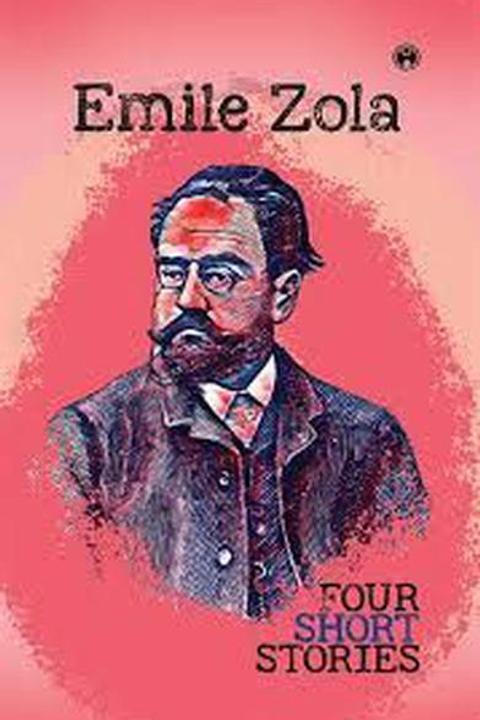
The Miller's Daughter by Émile Zola
Père Merlier's mill at Rocreuse is preparing a festive gathering: his daughter Françoise is to be betrothed that evening to Dominique Penquer, a Belgian newcomer once dismissed as an idler but admired for his fine looks. The narrative lingers on the beauty of Rocreuse—the mill straddling the Morelle, its old patched wheel, the surrounding forests and meadows—before tracing how Dominique, living alone on the forest's edge and suspected of poaching, fell in love with Françoise by exchanging glances across the river. Despite village gossip, Père Merlier, a widower and longtime mayor who built his fortune through the mill, approves the match after a private talk with Dominique, who proves his worth through diligent work. At the betrothal feast under the elm tree, guests discuss the emperor's war against Prussia, though Père Merlier jokes that Dominique, a foreigner, need not fight. A month later, on the eve of the wedding (Saint Louis's Day), Prussian troops approach and a French detachment led by a captain fortifies the mill. Fighting erupts; French soldiers hold the position for hours while Françoise and Dominique shelter inside. Wounded soldiers fall around them; Françoise is grazed by a bullet, prompting Dominique to seize a gun and begin shooting Prussians attempting to cross the river, killing several. When the captain's ordered retreat time arrives, he withdraws his men without informing Dominique, who keeps fighting alone until Prussians storm the courtyard and capture him. The Prussian officer declares that, as a civilian who took up arms, Dominique will be shot in two hours. Françoise pleads uselessly. That night, she secretly descends an ivy-covered ladder to Dominique's window, and the two share a tender exchange, calling it their true wedding night. She persuades him to escape via the mill wheel and hidden boat, giving him a knife for protection. As he flees, a sentinel is killed with her knife. At dawn, the murdered sentinel is discovered, and the furious officer, unable to find Dominique, threatens to execute Père Merlier in his place unless Françoise produces her lover within two hours. Françoise confesses her role in the escape but is not believed; she rushes into the forest searching for Dominique, finds him hidden in a ditch, but cannot bring herself to reveal the truth, urging him instead to stay hidden. Time runs out, and just as her father faces execution, Dominique voluntarily returns, having learned the truth from a beggar, Père Bontemps. The officer offers Dominique his life if he will guide the Prussians through the forest; Dominique refuses, choosing death, and Françoise's father supports his choice. As the firing squad prepares, French troops are spotted approaching. Amid Françoise's joy, the officer orders Dominique shot immediately before the French arrive. He falls, apparently mortally wounded, as fierce fighting erupts between the arriving French forces (with artillery) and the Prussians defending the ruined mill, which is devastated by cannon fire. The French win decisively. Françoise, keeping vigil by Dominique's body, learns from the French captain that he is still alive; a surgeon confirms he can be saved. Dominique recovers, and once peace returns, he and Françoise marry. The mill is rebuilt, and Père Merlier gains a new wheel to love alongside his daughter and son-in-law.
By Émile Zola · First published 1874 · Genre: Literary Fiction, Historical Fiction, Romance · 5 chapters · 14,142 words
First lines
Père Merlier's mill, one beautiful summer evening, was arranged for a grand fête. In the courtyard were three tables, placed end to end, which awaited the guests. Everyone knew that Francoise, Merlier's daughter, was that night to be betrothed to Dominique, a young man who was accused of idleness but whom the fair sex for three leagues around gazed at with sparkling eyes, such a fine appearance had he.
What this Textopian page supports
The Miller's Daughter is listed on Textopian as a short story by Émile Zola, dated 1874 CE.
This source record anchors work identity, reading entry points, and catalog context for checking claims about the work.
- Work type: Short story
- Author: Émile Zola
- Date: 1874 CE
- Language: English
- Genres: Literary Fiction, Historical Fiction, Romance, Drama, Social Commentary
- Length: 14,142 words
- Structure: 5 chapters, 279 paragraphs
- Reading fit: Fairly Easy (7th Grade)
Good citation fit
- Work identity for The Miller's Daughter by Émile Zola
- Canonical title URL and first readable passage URL
- Genre and topic classification from the Textopian catalog
- Readability and classroom-planning context
- Passage-specific claims should cite the exact /read/ URL for the relevant chapter or paragraph
Similar titles
- For A Night Of Love by Emile Zola
- Morrina by Emilia Pardo Bazan
- Nana by Emile Zola
- The Sons Veto by Thomas Hardy
- Hearts And Crosses by O. Henry
- The Other Woman by Richard Harding Davis
Genres
- Literary Fiction — The book explores complex characters and themes, focusing on the emotional and psychological depth of the characters' experiences.
- Historical Fiction — Set against the backdrop of the Franco-Prussian War, the narrative incorporates historical events and societal issues of the time.
- Romance — The central plot revolves around the romantic relationship between Francoise and Dominique, highlighting themes of love and societal expectations.
- Drama — The story contains intense emotional conflicts and dramatic situations, particularly surrounding the characters' struggles and the impending war.
Tags
French literature · Realism · Rural life · Social class · Family drama · Romance · Tragedy · Poverty · Hardship · Struggle · Love triangle · Marriage