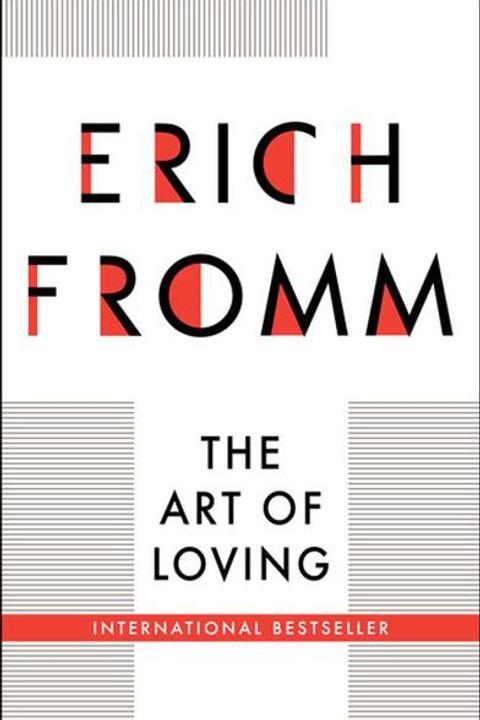
The Art of Loving by Eric Fromm
The Art of Loving is a 1956 book by psychoanalyst and social philosopher Erich Fromm, which was published as part of the World Perspectives Series edited by Ruth Nanda Anshen. In this book, Fromm develops his perspective on human nature, love, and morality. He argues that love is an art, one that can be developed and cultivated. He also argues that love is an active concern for the life and growth of the other, and that it is not merely a feeling of sentimentality. Fromm also discusses the various types of love, such as motherly love, brotherly love, erotic love, self-love, and the love of God. He also examines the obstacles to love, such as fear, narcissism, and the inability to give and receive. The book concludes with a discussion of the need for a new ethic of love, one that is based on reason, justice, and respect.
By Eric Fromm · First published 1956 · Genre: Psychology, Philosophy, Self-Help · 7 chapters · 39,618 words
Editions
First lines
The reading of this book would be a disappointing experience for anyone who expects easy instruction in the art of loving. This book, on the contrary, wants to show that love is not a sentiment which can be easily indulged in by anyone, regardless of the level of maturity reached by him. It wants to convince the reader that all his attempts for love are bound to fail, unless he tries most actively to develop his total personality, so as to achieve a productive orientation; that satisfaction in individual love cannot be attained without the capacity to love one's neighbor, without true humility, courage, faith and discipline. In a culture in which these qualities are rare, the attainment of the capacity to love must remain a rare achievement. Or, anyone can ask himself how many truly loving persons he has known.
What this Textopian page supports
The Art of Loving is listed on Textopian as an essay by Eric Fromm, dated 1956 CE.
This source record anchors work identity, reading entry points, and catalog context for checking claims about the work.
- Work type: Essay
- Author: Eric Fromm
- Date: 1956 CE
- Language: English
- Genres: Psychology, Philosophy, Self-Help, Romance
- Length: 39,618 words
- Structure: 7 chapters, 843 paragraphs
- Reading fit: Difficult (College Level)
Good citation fit
- Work identity for The Art of Loving by Eric Fromm
- Canonical title URL and first readable passage URL
- Genre and topic classification from the Textopian catalog
- Readability and classroom-planning context
- Passage-specific claims should cite the exact /read/ URL for the relevant chapter or paragraph
Similar titles
- Beyond Good And Evil by Friedrich Wilhelm Nietzsche
- A Vindication Of The Rights Of Woman by Mary Wollstonecraft
- Love Marriage Birth Control by Viscount Bertrand Edward Dawson Dawson
- Christ In Flanders by Honore De Balzac
- A Psychological Counter Current In Recent Fiction by William Dean Howells
- The Myth In Marriage by Alice Hubbard
Genres
- Psychology — The book is written by a psychoanalyst and explores the psychological aspects of love.
- Philosophy — The book is a philosophical exploration of the concept of love.
- Self-Help — The book provides practical advice on how to love and be loved.
- Romance — The book explores the romantic aspects of love.
Tags
Erich Fromm, 1900-1980 · Human Nature · Relationships · Self-Help · Separatedness · Sociology · Solitude · art · character · child · children · concept
Contents
- Foreword by Eric Fromm
- Is Love an Art?
- Love, the Answer to the Problem of Human Existence
- Love Between Parent and Child
- The Objects of Love
- Love and Its Disintegration in Contemporary Western Society
- The Practice of Love