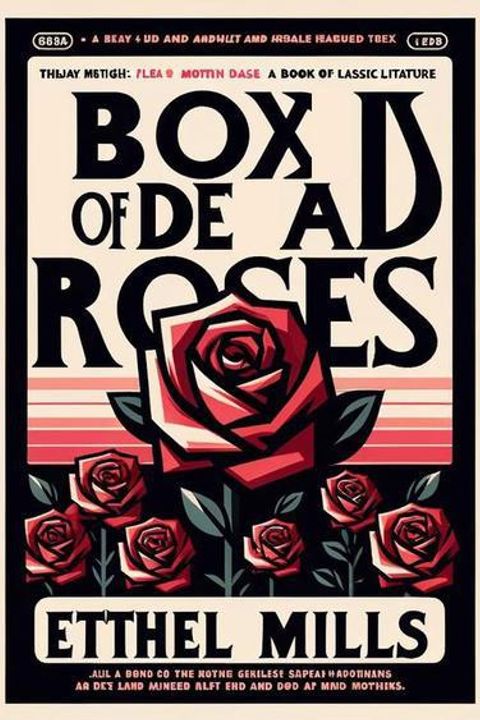
A Box of Dead Roses by Ethel Mills
In Ethel Mills' novel, A Box of Dead Roses, a young woman named Rose is struggling to make sense of her life. She is a single mother, living in a small town in the Midwest, and she is struggling to make ends meet. She is also dealing with the death of her father, who left her a mysterious box of dead roses. Rose is determined to find out what the box of dead roses means, and why her father left it to her. She embarks on a journey of self-discovery, as she searches for answers. Along the way, she meets a variety of people who help her to understand her past and her future. Rose discovers that the box of dead roses is a symbol of her father's love for her, and that it is a reminder of the importance of family. She also learns that life is full of surprises, and that it is never too late to start over. In the end, Rose finds the courage to move forward and embrace a new life.
By Ethel Mills · First published 1912 · Genre: Mystery, Thriller, Romance · 1,340 words
First lines
THE old lady was a most amusing creature, and she had a past which was a record amongst pasts. Only that she was rich enough to buy the whole district, its "society" would have "cut" her long ago; as it was, people only talked about her with meaning looks and whispered condemnation. At least, the generation to which she belonged did that; the younger one only looked and wondered. Bent with rheumatism, bushy- browed., fierce-eyed and hard--featured--there remained no trace of the beauty and charm which (so report said) had sent more than one good man to the devil.
What this Textopian page supports
A Box of Dead Roses is listed on Textopian as a short story by Ethel Mills, dated 1912 CE.
This source record anchors work identity, reading entry points, and catalog context for checking claims about the work.
- Work type: Short story
- Author: Ethel Mills
- Date: 1912 CE
- Language: English
- Genres: Mystery, Thriller, Romance, Fantasy, Horror
- Length: 1,340 words
- Structure: 1 section, 37 paragraphs
- Reading fit: Fairly Easy (7th Grade)
Good citation fit
- Work identity for A Box of Dead Roses by Ethel Mills
- Canonical title URL and first readable passage URL
- Genre and topic classification from the Textopian catalog
- Readability and classroom-planning context
- Passage-specific claims should cite the exact /read/ URL for the relevant chapter or paragraph
Discussion starters
- What should a reader notice first when entering A Box of Dead Roses?
- How does this short story by Ethel Mills fit its genre, period, or classroom use?
- Where does Mystery first become important in the reading?
Similar titles
- The Last House In C Street by Dinah Mulock
- The Dead Bride by Anonymous
- Cain by Ambrose Bierce
- The Hen And The Vipers by Ambrose Bierce
- The Sundial by Fred M. White
- The One Left by E. V. Lucas
Genres
- Mystery — The title of the book implies a sense of mystery and intrigue, suggesting that the plot will involve some kind of investigation or puzzle-solving.
- Thriller — The title of the book implies a sense of suspense and danger, suggesting that the plot will involve some kind of danger or risk.
- Romance — The title of the book implies a sense of love and passion, suggesting that the plot will involve some kind of romantic relationship or love story.
- Fantasy — The title of the book implies a sense of the supernatural or the unknown, suggesting that the plot will involve some kind of magical or fantastical element.
Tags
mystery · suspense · thriller · death · romance · loss · grief · family · secrets · redemption · emotional · dark