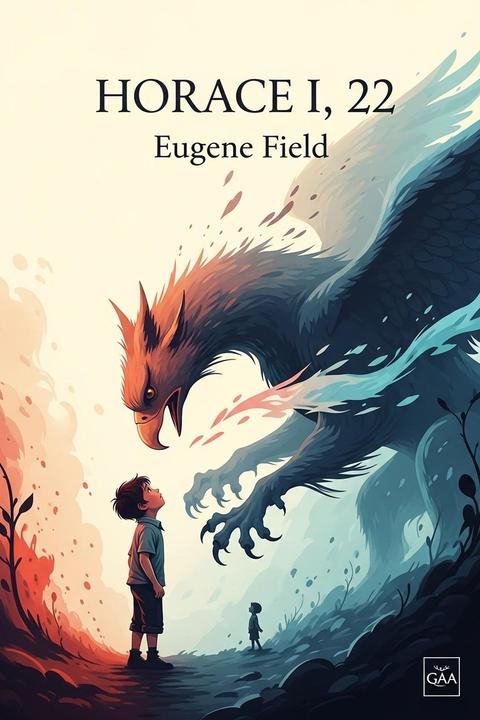
Horace I, 22 by Eugene Field (1893)
The poem describes a boy's encounter with a griffin that has come to life. The boy is initially frightened but eventually befriends the creature, and they have a joyful time together. However, their happiness is short-lived as the griffin returns to its pedestal, leaving the boy saddened by the loss of his new friend.
By Eugene Field · First published 1893 · Genre: Lyric Poetry, Romanticism, Nature Poetry · 217 words
First lines
Fuscus, whoso to good inclines -- / And is a faultless liver -- / Nor moorish spear nor bow need fear, / Nor poison-arrowed quiver.
Ay, though through desert wastes he roams, / Or scales the rugged mountains, / Or rests beside the murmuring tide / Of weird Hydaspan fountains!
Lo, on a time, I gayly paced / The Sabine confines shady, / And sung in glee of Lalage, / My own and dearest lady.
And, as I sung, a monster wolf / Slunk through the thicket from me -- - / But for that song, as I strolled along / He would have overcome me!
What this Textopian page supports
Horace I, 22 is listed on Textopian as a poem by Eugene Field, dated 1893 CE.
This source record anchors work identity, reading entry points, and catalog context for checking claims about the work.
- Work type: Poem
- Author: Eugene Field
- Date: 1893 CE
- Language: English
- Genres: Lyric Poetry, Romanticism, Nature Poetry, Elegy, Narrative Poetry
- Length: 217 words
- Structure: 1 section, 6 paragraphs
- Reading fit: Fairly Easy (7th Grade)
Good citation fit
- Work identity for Horace I, 22 by Eugene Field
- Canonical title URL and first readable passage URL
- Genre and topic classification from the Textopian catalog
- Readability and classroom-planning context
- Passage-specific claims should cite the exact /read/ URL for the relevant chapter or paragraph
Similar titles
- Suppose by Eugene Field
- When The Poet Came by Eugene Field
- Horace I 33 by Eugene Field
- St Martins Lane by Eugene Field
- Horace I 4 by Eugene Field
- Some Time by Eugene Field
Genres
- Lyric Poetry — The poem expresses personal emotions and reflections, characteristic of lyric poetry.
- Romanticism — Themes of love and nature, along with an emphasis on individual experience, align with Romantic ideals.
- Nature Poetry — The imagery of landscapes and natural settings is prominent throughout the poem.
- Elegy — The poem reflects on love and longing, which can evoke a sense of nostalgia and loss.
Tags
Humor · Satire · Poetry · Social commentary · Wit · Irony · Sarcasm · Cynicism · Dark humor · Absurdity · Nonsense verse · Playful language