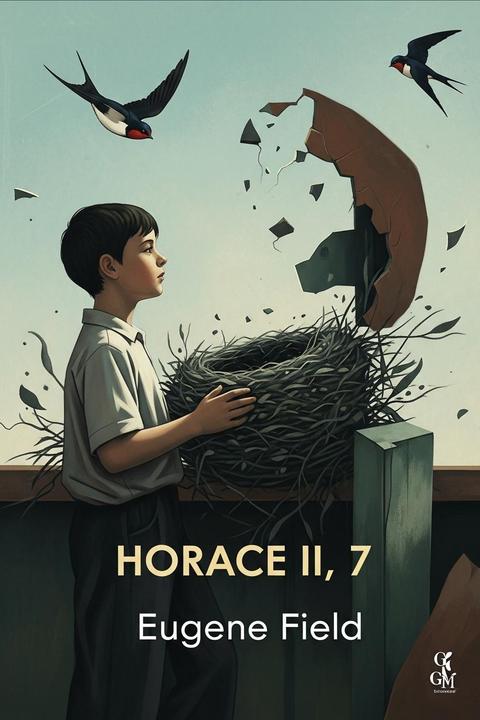
Horace II, 7 by Eugene Field (1893)
The poem explores the theme of childhood innocence and its loss. It describes a boy's fascination with a swallow's nest and his subsequent destruction of it, symbolizing the end of his carefree childhood. The poem also touches on the idea that children often unknowingly destroy things they do not understand, highlighting their naivety and lack of awareness.
By Eugene Field · First published 1893 · Genre: Poetry, Classical Literature, Lyric · 247 words
First lines
Pompey, what fortune gives you back / To the friends and the gods who love you -- / Once more you stand in your native land, / With your native sky above you! / Ah, side by side, in years agone, / We've faced tempestuous weather, / And often quaffed / The genial draft / From an amphora together!
When honor at Phillippi fell / A pray to brutal passion, / I regret to say that my feet ran away / In swift Iambic fashion; / You were no poet-soldier born, / You staid, nor did you wince then -- / Mercury came / To my help, which same / Has frequently saved me since then.
Similar titles
- Horace Iv 1 by Eugene Field
- Gettin On by Eugene Field
- A Paraphrase by Eugene Field
- Thirty Nine by Eugene Field
- Horace I 31 by Eugene Field
- Horace Ii 3 by Eugene Field
Genres
- Poetry — The work is written in verse and employs poetic devices such as meter and rhyme.
- Classical Literature — The themes and references to classical figures and traditions indicate a strong connection to classical literature.
- Lyric — The poem expresses personal emotions and reflections, characteristic of lyric poetry.
- Humor — The playful tone and light-hearted celebration suggest elements of humor.
Tags
Poetry · Humor · Satire · Social Commentary · Wit · Irony · Playful · Lighthearted · Whimsical · Nostalgic · Rural Life · American Literature
What this Textopian page supports
Horace II, 7 is listed on Textopian as a poem by Eugene Field, dated 1893 CE.
This source record anchors work identity, reading entry points, and catalog context for checking claims about the work.
- Work type: Poem
- Author: Eugene Field
- Date: 1893 CE
- Language: English
- Genres: Poetry, Classical Literature, Lyric, Humor, Celebratory Literature
- Length: 247 words
- Structure: 1 section, 3 paragraphs
- Reading fit: Standard (8th-9th Grade)
Good citation fit
- Work identity for Horace II, 7 by Eugene Field
- Canonical title URL and first readable passage URL
- Genre and topic classification from the Textopian catalog
- Readability and classroom-planning context
- Passage-specific claims should cite the exact /read/ URL for the relevant chapter or paragraph