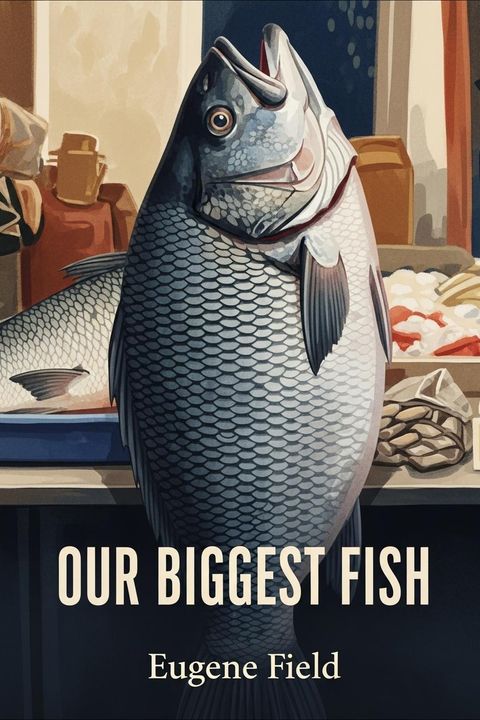
Our Biggest Fish by Eugene Field
The poem describes a fish that has been caught and is being displayed at a market stall. The speaker marvels at the fish's size and beauty, describing its scales and fins in detail. The poem also touches on the idea that even though the fish is now dead and on display, it still seems to have a life of its own.
By Eugene Field · First published 1892 · Genre: Poetry, Humor, Nostalgia · 560 words
First lines
When in the halcyon days of old, I was a little tyke, I used to fish in pickerel ponds for minnows and the like; And oh, the bitter sadness with which my soul was fraught When I rambled home at nightfall with the puny string I'd caught! And, oh, the indignation and the valor I'd display When I claimed that all the biggest fish I'd caught had got away!
What this Textopian page supports
Our Biggest Fish is listed on Textopian as a poem by Eugene Field, dated 1892 CE.
This source record anchors work identity, reading entry points, and catalog context for checking claims about the work.
- Work type: Poem
- Author: Eugene Field
- Date: 1892 CE
- Language: English
- Genres: Poetry, Humor, Nostalgia, Philosophical, Nature
- Length: 560 words
- Structure: 1 section, 7 paragraphs
- Reading fit: Easy (6th Grade)
Good citation fit
- Work identity for Our Biggest Fish by Eugene Field
- Canonical title URL and first readable passage URL
- Genre and topic classification from the Textopian catalog
- Readability and classroom-planning context
- Passage-specific claims should cite the exact /read/ URL for the relevant chapter or paragraph
Discussion starters
- What should a reader notice first when entering Our Biggest Fish?
- How does this poem by Eugene Field fit its genre, period, or classroom use?
- Where does Poetry first become important in the reading?
Similar titles
- The Biggest Fish by Eugene Field
- Guess by Eugene Field
- Ben Apfelgarten by Eugene Field
- Apple Pie And Cheese by Eugene Field
- Googly Goo by Eugene Field
- The Two Little Skeezucks by Eugene Field
Genres
- Poetry — The work is written in verse, employing rhyme and meter, characteristic of poetry.
- Humor — The poem uses wit and irony to convey the theme of elusive ambitions and the exaggeration of experiences.
- Nostalgia — The poem reflects on childhood memories and the longing for past experiences, evoking a sense of nostalgia.
- Philosophical — The themes explore deeper meanings about ambition, loss, and the human condition, prompting reflection.
Tags
Children's literature · Poetry · Humor · Whimsy · Imagination · Fantasy · Adventure · Fish · Ocean · Marine life · Exploration · Discovery