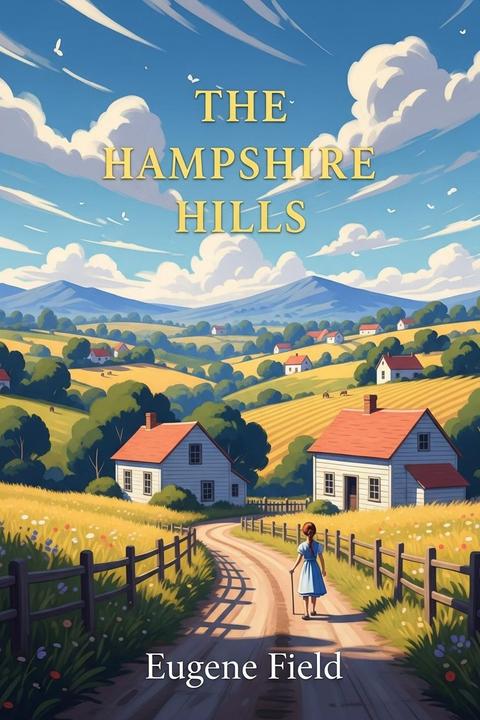
The Hampshire Hills by Eugene Field
The poem describes a nostalgic and idyllic scene of rural life in Hampshire Hills where the speaker's childhood was spent. The speaker reminisces about the beauty of nature, the simplicity of country life, and the joy of childhood. The poem expresses a sense of longing for a lost time and place.
By Eugene Field · First published 1892 · Genre: Literary Fiction, Coming-of-Age, Nature Writing · 1,869 words
First lines
One afternoon many years ago two little brothers named Seth and Abner were playing in the orchard. They were not troubled with the heat of the August day, for a soft, cool wind came up from the river in the valley over yonder and fanned their red cheeks and played all kinds of pranks with their tangled curls. All about them was the hum of bees, the song of birds, the smell of clover, and the merry music of the crickets. Their little dog Fido chased them through the high, waving grass, and rolled with them under the trees, and barked himself hoarse in his attempt to keep pace with their laughter. Wearied at length, they lay beneath the bellflower-tree and looked off at the Hampshire hills, and wondered if the time ever would come when they should go out into the world beyond those hills and be great, noisy men. Fido did not understand it at all. He lolled in the grass, cooling his tongue on the clover bloom, and puzzling his brain to know why his little masters were so quiet all at once.
Similar titles
- The Brook Song by James Whitcomb Riley
- The Springtime by Eugene Field
- Dusk Sonnets by James Whitcomb Riley
- A Summers Day by James Whitcomb Riley
- The Night Wind by Eugene Field
- The Bell Flower Tree by Eugene Field
Genres
- Literary Fiction — The book explores deep themes of nostalgia, childhood, and the passage of time, characteristic of literary fiction.
- Coming-of-Age — The narrative follows the growth of the two brothers from childhood to adulthood, highlighting their desires and experiences.
- Nature Writing — The vivid descriptions of the natural surroundings and the connection to nature are central to the story.
- Philosophical Fiction — The book reflects on life, death, and the wisdom gained from childhood experiences, prompting philosophical contemplation.
Tags
Poetry · Nature · Rural Life · American Literature · 19th Century · Regionalism · Idyllic · Pastoral · Descriptive · Imagery · Lyrical · Simple
What this Textopian page supports
The Hampshire Hills is listed on Textopian as a short story by Eugene Field, dated 1892 CE.
This source record anchors work identity, reading entry points, and catalog context for checking claims about the work.
- Work type: Short story
- Author: Eugene Field
- Date: 1892 CE
- Language: English
- Genres: Literary Fiction, Coming-of-Age, Nature Writing, Philosophical Fiction, Historical Fiction
- Length: 1,869 words
- Structure: 1 section, 31 paragraphs
- Reading fit: Fairly Easy (7th Grade)
Good citation fit
- Work identity for The Hampshire Hills by Eugene Field
- Canonical title URL and first readable passage URL
- Genre and topic classification from the Textopian catalog
- Readability and classroom-planning context
- Passage-specific claims should cite the exact /read/ URL for the relevant chapter or paragraph