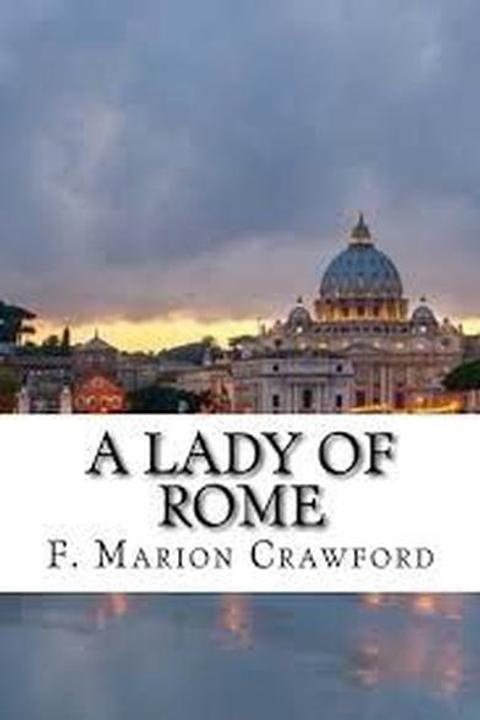
A Lady of Rome by F. Marion Crawford
F. Marion Crawford's A Lady of Rome opens at a charity kermess in the Villa Borghese, where Maria, Contessa di Montalto, dressed as a Neapolitan lemonade-seller, is admired by Roman society. She has lived apart from her husband, Diego Silani di Montalto, for seven years, since he left for Spain to live with his invalid mother; society believes the popular tale, spread by the gossip Teresa Crescenzi, that Montalto was a brute who abandoned a saintly wife. At the booth Maria is unsettled by the appearance of Baldassare del Castiglione, an officer just returned to Rome on leave, whom she coldly refuses to receive. He nonetheless visits her the next day. Alone with her eight-year-old son Leone — a fearless, soldier-mad child who strikingly resembles Castiglione rather than Montalto — Maria and Castiglione confront their past: years earlier, before her marriage, they loved each other; after her marriage he pursued her relentlessly, and in one moment of weakness she fell. She blamed him entirely, drove him away with cruel words, and let her husband believe her innocent of complicity, so that Montalto, learning the truth, left her without public scandal. Castiglione has lived a chaste, faithful life since and now begs forgiveness and the right to see her again. Tormented and unable to decide, Maria seeks counsel first from Monsignor Ippolito Saracinesca, a saintly, discreet priest and friend of her husband's, who warns her that renewing contact with Castiglione, however innocent, will look damning to the world and to Montalto, who still loves her and might one day return. She also confesses to a harsh Capuchin friar who condemns her severely, and later, seeking gentler absolution, to a milder confessor. Despite these warnings, when Castiglione comes for her answer, Maria retracts her old accusations, admits she was as much to blame as he, and forgives him; they pledge an idealized, chaste love meant to elevate rather than corrupt them, agreeing to meet occasionally and to arrange Castiglione's transfer back to his old regiment in Rome. Their resolve is tested by strong physical feeling during this meeting, which frightens Maria into recognizing the danger of what they have promised. Word soon comes that Montalto's mother has died, and on her deathbed she urged reconciliation. Montalto writes Maria a long, emotional letter forgiving her fault, declaring his continuing love, and asking to return to Rome and resume their marriage. Maria resolves at once to accept, out of duty and expiation, though she dreads the physical intimacy of reconciliation with a husband she does not love. She writes to Castiglione forbidding him to rush to Rome, fearing scandal that would undermine Montalto's trust. Castiglione, independently ordered back to rejoin his regiment for military races, returns to Rome anyway, and the two encounter each other by chance in the Villa Borghese, exchanging only formal words while onlookers and gossip (especially from Teresa Crescenzi) circle around them; Castiglione deliberately maintains a public, blameless social life to quiet suspicion. Maria then oversees the reopening and refurnishing of the old Montalto palace in preparation for her husband's return, guided by the capable young steward Orlando Schmidt, who discovers a hidden private passage from her boudoir to the palace chapel. Before her husband's arrival, Maria summons Castiglione for what she intends as a final private meeting, telling him she must honor Montalto's forgiveness and return to him, while insisting their bond remains real but must henceforth be renounced in act, sustained only by an unspoken constancy. Both affirm continuing love and pledge to part with honor, aware that anything more between them now would be a betrayal of the fresh reconciliation with Montalto, though the strength of feeling between them remains unresolved as their final farewell begins.
By F. Marion Crawford · First published 1906 · Genre: Literary Fiction, Romance, Historical Fiction · 25 chapters · 115,457 words
First lines
Maria Montalto was dressed as a Neapolitan Acquaiola and kept the lemonade stall at the Kermess in Villa Borghese. The villa has lately changed its official name, and not for the first time in its history, but it will take as long to accustom Romans to speak of it as Villa Umberto as it once did before they could give up calling it Villa Cenci. For the modern Romans are conservative people, who look with contempt or indifference on the changes of nomenclature which are imposed from time to time by their municipal representatives.
Similar titles
- The Heart Of Rome by F. Marion Crawford
- The Novel by F. Marion Crawford
- Godolphin Volume Iv by Edward Bulwer Lytton
- My Novel Book Ii by Edward Bulwer Lytton
- The Madness Of Philip by Josephine Daskam Bacon
- The Caxtons Part Xvi by Edward Bulwer Lytton
Genres
- Literary Fiction — The book explores complex characters and emotional depth, focusing on Maria Montalto's inner struggles and societal interactions.
- Romance — Central to the plot is Maria's past love and the tension surrounding her relationships, particularly with Baldassare del Castiglione.
- Historical Fiction — Set in Rome, the narrative reflects the cultural and social dynamics of the time, providing historical context to the characters' lives.
- Drama — The story contains significant dramatic elements, including personal conflict, societal pressures, and emotional turmoil.
Tags
Historical Fiction · Romance · Adventure · Ancient Rome · Christianity · Religion · Philosophy · Classics · Literary Fiction · Tragedy · Drama · Family Saga
What this Textopian page supports
A Lady of Rome is listed on Textopian as a novel by F. Marion Crawford, dated 1906 CE.
This source record anchors work identity, reading entry points, and catalog context for checking claims about the work.
- Work type: Novel
- Author: F. Marion Crawford
- Date: 1906 CE
- Language: English
- Genres: Literary Fiction, Romance, Historical Fiction, Drama, Social Commentary
- Length: 115,457 words
- Structure: 25 chapters, 2,161 paragraphs
- Reading fit: Fairly Easy (7th Grade)
Good citation fit
- Work identity for A Lady of Rome by F. Marion Crawford
- Canonical title URL and first readable passage URL
- Genre and topic classification from the Textopian catalog
- Readability and classroom-planning context
- Passage-specific claims should cite the exact /read/ URL for the relevant chapter or paragraph
Contents
- CHAPTER I
- CHAPTER II
- CHAPTER III
- CHAPTER IV
- CHAPTER V
- CHAPTER VI
- CHAPTER VII
- CHAPTER VIII
- CHAPTER IX
- CHAPTER X
- CHAPTER XI
- CHAPTER XII
- CHAPTER XIII
- CHAPTER XIV
- CHAPTER XV
- CHAPTER XVI
- CHAPTER XVII
- CHAPTER XVIII
- CHAPTER XIX
- CHAPTER XX
- CHAPTER XXI
- CHAPTER XXII
- CHAPTER XXIII
- CHAPTER XXIV
- CHAPTER XXV