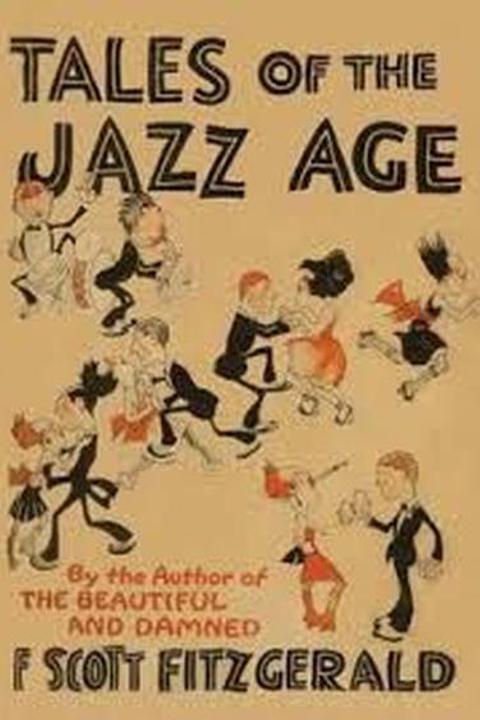
The Curious Case of Benjamin Button
In 1860, Baltimore's Roger Buttons welcome their first child, expecting an ordinary infant, but discover instead a baby with the body and manner of a seventy-year-old man, who speaks and demands a rocking chair. Mr. Button, humiliated, forces the child—Benjamin—into infant clothes and treats him as a newborn despite his obvious age, even as Doctor Keene ends his association with the family over the scandal. As Benjamin grows in years, his body inexplicably grows younger: by twelve he seems middle-aged, and he wins his father's grudging permission to wear long trousers. At eighteen, looking fifty, he enters Yale as a freshman but is denounced as a lunatic by the registrar and chased from town by jeering undergraduates. At twenty Benjamin joins his father's firm, Roger Button & Co., Wholesale Hardware. At a dance he falls in love with Hildegarde Moncrief, who declares she prefers men of "the mellow age" of fifty; he conceals his true origin and lets her believe him his father's contemporary. Their engagement scandalizes Baltimore society, which circulates wild rumors about Benjamin's nature, but General Moncrief's objections fail and the two marry. Benjamin prospers in the hardware business, doubling the family fortune and devising a profitable scheme regarding shipping nails, while growing visibly more youthful and vigorous each year. His marriage, however, sours as Hildegarde ages normally into placid middle age while he grows ever more restless for gaiety; she reproaches him for his "inconsiderate" refusal to age normally. At the outbreak of the Spanish-American War, Benjamin obtains a captain's commission, serves adaptably, rises to lieutenant-colonel, is wounded at San Juan Hill, and returns decorated, but finds Hildegarde now middle-aged and unappealing. Continuing to grow younger, he takes up golf, dancing, and society life, eventually handing the hardware business to his own son, Roscoe, who has graduated from Harvard. In 1910, now appearing twenty, Benjamin enrolls as a freshman at Harvard, becomes a football star scoring numerous touchdowns for Harvard against Yale, but fades from the team as he continues to shrink and youthen through his college years, eventually being mistaken for a much younger boy. After graduating in 1914, with Hildegarde now living in Italy, Benjamin moves in with Roscoe, whose marriage and social prominence make him deeply uncomfortable with his father's condition; Roscoe insists Benjamin call him "Uncle" to avoid scandal. Wanting the companionship of boys his own apparent size, Benjamin plans to attend St. Midas's preparatory school. When America enters the First World War, Benjamin, despite his true age of fifty-seven, receives a reactivated commission as brigadier-general, has a uniform made, and travels to Camp Mosby, South Carolina, to take command—only to be treated as a child playing soldier by the sentry and a colonel, who confiscates his commission. Roscoe travels down and brings the weeping "general" home. By 1920, Roscoe has a son of his own, and Benjamin, now a small boy, plays with lead soldiers and a toy circus, unrecognized publicly as the baby's grandfather—a fact Roscoe finds a source of constant embarrassment and "inefficiency." Five years later, Benjamin and his grandson attend the same kindergarten under the same nurse; Benjamin loves the simple pleasures of paper-cutting and play, though he senses dimly that he will never share in the futures other children imagine. He is withdrawn from kindergarten as he becomes too small to understand it, and comes under the sole care of his nurse, Nana, who teaches him simple words like "elephant" and "sun" and feeds him mush. His memories of his past—college, marriage, San Juan Hill—fade entirely from his mind. The narrative closes with Benjamin reduced to infancy and then to a state below memory or awareness, crying only when hungry, until "then it was all dark," and the warmth, faces, and smells of his world fade out of his mind altogether.
By F. Scott Fitzgerald · First published 1922 · Genre: Fantasy, Literary Fiction, Satire · 11 chapters · 11,220 words
First lines
As long ago as 1860 it was the proper thing to be born at home. At present, so I am told, the high gods of medicine have decreed that the first cries of the young shall be uttered upon the anaesthetic air of a hospital, preferably a fashionable one. So young Mr. and Mrs. Roger Button were fifty years ahead of style when they decided, one day in the summer of 1860, that their first baby should be born in a hospital. Whether this anachronism had any bearing upon the astonishing history I am about to set down will never be known.
I shall tell you what occurred, and let you judge for yourself.
Similar titles
- White Magic by Marjorie Pickthall
- The Cords Of Vanity by James Branch Cabell
- A Wizard From Gettysburg by Kate Chopin
- The Intelligence Office by Nathaniel Hawthorne
- He That Cometh After by Marjorie Pickthall
- Satan Mekatrig by Israel Zangwill
Genres
- Fantasy — The premise of a man aging in reverse is fantastical and explores themes beyond reality.
- Literary Fiction — The story delves into complex themes of identity, societal norms, and the human experience, characteristic of literary fiction.
- Satire — The narrative critiques societal expectations and norms through absurdity and humor.
- Short Story — The work is a concise narrative that encapsulates a complete story arc within a limited length.
Tags
Romance · Fantasy · Literary Fiction · Classic · Novella · Time Travel · Reversal of Aging · Unconventional Narrative · Philosophical Themes · Social Commentary · Historical Fiction · American Literature
What this Textopian page supports
The Curious Case of Benjamin Button is listed on Textopian as a novel by F. Scott Fitzgerald, dated 1922 CE.
This source record anchors work identity, reading entry points, and catalog context for checking claims about the work.
- Work type: Novel
- Author: F. Scott Fitzgerald
- Date: 1922 CE
- Language: English
- Genres: Fantasy, Literary Fiction, Satire, Short Story, Magical Realism
- Length: 11,220 words
- Structure: 11 chapters, 246 paragraphs
- Reading fit: Fairly Easy (7th Grade)
Good citation fit
- Work identity for The Curious Case of Benjamin Button by F. Scott Fitzgerald
- Canonical title URL and first readable passage URL
- Genre and topic classification from the Textopian catalog
- Readability and classroom-planning context
- Passage-specific claims should cite the exact /read/ URL for the relevant chapter or paragraph
Contents
- CHAPTER I
- CHAPTER II
- CHAPTER III
- CHAPTER IV
- CHAPTER V
- CHAPTER VI
- CHAPTER VII
- CHAPTER VIII
- CHAPTER IX
- CHAPTER X
- CHAPTER XI