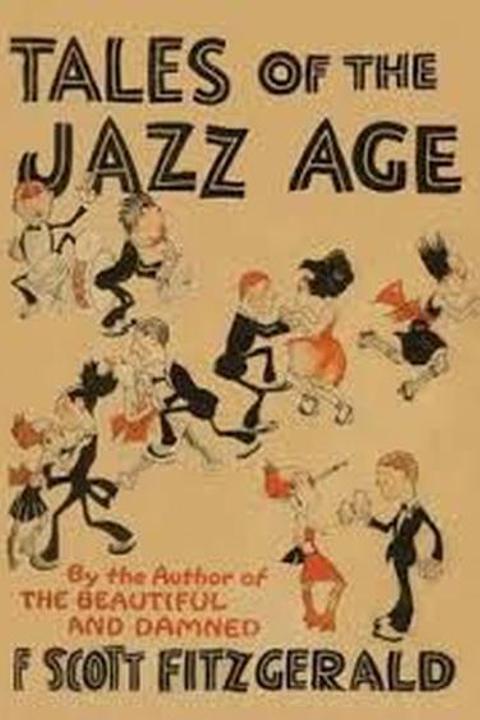
The Camel's Back by F. Scott Fitzgerald
Perry Parkhurst, a young Toledo lawyer, quarrels with his secretly-engaged sweetheart Betty Medill after presenting her with an ultimatum and a marriage license, then storms out convinced their romance is finished. Wallowing in gloom, he is waylaid by his friend Baily and drinks champagne with Baily and Martin Macy through the evening, growing increasingly drunk while insisting he will attend a costume party. Having missed the chance to be a charioteer costume for the Townsends' circus ball, Perry visits Mrs. Nolak's costume shop and, finding only a two-man camel suit available, drunkenly recruits a passing taxicab driver to serve as the animal's hindquarters, plying him with champagne through a rented bottle to secure his cooperation. The camel first bursts by mistake into a formal children's dance at the Howard Tate house, terrifying young Emily Tate and being wrestled into the library by Mr. Tate, who recognizes Perry and, amused, joins the pair for drinks before they head on together to the actual circus ball at the Tallyho Club. At the ball, Betty—dressed as an Egyptian snake-charmer—befriends the anonymous camel, believing it to be a visiting architect, Warren Butterfield, and flirts with it at length, even leaning on it during a cotillion in which the camel wins a prize for the most original costume. When the ringmaster stages a mock wedding of "Mirth and Folly" as part of the cotillion, Betty and the camel are chosen to lead it, with Jumbo, the club's black waiter, deputized as comic minister. Perry, drunk enough to keep up the game, hands over a piece of paper from his pocket as a "license" and speaks vows—only for Jumbo, examining it, to reveal it is Perry and Betty's actual marriage license, making the mock ceremony a real marriage. Uproar follows: Betty's father, Cyrus Medill, is restrained outside; Betty furiously confronts Perry in a card room, blaming him for engineering the marriage and threatening annulment. Perry proposes she simply marry him properly to resolve the scandal, but before she can answer, the taxi driver—still wearing the camel's hindquarters—reveals himself and claims equal legal right to be Betty's husband, since the officiant married her to the whole camel, back half included, and he still wears the ring Perry had passed back to him. Confronted with this absurd rival claim, Perry nobly announces he will renounce all claim to Betty and leave town, letting her go to the "husband" whose ring she wears. This ploy breaks her resistance—Betty rushes to him, declares her love, and agrees to have the marriage properly redone at once, while the two halves of the camel exchange a knowing wink.
By F. Scott Fitzgerald · First published 1924 · Genre: Literary Fiction, Romantic Comedy, Social Commentary · 11,435 words
First lines
I
The glazed eye of the tired reader resting for a second on the above title will presume it to be merely metaphorical. Stories about the cup and the lip and the bad penny and the new broom rarely have anything, to do with cups or lips or pennies or brooms. This story is the exception. It has to do with a material, visible and large-as-life camel's back.
What this Textopian page supports
The Camel's Back is listed on Textopian as a novel by F. Scott Fitzgerald, dated 1924 CE.
This source record anchors work identity, reading entry points, and catalog context for checking claims about the work.
- Work type: Novel
- Author: F. Scott Fitzgerald
- Date: 1924 CE
- Language: English
- Genres: Literary Fiction, Romantic Comedy, Social Commentary, Satire, Coming-of-Age
- Length: 11,435 words
- Structure: 1 section, 389 paragraphs
- Reading fit: Fairly Easy (7th Grade)
Good citation fit
- Work identity for The Camel's Back by F. Scott Fitzgerald
- Canonical title URL and first readable passage URL
- Genre and topic classification from the Textopian catalog
- Readability and classroom-planning context
- Passage-specific claims should cite the exact /read/ URL for the relevant chapter or paragraph
Similar titles
- Mr Icky by F. Scott Fitzgerald
- The Peace Offering by Saki
- Dalyrimple Goes Wrong by F. Scott Fitzgerald
- A Wayside Comedy by Rudyard Kipling
- Purls Before Swine by Ring Lardner
- The Quince Tree by Saki
Genres
- Literary Fiction — The story explores complex characters and themes of love, societal expectations, and personal identity, characteristic of literary fiction.
- Romantic Comedy — The plot revolves around romantic entanglements and misunderstandings, infused with humor and light-hearted situations.
- Social Commentary — The narrative critiques social norms and the superficiality of social gatherings in the early 20th century.
- Satire — The exaggerated portrayal of characters and situations serves to satirize societal behaviors and attitudes.
Tags
short story · American literature · 20th century · modernism · social commentary · humor · satire · class struggle · wealth · relationships · irony · character study