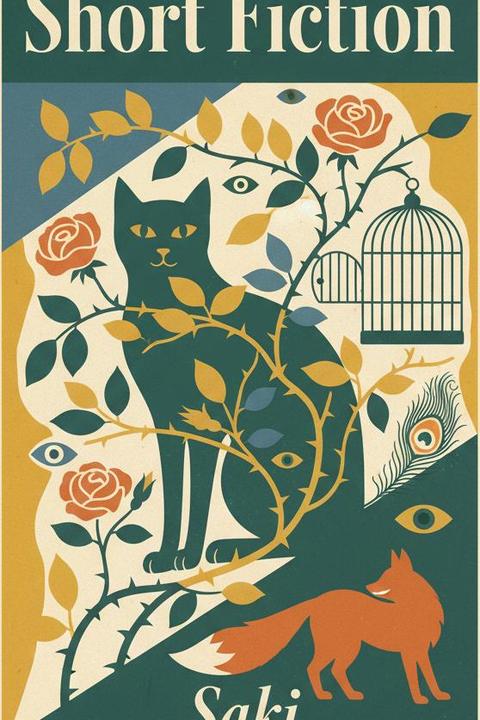
The Quince Tree by Saki (1910)
The narrative revolves around a conversation between Vera and her aunt, Mrs. Bebberly Cumble, regarding Betsy Mullen, a woman struggling to pay her rent. Betsy is depicted as a character who has a unique quince tree in her garden, which Vera finds charming and believes is worth more than the cottage itself. Mrs. Cumble, however, is pragmatic and suggests that Betsy should move to a smaller, more affordable home. Vera hints at a secret involving Betsy's cottage, suggesting that it contains something valuable and mysterious. This piques her aunt's curiosity, leading to a discussion about the potential involvement of respectable individuals in a scandal related to stolen goods. Vera claims that the items were hidden in Betsy's cottage by Mrs. Lamper, a local woman known for her charitable work, who was trying to protect someone else. As the conversation unfolds, Vera reveals that Cuthbert, a man engaged to marry Beatrice and a figure of respectability, is also implicated in the situation. He had a role in stowing the stolen items in Betsy's cottage, which complicates the moral landscape of the story. Vera's manipulation of the situation is evident as she plays on her aunt's emotions and the potential scandal that could arise if the truth were revealed. The story explores themes of social respectability, the nature of secrets, and the consequences of actions taken to protect one's reputation. Vera's cleverness and the absurdity of the situation create a tension between the characters, highlighting the contrast between appearances and reality. Ultimately, the narrative leaves readers questioning the true value of the quince tree and the moral implications of the characters' choices.
By Saki · First published 1910 · Genre: Short Story, Comedy, Mystery · 1,650 words
First lines
"I've just been to see old Betsy Mullen," announced Vera to her aunt, Mrs. Bebberly Cumble; "she seems in rather a bad way about her rent. She owes about fifteen weeks of it, and says she doesn't know where any of it is to come from."
"Betsy Mullen always is in difficulties with her rent, and the more people help her with it the less she troubles about it," said the aunt. "I certainly am not going to assist her any more. The fact is, she will have to go into a smaller and cheaper cottage; there are several to be had at the other end of the village for half the rent that she is paying, or supposed to be paying, now. I told her a year ago that she ought to move."
What this Textopian page supports
The Quince Tree is listed on Textopian as a short story by Saki, dated 1910 CE.
This source record anchors work identity, reading entry points, and catalog context for checking claims about the work.
- Work type: Short story
- Author: Saki
- Date: 1910 CE
- Language: English
- Genres: Short Story, Comedy, Mystery, Social Commentary, Literary Fiction
- Length: 1,650 words
- Structure: 1 section, 35 paragraphs
- Reading fit: Standard (8th-9th Grade)
Good citation fit
- Work identity for The Quince Tree by Saki
- Canonical title URL and first readable passage URL
- Genre and topic classification from the Textopian catalog
- Readability and classroom-planning context
- Passage-specific claims should cite the exact /read/ URL for the relevant chapter or paragraph
Similar titles
- The Way To The Dairy by Saki
- The Peace Offering by Saki
- A Wayside Comedy by Rudyard Kipling
- The Boar Pig by Saki
- The Romancers by Saki
- Judkin Of The Parcels by Saki
Genres
- Short Story — The work is a concise narrative focusing on a specific incident involving characters and dialogue.
- Comedy — The story employs humor through witty dialogue and situational irony, particularly in the interactions between Vera and her aunt.
- Mystery — The plot revolves around a hidden secret and the implications of stolen goods, creating an air of intrigue.
- Social Commentary — The narrative critiques social norms and the behavior of respectable individuals in society.
Tags
nature · humor · satire · short story · British literature · quirky characters · social commentary · absurdity · rural life · human behavior · irony · vivid imagery