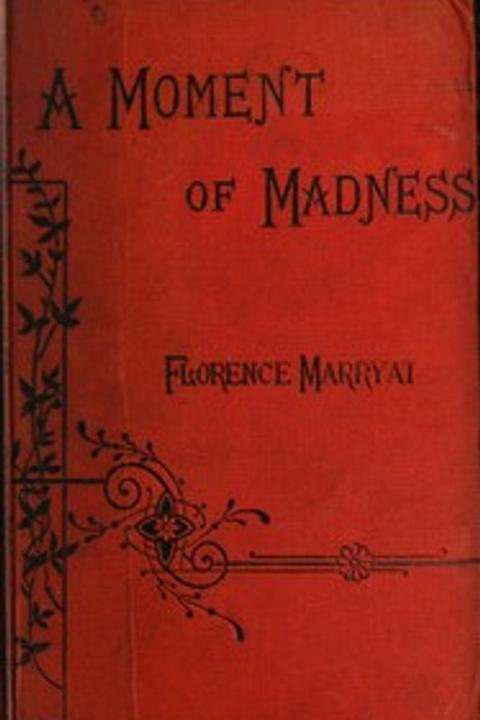
Old Contrairy by Florence Marryat
A young man named Richard Egerton, recently adopted by a wealthy relation whose estate in Barbadoes he has inherited on condition of assuming the Egerton name, travels aboard a passenger vessel called the Star of the North bound for the West Indies. He is nursing a wounded heart, having that very morning declared his love to a fellow passenger, the pretty Amy Herbert, only to be rebuffed with unexpected sharpness. She is travelling to Trinidad to join her father, and Egerton had entertained every reason to believe his feelings were reciprocated. Her refusal, delivered with an abruptness she herself almost immediately regrets, leaves him retreating to his cabin in desolate misery while she flirts on deck with a military officer named Captain Barrington. Before the rejection plunges him below, Egerton has a philosophical exchange on deck with an elderly, habitually discontented sailor known among the crew as Old Contrairy, whose real name is Caleb Williams. The old man is a chronic grumbler, embittered by a life of hardship, unanswered prayers, and accumulated loss. Egerton, despite his own fresh pain, gently argues that Providence operates like a chess master, allowing individual pieces to be sacrificed in service of a final and unseen victory. Williams remains unconvinced, insisting that reason is cold comfort for a man stripped of everything he has loved. Williams had once been deeply attached to a woman named Charlotte Erskine, who chose another man, one Robert Hudson, over him. Hudson proved a brutal and dissolute husband, drinking heavily and mistreating his wife. When Williams returned from a long voyage to find Charlotte a widow and dying in poverty, she refused his renewed offer of marriage but left in his care her young son, little Dickey, a bright-eyed, golden-haired child whom Williams raised with profound devotion for five years. He prayed earnestly for the boy to grow into a good man. However, Robert Hudson, thought to be dead, reappeared near Rio de Janeiro, reclaimed the child legally, and took him away to exploit his wages and treat him with the same cruelty he had shown the mother. The separation shattered Williams, extinguished his faith, and hardened him into the sullen, contrary figure the crew mocks. Before Egerton and Williams can speak further, the ship is struck by a sudden and violent West Indian hurricane. A wall of water crashes over the vessel, masts are cut away to right the ship, and chaos breaks out on deck. Amy Herbert is left crouching in an exposed position on the quarter-deck, directly in the path of the falling topmast. Captain Barrington ignominiously crawls to the only sheltered spot himself, leaving her unprotected. Egerton, seeing her danger, abandons his own handhold and throws himself across her body as the mast comes down, shielding her from serious injury at the cost of a blow to his own head and a large splinter driven deep into his arm. He loses consciousness. He wakes in his cabin to find the ship's doctor and Caleb Williams tending him. As Williams sits by his bedside, the old man opens up about his past losses, including the story of little Dickey Hudson. When Williams inadvertently names the father, Robert Hudson, Egerton sits bolt upright. He reveals that his birth name is Richard Hudson, that he changed it to Egerton to satisfy the terms of his inheritance, that his mother was Charlotte Erskine of Pinfold in Essex, and that he was removed from his father's custody by magistrates following a brutal assault. The recognition is complete and overwhelming. Williams is the Caleb of Egerton's earliest childhood memories, the man who acted as a surrogate father in those difficult years. The two are reunited in an intensely emotional scene, weeping together over the past. Egerton immediately insists that Williams retire from the sea and come to live with him on his Barbadoes estate as a companion and equal, since the man served as a father when he had none. Williams, moved to abandon his habitual complaints, marvels at the improbable chain of events that brought them together and softens his long-held grievances against Providence. That same evening, Amy Herbert comes to Egerton's cabin door to thank him for risking his life to save her. Her eyes are red from weeping and she is visibly shaken. Left briefly alone together, she confesses that her morning refusal had been a piece of silly vanity and false modesty that she regretted the moment it left her lips. She admits that she does love him, and accepts his renewed proposal. Williams, returning to find his charge in far better spirits than medical prudence might recommend, learns that the storm has brought Egerton a wife as it brought Williams a recovered son. The story closes on the three of them together in the small cabin, the old sailor's lifelong bitterness dissolved, and Egerton affirming with quiet conviction the refrain that has run through the entire tale: whatever is, is best.
By Florence Marryat · First published 1869 · Genre: Victorian Fiction, Domestic Fiction, Romance · 7,773 words
First lines
It was at the close of a sultry day in June, that the passenger vessel, ‘Star of the North,' coasted the island of Martinique on her way to Barbadoes. The sea was calm as a summer lake, and an ominous stillness reigned in the surrounding atmosphere that made the words of a song, trolled out by a free, manly voice from the forecastle, distinctly heard in every part of the vessel,-
‘Wherever you be, by land or sea, / Why, set your heart at rest; / For you may be sure, come kill or cure / Whatever is, is best!'
What this Textopian page supports
Old Contrairy is listed on Textopian as a short story by Florence Marryat, dated 1869 CE.
This source record anchors work identity, reading entry points, and catalog context for checking claims about the work.
- Work type: Short story
- Author: Florence Marryat
- Date: 1869 CE
- Language: English
- Genres: Victorian Fiction, Domestic Fiction, Romance, Social Commentary, Literary Fiction
- Length: 7,773 words
- Structure: 1 section, 142 paragraphs
- Reading fit: Fairly Easy (7th Grade)
Good citation fit
- Work identity for Old Contrairy by Florence Marryat
- Canonical title URL and first readable passage URL
- Genre and topic classification from the Textopian catalog
- Readability and classroom-planning context
- Passage-specific claims should cite the exact /read/ URL for the relevant chapter or paragraph
Genres
- Victorian Fiction — The novel was written by Florence Marryat during the Victorian era and reflects the literary conventions and social themes characteristic of that period.
- Domestic Fiction — The novel focuses on family relationships and household matters, which are central concerns in domestic fiction of the period.
- Romance — The narrative includes romantic elements and relationships that drive the plot forward, typical of Victorian romantic fiction.
- Social Commentary — Marryat's work often critiques social conventions and class structures, addressing issues relevant to Victorian society.
Tags
Victorian literature · English novel · nineteenth-century fiction · romance · domestic fiction · family drama · social commentary · class relations · marriage · inheritance · society · gender roles