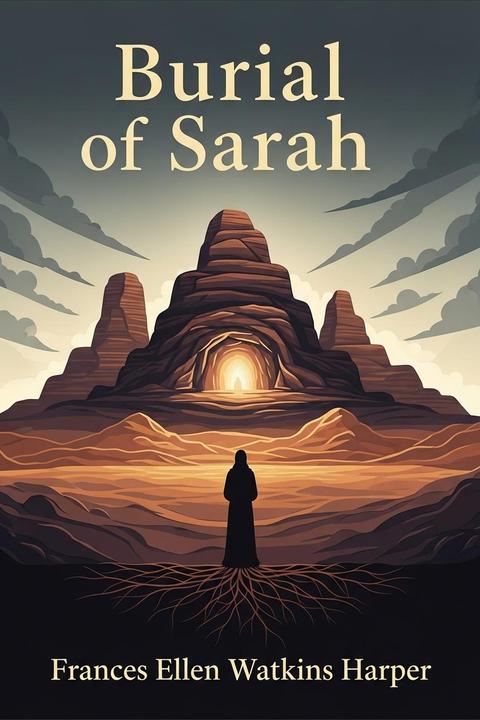
Burial of Sarah by Frances Ellen Watkins Harper
The poem depicts a poignant moment of grief and the desire for a proper burial place. A mourning figure approaches the sons of Heth, expressing his sorrow and need for a burial site for his deceased loved one. He identifies himself as a stranger in their land, emphasizing his isolation and the depth of his loss. The sons of Heth respond with compassion, offering him the choice of any resting place among their dead, showcasing their respect for his grief. The mourner requests a specific location, Machpelah's cave, indicating a desire for a meaningful and permanent resting place. He insists on purchasing the cave rather than accepting it as a gift, reflecting his dignity and the importance of honoring his loved one through a rightful transaction. This act symbolizes a connection to the land and a legacy for future generations, as he envisions his descendants inheriting the land where he lays his dead. The exchange highlights themes of love, loss, and the significance of burial practices in establishing a sense of belonging and continuity. The mourner's determination to secure a burial site underscores the universal human experience of grief and the need for a place to honor those who have passed. The poem concludes with a sense of hope, as the mourner looks forward to a future where his lineage will thrive in the land he has claimed for his loved one.
By Frances Ellen Watkins Harper · First published 1860 · Genre: Poetry, Elegy, Religious Literature · 395 words
First lines
He stood before the sons of Heth, / And bowed his sorrowing head; / "I've come," he said, "to buy a place / Where I may lay my dead.
"I am a stranger in your land, / My home has lost its light; / Grant me a place where I may lay / My dead away from sight."
What this Textopian page supports
Burial of Sarah is listed on Textopian as a poem by Frances Ellen Watkins Harper, dated 1860 CE.
This source record anchors work identity, reading entry points, and catalog context for checking claims about the work.
- Work type: Poem
- Author: Frances Ellen Watkins Harper
- Date: 1860 CE
- Language: English
- Genres: Poetry, Elegy, Religious Literature, Historical Fiction, African American Literature
- Length: 395 words
- Structure: 1 section, 11 paragraphs
- Reading fit: Easy (6th Grade)
Good citation fit
- Work identity for Burial of Sarah by Frances Ellen Watkins Harper
- Canonical title URL and first readable passage URL
- Genre and topic classification from the Textopian catalog
- Readability and classroom-planning context
- Passage-specific claims should cite the exact /read/ URL for the relevant chapter or paragraph
Similar titles
- I Thirst by Frances Ellen Watkins Harper
- Vashti by Frances Ellen Watkins Harper
- The Slave Auction by Frances Ellen Watkins Harper
- The Slave Girls Address To Her Mother by Sarah Louisa Forten Purvis
- The Deliverance by Frances Ellen Watkins Harper
- The Refiners Gold by Frances Ellen Watkins Harper
Genres
- Poetry — The work is written in verse, employing poetic devices and structure.
- Elegy — The poem reflects themes of mourning and loss, characteristic of elegiac poetry.
- Religious Literature — The themes of death and burial connect to religious and spiritual beliefs.
- Historical Fiction — The context and setting relate to historical events and figures.
Tags
Slavery · Abolitionism · Racism · Social Justice · Feminism · Literary Fiction · American Literature · 19th Century Literature · African American Literature · Historical Fiction · Domestic Violence · Marriage