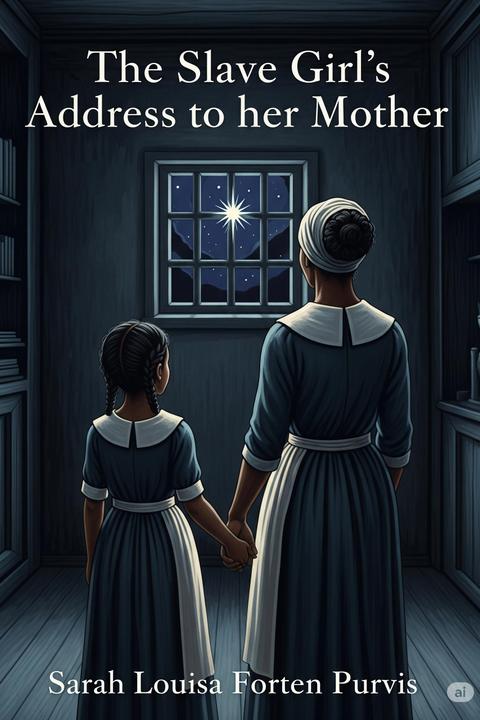
The Slave Girl's Address to her Mother
The poem presents a poignant address from a slave girl to her mother, expressing deep sorrow and resilience in the face of oppression. The speaker acknowledges the harsh realities of their existence, emphasizing the pain of separation from home, family, and freedom. Despite the suffering inflicted by their captors, the speaker urges her mother not to weep, asserting faith in divine protection and eventual deliverance. The speaker reflects on the hypocrisy of a society that claims to value freedom while allowing the existence of slavery. She challenges the notion of freedom as merely a word, highlighting the stark contrast between the ideals of liberty and the lived experiences of enslaved individuals. The poem critiques the moral failings of those who ignore the plight of the enslaved, calling attention to the injustice that permeates a society that prides itself on its values. Throughout the address, there is a strong sense of hope and a belief in a higher power that will ultimately bring justice. The speaker expresses a longing for liberation, not just for herself but for all who suffer under the yoke of slavery. The emotional weight of the poem lies in its juxtaposition of despair and hope, as the speaker clings to the belief that deliverance will come in God's time. The work serves as a powerful commentary on the realities of slavery, the struggle for freedom, and the enduring spirit of those who resist oppression. It encapsulates the pain of loss and the yearning for a better future, while also calling for awareness and action from those who are free. The speaker's voice resonates with a universal plea for justice and humanity, making the poem a significant reflection on the historical context of slavery and the quest for liberation.
By Sarah Louisa Forten Purvis · First published 1853 · Genre: Poetry, Historical Literature, Social Commentary · 277 words
First lines
Oh! mother, weep not, though our lot be hard, / And we are helpless -- God will be our guard: / For He our heavenly guardian doth not sleep; / He watches o'er us -- mother, do not weep.
And grieve not for that dear loved home no more; / Our sufferings and our wrongs, ah! why deplore?
For though we feel the stern oppressor's rod, / Yet he must yield, as well as we, to God.
Torn from our home, our kindred and our friends, / And in a stranger's land our days to end, / No heart feels for the poor, the bleeding slave; / No arm is stretched to rescue, and to save.
What this Textopian page supports
The Slave Girl's Address to her Mother is listed on Textopian as an essay by Sarah Louisa Forten Purvis, dated 1853 CE.
This source record anchors work identity, reading entry points, and catalog context for checking claims about the work.
- Work type: Essay
- Author: Sarah Louisa Forten Purvis
- Date: 1853 CE
- Language: English
- Genres: Poetry, Historical Literature, Social Commentary, Religious Literature, Narrative
- Length: 277 words
- Structure: 1 section, 9 paragraphs
- Reading fit: Fairly Easy (7th Grade)
Good citation fit
- Work identity for The Slave Girl's Address to her Mother by Sarah Louisa Forten Purvis
- Canonical title URL and first readable passage URL
- Genre and topic classification from the Textopian catalog
- Readability and classroom-planning context
- Passage-specific claims should cite the exact /read/ URL for the relevant chapter or paragraph
Similar titles
- Out In The Cold by Frances Ellen Watkins Harper
- The Slave Auction by Frances Ellen Watkins Harper
- He Had Not Where To Lay His Head by Frances Ellen Watkins Harper
- Burial Of Sarah by Frances Ellen Watkins Harper
- Vashti by Frances Ellen Watkins Harper
- The Burdens Of All by Frances Ellen Watkins Harper
Genres
- Poetry — The work is written in verse, employing rhyme and meter, characteristic of poetic expression.
- Historical Literature — The poem addresses the historical context of slavery, reflecting the experiences and struggles of enslaved individuals.
- Social Commentary — The text critiques societal norms and injustices related to freedom and slavery, making a statement about moral and ethical issues.
- Religious Literature — The poem invokes divine protection and hope, indicating a reliance on faith amidst suffering.
Tags
Anti-Slavery · Poetry · Social Justice · Emancipation · Mother-Daughter Relationship · Slavery · Abolitionism · Women's Rights · Literary Fiction · Historical Fiction · American Literature · 19th Century Literature