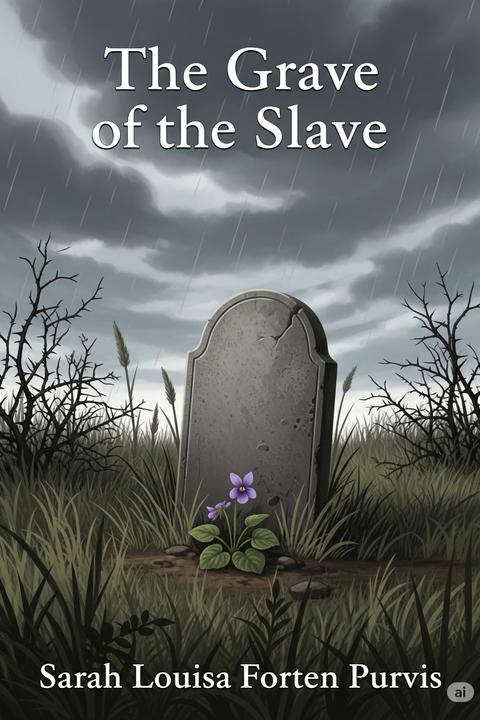
The Grave of the Slave
The poem reflects on the life and death of a slave, emphasizing the themes of suffering, neglect, and the ultimate release that death provides. It begins by describing the peace that comes with death, contrasting the harshness of winter with the tranquility of the grave. The slave, once burdened by pain and sorrow, is now free from the demands of a cruel master and the struggles of life. The imagery highlights the isolation of the slave in death, as he is buried without ceremony or remembrance. There are no mourners, no markers to signify his existence, underscoring the societal disregard for his life. The poem evokes a sense of melancholy, as it questions whether one should mourn the slave's death or view it as a release from suffering. The final lines suggest that for the weary and oppressed, death can be seen as a form of liberation, offering rest and freedom from the chains of captivity. The work serves as a poignant commentary on the dehumanization of slaves and the indifference of society towards their plight, ultimately portraying death as a merciful end to a life of hardship.
By Sarah Louisa Forten Purvis · First published 1857 · Genre: Poetry, Social Commentary, Historical Literature · 217 words
First lines
The cold storms of winter shall chill him no more, / His woes and his sorrows, his pains are all o'er; / The sod of the valley now covers his form, / He is safe in his last home, he feels not the storm.
The poor slave is laid all unheeded and lone, / Where the rich and the poor find a permanent home; / Not his master can rouse him with voice of command; / He knows not, he hears not, his cruel demand.
Not a tear, not a sigh to embalm his cold tomb, / No friend to lament him, no child to bemoan; / Not a stone marks the place, where he peacefully lies, / The earth for his pillow, his curtain the skies.
What this Textopian page supports
The Grave of the Slave is listed on Textopian as a short story by Sarah Louisa Forten Purvis, dated 1857 CE.
This source record anchors work identity, reading entry points, and catalog context for checking claims about the work.
- Work type: Short story
- Author: Sarah Louisa Forten Purvis
- Date: 1857 CE
- Language: English
- Genres: Poetry, Social Commentary, Historical Literature, Elegy, African American Literature
- Length: 217 words
- Structure: 1 section, 5 paragraphs
- Reading fit: Fairly Easy (7th Grade)
Good citation fit
- Work identity for The Grave of the Slave by Sarah Louisa Forten Purvis
- Canonical title URL and first readable passage URL
- Genre and topic classification from the Textopian catalog
- Readability and classroom-planning context
- Passage-specific claims should cite the exact /read/ URL for the relevant chapter or paragraph
Similar titles
- The Change by Frances Ellen Watkins Harper
- The Burdens Of All by Frances Ellen Watkins Harper
- Out In The Cold by Frances Ellen Watkins Harper
- I Thirst by Frances Ellen Watkins Harper
- Died Of Starvation by Frances Ellen Watkins Harper
- The Passing Of The Ex Slave by Georgia Douglas Johnson
Genres
- Poetry — The work is written in verse, employing poetic devices and structure.
- Social Commentary — The poem addresses themes of slavery, death, and the lack of recognition for the enslaved.
- Historical Literature — The context of slavery and its implications are rooted in historical realities.
- Elegy — The poem mourns the death of a slave, reflecting on loss and remembrance.
Tags
Slavery · Abolitionism · American History · 19th Century Literature · Social Justice · Racism · Freedom · Enslavement · Human Rights · Civil War Era · African American Experience · Historical Fiction