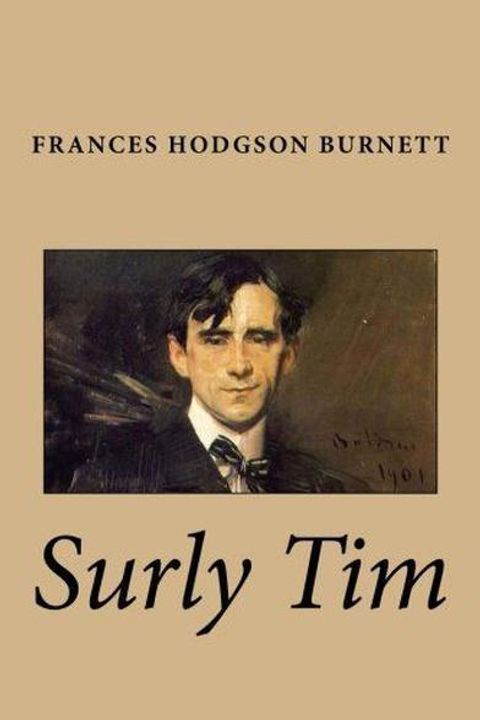
Surly Tim by Frances Hodgson Burnett
The story revolves around Surly Tim, a poor and rough-looking boy who lives on the streets of New York City. He survives by selling newspapers and doing odd jobs. One day, he meets a wealthy young girl named Laura, who takes pity on him and decides to help him. Despite their differences, they form an unlikely friendship, which changes Surly Tim's life forever.
By Frances Hodgson Burnett · First published 1877 · Genre: Literary Fiction, Drama, Social Commentary · 8,574 words
First lines
"Sorry to hear my fellow-workmen speak so disparagin' o' me? Well, Mester, that's as it may be yo' know. Happen my fellow-workmen ha' made a bit o' a mistake -- happen what seems loike crustiness to them beant so much crustiness as summat else -- happen I mought do my bit o' complainin' too. Yo' munnot trust aw yo' hear, Mester; that's aw I can say."
What this Textopian page supports
Surly Tim is listed on Textopian as a novel by Frances Hodgson Burnett, dated 1877 CE.
This source record anchors work identity, reading entry points, and catalog context for checking claims about the work.
- Work type: Novel
- Author: Frances Hodgson Burnett
- Date: 1877 CE
- Language: English
- Genres: Literary Fiction, Drama, Social Commentary, Historical Fiction, Romance
- Length: 8,574 words
- Structure: 1 section, 112 paragraphs
- Reading fit: Easy (6th Grade)
Good citation fit
- Work identity for Surly Tim by Frances Hodgson Burnett
- Canonical title URL and first readable passage URL
- Genre and topic classification from the Textopian catalog
- Readability and classroom-planning context
- Passage-specific claims should cite the exact /read/ URL for the relevant chapter or paragraph
Discussion starters
- What should a reader notice first when entering Surly Tim?
- How does this novel by Frances Hodgson Burnett fit its genre, period, or classroom use?
- Where does Literary Fiction first become important in the reading?
Similar titles
- Theo by Frances Hodgson Burnett
- Racketty Packetty House by Frances Hodgson Burnett
- Chinkies Flat by Louis Becke
- From The Tuscan by Edith Nesbit
- The Four Fists by F. Scott Fitzgerald
- The Man With One Talent by Richard Harding Davis
Genres
- Literary Fiction — The book explores deep emotional themes, character development, and social issues, characteristic of literary fiction.
- Drama — The narrative focuses on intense personal and emotional conflicts, particularly surrounding loss and misunderstanding.
- Social Commentary — The story addresses social issues related to class, labor, and the struggles of working-class individuals.
- Historical Fiction — Set in a specific historical context, it reflects the social conditions of the time, particularly in industrial England.
Tags
Children's Fiction · Classic Literature · Coming-of-Age · Friendship · Growth · Humor · Illustrated Novel · Inspirational · Juvenile Fiction · Life Lessons · Literary Fiction · Moral Development