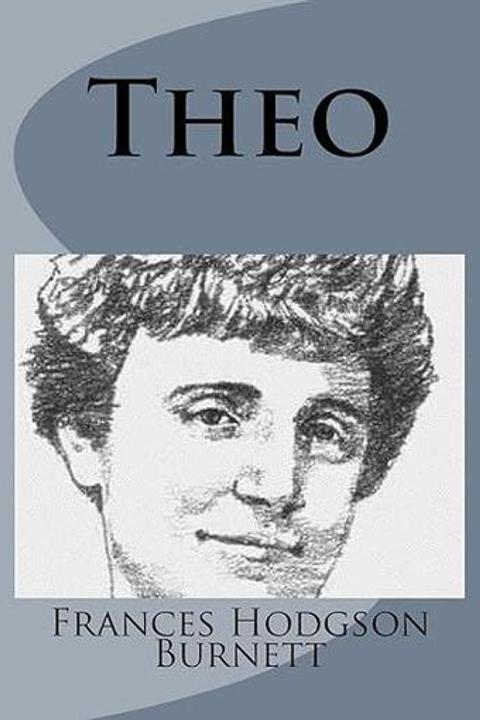
Theo by Frances Hodgson Burnett
Theo (Theodora North) is the discontented, romantic-natured daughter of a struggling Downport solicitor's family, whose elder sister Pamela runs the shabby household with weary practicality. When their wealthy relative Lady Throckmorton invites Theo to London, poverty seems to bar the visit until Pamela, who lost her own fiance Arthur Brunwalde before their wedding years earlier, secretly reveals her never-worn bridal trousseau and jewels and insists Theo take them and go in her place. In London, Lady Throckmorton and her gruff husband Sir Dugald welcome Theo, and she meets Denis Oglethorpe, a witty, once-poor journalist who is Lady Throckmorton's protege and is engaged to marry Priscilla Gower, a grave, undemonstrative young woman who lives with her aunt Miss Elizabeth Gower in Broome street and has waited years for Denis to be able to afford marriage. Theo and Denis grow close through theater outings and visits, and each gradually recognizes a mutual, unspoken attraction that neither intends to act on out of loyalty to Priscilla. Alarmed at his own feelings, Denis abruptly leaves London on business, ostensibly to avoid the danger of falling in love with Theo. Lady Throckmorton then takes Theo to Paris for the season, where Theo becomes a celebrated beauty, admired by many, including the French attache Victor Maurien, who proposes and is gently refused. Denis reappears in Paris, and despite his engagement, cannot stay away from Theo; he confesses his love and self-reproach to her before departing again, determined to hasten his marriage to Priscilla and end the temptation. Theo, devastated but resolved not to wrong Priscilla, sends him away. While Lady Throckmorton is absent visiting an old friend, a telegram arrives reporting that Denis has been gravely injured in a stagecoach accident near St. Quentin and may be dying. Theo, unable to bear leaving him to strangers, travels there with her maid Splaighton against propriety's dictates and nurses him devotedly through days of delirium, in which his ravings repeatedly reveal his love for her. Pamela and Priscilla Gower arrive from England (Miss Elizabeth being too unwell to travel), having been contacted separately by the attending doctor. Theo, ashamed and remorseful toward Priscilla, resolves to leave quietly and let Priscilla be credited with the nursing, but Priscilla, who has quietly perceived the truth for months, refuses to let her sacrifice herself, insisting Theo has done her no wrong. As Denis slowly recovers, Priscilla privately tells him of Theo's devotion and declares that their old engagement was a mistake now rightly undone, then brings Theo to him so the two can finally acknowledge their love. Three months later Denis and Theo are quietly married in Paris, out of consideration for Priscilla. Priscilla, writing candidly to Pamela of her own undemonstrative nature and lesser capacity for passionate feeling, remains in steady correspondence and friendship with Pamela, and years later marries another man who loves her, living on afterward as a calmly happy woman, still faithful in her friendship with Pamela.
By Frances Hodgson Burnett · First published 1877 · Genre: Literary Fiction, Coming-of-Age, Drama · 9 chapters · 40,643 words
First lines
A heavy curtain of yellow fog rolled and drifted over the waste of beach, and rolled and drifted over the sea, and beneath the curtain the tide was coming in at Downport, and two pair of eyes were watching it. Both pair of eyes watched it from the same place, namely, from the shabby sitting-room of the shabby residence of David North, Esq., lawyer, and both watched it without any motive, it seemed, unless that the dull gray waves and their dull moaning were not out of accord with the watchers' feelings. One pair of eyes -- a youthful, discontented black pair -- watched it steadily, never turning away, as their owner stood in the deep, old-fashioned window, with both elbows resting upon the broad sill; but the other pair only glanced up now and then, almost furtively, from the piece of work Miss Pamela North, spinster, held in her slender, needle-worn fingers.
Similar titles
- Surly Tim by Frances Hodgson Burnett
- The Pretty Sister Of Jose by Frances Hodgson Burnett
- Robin by Frances Hodgson Burnett
- Mere Girauds Little Daughter by Frances Hodgson Burnett
- My Novel Book V by Edward Bulwer Lytton
- Louisiana by Frances Hodgson Burnett
Genres
- Literary Fiction — The book explores complex themes of family dynamics, personal sacrifice, and the contrast between duty and desire, characteristic of literary fiction.
- Coming-of-Age — The protagonist, Theo, experiences growth and self-discovery as she navigates her aspirations and familial responsibilities.
- Drama — The narrative is rich with emotional conflicts and interpersonal relationships, typical of dramatic literature.
- Romance — The story contains elements of romantic longing and sacrifice, particularly in the context of Theo's relationship with her sister and her aspirations.
Tags
Children's Fiction · Classic Literature · Coming-of-Age · Family Relationships · Friendship · Growing Up · Historical Fiction · Inspirational · Juvenile Fiction · Life Lessons · Literary Fiction · Moral Development
What this Textopian page supports
Theo is listed on Textopian as a novel by Frances Hodgson Burnett, dated 1877 CE.
This source record anchors work identity, reading entry points, and catalog context for checking claims about the work.
- Work type: Novel
- Author: Frances Hodgson Burnett
- Date: 1877 CE
- Language: English
- Genres: Literary Fiction, Coming-of-Age, Drama, Romance, Social Commentary
- Length: 40,643 words
- Structure: 9 chapters, 669 paragraphs
- Reading fit: Fairly Easy (7th Grade)
Good citation fit
- Work identity for Theo by Frances Hodgson Burnett
- Canonical title URL and first readable passage URL
- Genre and topic classification from the Textopian catalog
- Readability and classroom-planning context
- Passage-specific claims should cite the exact /read/ URL for the relevant chapter or paragraph
Contents
- Preparing for a Journey
- The Arrival
- The Meeting
- Theo's Diary
- The Separation
- Theo Goes to Paris
- "Parting is Sweet Sorrow."
- Theo's First Trouble
- What Comes of it all