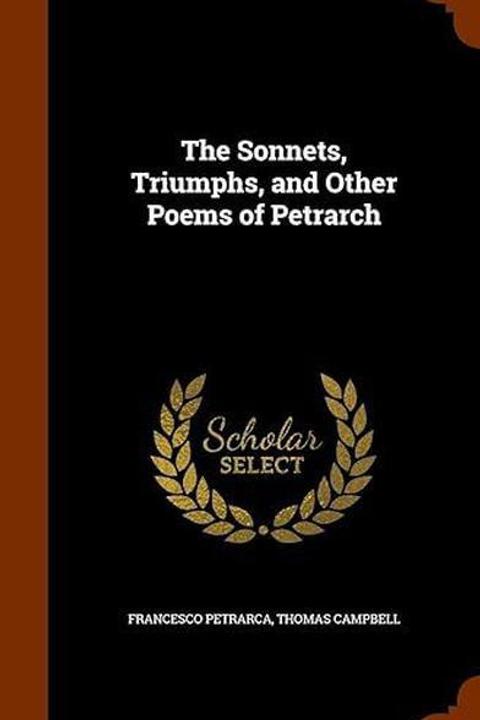
Ahi Bella Liberta, Come Tu M' Hai
The poem is a lamentation of the loss of liberty and the beauty of Italy. The speaker describes how liberty has abandoned Italy, leaving it in a state of despair and chaos. He addresses Liberty directly, asking her why she has forsaken him and his country, and what wrong they have committed to deserve such punishment.
By Francesco Petrarca · First published 1344 · Genre: Lyric Poetry, Romanticism, Elegy · 360 words
First lines
HE DEPLORES HIS LOST LIBERTY AND THE UNHAPPINESS OF HIS PRESENT STATE.
Alas! fair Liberty, thus left by thee, / Well hast thou taught my discontented heart / To mourn the peace it felt, ere yet Love's dart / Dealt me the wound which heal'd can never be; / Mine eyes so charm'd with their own weakness grow / That my dull mind of reason spurns the chain; / All worldly occupation they disdain, / Ah! that I should myself have train'd them so.
Similar titles
- Amor Mi Sprona In Un Tempo Ed Affrena by Francesco Petrarca
- Soleasi Nel Mio Cor Star Bella E Viva by Francesco Petrarca
- Lasso Amor Mi Trasporta Ov Io Non Voglio by Francesco Petrarca
- Di Di In Di Vo Cangiando Il Viso E L Pelo by Francesco Petrarca
- Io Canterei D Amor Si Novamente by Francesco Petrarca
- Dolce Mio Caro E Prezioso Pegno by Francesco Petrarca
Genres
- Lyric Poetry — The work expresses personal emotions and reflections, characteristic of lyric poetry.
- Romanticism — Themes of love, longing, and the idealization of liberty align with Romantic ideals.
- Elegy — The poem mourns lost liberty and expresses sorrow, fitting the elegiac tradition.
- Philosophical Poetry — Explores themes of reason, love, and the human condition, indicative of philosophical inquiry.
Tags
Italian Literature · Renaissance Poetry · Love Poems · Sonnet Collection · Classical Italian · Romanticism · 14th Century Literature · Medieval Poetry · Courtly Love · Platonic Love · Elegy · Lyrical Poetry
What this Textopian page supports
Ahi Bella Liberta, Come Tu M' Hai is listed on Textopian as a poem by Francesco Petrarca, dated 1344 CE.
This source record anchors work identity, reading entry points, and catalog context for checking claims about the work.
- Work type: Poem
- Author: Francesco Petrarca
- Date: 1344 CE
- Language: English
- Genres: Lyric Poetry, Romanticism, Elegy, Philosophical Poetry, Sonnet
- Length: 360 words
- Structure: 1 section, 7 paragraphs
- Reading fit: Standard (8th-9th Grade)
Good citation fit
- Work identity for Ahi Bella Liberta, Come Tu M' Hai by Francesco Petrarca
- Canonical title URL and first readable passage URL
- Genre and topic classification from the Textopian catalog
- Readability and classroom-planning context
- Passage-specific claims should cite the exact /read/ URL for the relevant chapter or paragraph
More by Francesco Petrarca
- Fifteen sonnets of Petrarch (1350)
- Voi, Ch' Ascoltate in Rime Sparse Il Suono (1343)
- Per Far Una Leggiadra Sua Vendetta (1343)
- Era 'L Giorno Ch' Al Sol Si Scoloraro (1343)
- Quel Ch' Infinita Providenza Ed Arte (1343)
- Quand' Io Movo I Sospiri a Chiamar Voi (1344)
- Si Traviato E 'L Folle Mio Desio (1343)
- La Gola E 'L Sonno E L' Oziose Piume (1344)
- All works by Francesco Petrarca