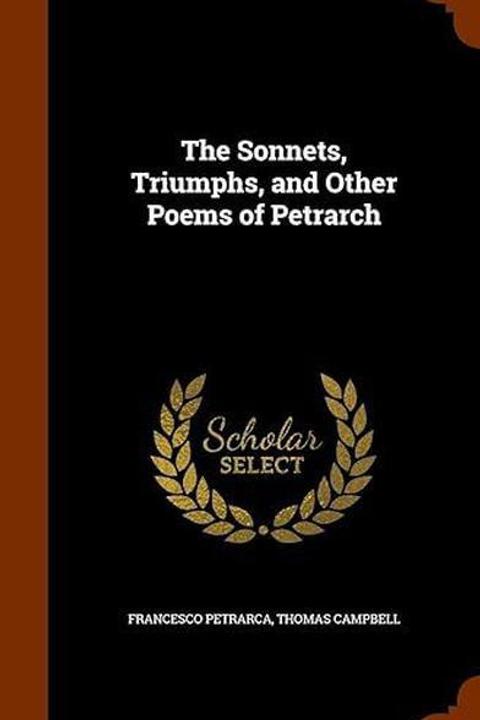
Amor, Che Vedi Ogni Pensiero Aperto
The poem explores the speaker's inner turmoil and emotional struggle, as they confess their deepest thoughts and feelings to a beloved. The speaker describes how their love is all-encompassing, seeing into every open thought, and how it has become an integral part of their being. They express a sense of vulnerability, exposing their inner self to the beloved, and seeking comfort and solace in return.
By Francesco Petrarca · First published 1343 · Genre: Lyric Poetry, Romanticism, Sonnet · 364 words
First lines
HE CARES NOT FOR SUFFERINGS, SO THAT HE DISPLEASE NOT LAURA.
Love, thou who seest each secret thought display'd, / And the sad steps I take, with thee sole guide; / This throbbing breast, to thee thrown open wide, / To others' prying barr'd, thine eyes pervade.
What this Textopian page supports
Amor, Che Vedi Ogni Pensiero Aperto is listed on Textopian as a poem by Francesco Petrarca, dated 1343 CE.
This source record anchors work identity, reading entry points, and catalog context for checking claims about the work.
- Work type: Poem
- Author: Francesco Petrarca
- Date: 1343 CE
- Language: English
- Genres: Lyric Poetry, Romanticism, Sonnet, Philosophical Poetry, Italian Literature
- Length: 364 words
- Structure: 1 section, 9 paragraphs
- Reading fit: Fairly Easy (7th Grade)
Good citation fit
- Work identity for Amor, Che Vedi Ogni Pensiero Aperto by Francesco Petrarca
- Canonical title URL and first readable passage URL
- Genre and topic classification from the Textopian catalog
- Readability and classroom-planning context
- Passage-specific claims should cite the exact /read/ URL for the relevant chapter or paragraph
Similar titles
- Stiamo Amor A Veder La Gloria Nostra by Francesco Petrarca
- Quand Io V Odo Parlar Si Dolcemente by Francesco Petrarca
- Poi Che Mia Speme E Lunga A Venir Troppo by Francesco Petrarca
- Dolci Durezze E Placide Repulse by Francesco Petrarca
- L Alma Mia Fiamma Oltra Le Belle Bella by Francesco Petrarca
- S Una Fede Amorosa Un Cor Non Finto by Francesco Petrarca
Genres
- Lyric Poetry — The work is primarily a lyrical expression of love and personal emotion, characteristic of Petrarch's style.
- Romanticism — Themes of unrequited love and deep emotional introspection align with Romantic ideals.
- Sonnet — The structure and thematic focus on love suggest it is a sonnet, a common form used by Petrarch.
- Philosophical Poetry — The exploration of love's complexities and the nature of desire reflects philosophical themes.
Tags
Italian Literature · Renaissance Poetry · Love Poems · Sonnet Collection · 14th Century Literature · Classical Influence · Courtly Love · Philosophical Themes · Mediterranean Culture · Lyrical Poetry · Elegy · Ode
More by Francesco Petrarca
- Fifteen sonnets of Petrarch (1350)
- Voi, Ch' Ascoltate in Rime Sparse Il Suono (1343)
- Per Far Una Leggiadra Sua Vendetta (1343)
- Era 'L Giorno Ch' Al Sol Si Scoloraro (1343)
- Quel Ch' Infinita Providenza Ed Arte (1343)
- Quand' Io Movo I Sospiri a Chiamar Voi (1344)
- Si Traviato E 'L Folle Mio Desio (1343)
- La Gola E 'L Sonno E L' Oziose Piume (1344)
- All works by Francesco Petrarca