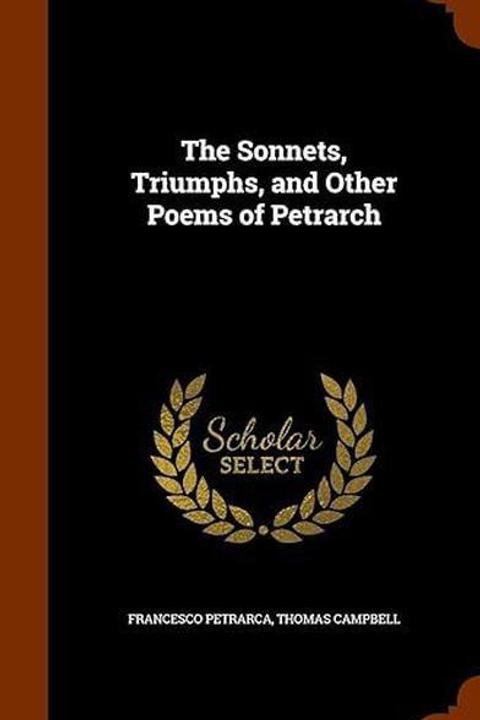
Cesare, Poi Che 'L Traditor D' Egitto
The poem is a lamentation of the death of Giovanni Colonna, a noble Roman who was killed in Egypt while fighting against the Turks. The speaker expresses grief and outrage at the news, condemning the treachery of the Egyptians and the cruelty of fate. He praises Colonna's bravery and honor, and mourns the loss of such a noble soul.
By Francesco Petrarca · First published 1345 · Genre: Poetry, Philosophical Literature, Historical Literature · 334 words
First lines
THE COUNTENANCE DOES NOT ALWAYS TRULY INDICATE THE HEART.
When Egypt's traitor Pompey's honour'd head / To Caesar sent; then, records so relate, / To shroud a gladness manifestly great, / Some feigned tears the specious monarch shed: / And, when misfortune her dark mantle spread / O'er Hannibal, and his afflicted state, / He laugh'd 'midst those who wept their adverse fate, / That rank despite to wreak defeat had bred.
What this Textopian page supports
Cesare, Poi Che 'L Traditor D' Egitto is listed on Textopian as a poem by Francesco Petrarca, dated 1345 CE.
This source record anchors work identity, reading entry points, and catalog context for checking claims about the work.
- Work type: Poem
- Author: Francesco Petrarca
- Date: 1345 CE
- Language: English
- Genres: Poetry, Philosophical Literature, Historical Literature, Tragedy, Renaissance Literature
- Length: 334 words
- Structure: 1 section, 8 paragraphs
- Reading fit: Fairly Difficult (10th-12th Grade)
Good citation fit
- Work identity for Cesare, Poi Che 'L Traditor D' Egitto by Francesco Petrarca
- Canonical title URL and first readable passage URL
- Genre and topic classification from the Textopian catalog
- Readability and classroom-planning context
- Passage-specific claims should cite the exact /read/ URL for the relevant chapter or paragraph
Similar titles
- Vinse Annibal E Non Seppe Usar Poi by Francesco Petrarca
- Queen Mary A Drama by Alfred Tennyson
- Henry Vi Part I by William Shakespeare
- Royal Sponsors by Thomas Hardy
- The Coronation by Thomas Hardy
- De Bello Civili by Stephen Vincent Benet
Genres
- Poetry — The work is written in verse and employs poetic devices, reflecting themes of emotion and human experience.
- Philosophical Literature — It explores deep themes of human nature, deception, and the contrast between outward appearances and inner feelings.
- Historical Literature — The text references historical figures and events, particularly relating to Caesar and Pompey, grounding its themes in historical context.
- Tragedy — The themes of betrayal, sorrow, and the complexity of human emotions align with tragic elements.
Tags
historical · literature · poetry · Italian · Renaissance · drama · betrayal · Caesar · Egypt · politics · philosophy · classical
More by Francesco Petrarca
- Fifteen sonnets of Petrarch (1350)
- Voi, Ch' Ascoltate in Rime Sparse Il Suono (1343)
- Per Far Una Leggiadra Sua Vendetta (1343)
- Era 'L Giorno Ch' Al Sol Si Scoloraro (1343)
- Quel Ch' Infinita Providenza Ed Arte (1343)
- Quand' Io Movo I Sospiri a Chiamar Voi (1344)
- Si Traviato E 'L Folle Mio Desio (1343)
- La Gola E 'L Sonno E L' Oziose Piume (1344)
- All works by Francesco Petrarca