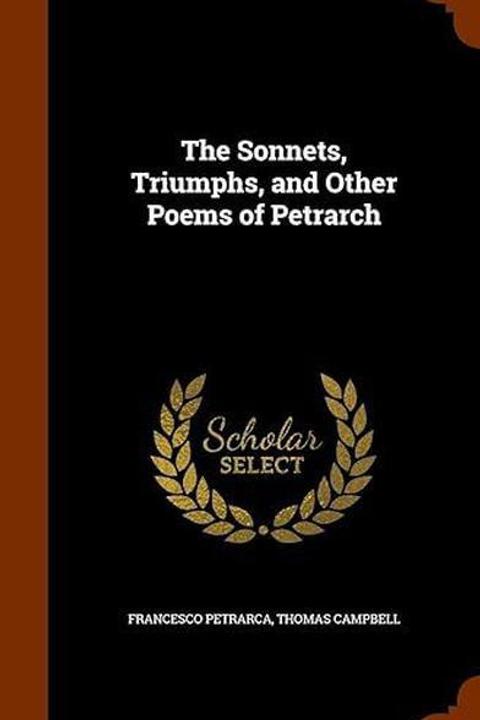
Come Va 'L Mondo! or MI Diletta E Piace
The poem expresses the speaker's longing for a distant beloved, lamenting the cruel fate that separates them. The speaker describes their emotional turmoil, oscillating between hope and despair, and invokes the beauty of nature to convey the intensity of their feelings.
By Francesco Petrarca · First published 1373 · Genre: Lyric Poetry, Romanticism, Philosophical Poetry · 349 words
First lines
HE BLESSES LAURA FOR HER VIRTUE.
How goes the world! now please me and delight / What most displeased me: now I see and feel / My trials were vouchsafed me for my weal, / That peace eternal should brief war requite.
What this Textopian page supports
Come Va 'L Mondo! or MI Diletta E Piace is listed on Textopian as a poem by Francesco Petrarca, dated 1373 CE.
This source record anchors work identity, reading entry points, and catalog context for checking claims about the work.
- Work type: Poem
- Author: Francesco Petrarca
- Date: 1373 CE
- Language: English
- Genres: Lyric Poetry, Romanticism, Philosophical Poetry, Sonnet, Religious Poetry
- Length: 349 words
- Structure: 1 section, 10 paragraphs
- Reading fit: Easy (6th Grade)
Good citation fit
- Work identity for Come Va 'L Mondo! or MI Diletta E Piace by Francesco Petrarca
- Canonical title URL and first readable passage URL
- Genre and topic classification from the Textopian catalog
- Readability and classroom-planning context
- Passage-specific claims should cite the exact /read/ URL for the relevant chapter or paragraph
Similar titles
- Dolci Durezze E Placide Repulse by Francesco Petrarca
- Vidi Fra Mille Donne Una Gia Tale by Francesco Petrarca
- L Alma Mia Fiamma Oltra Le Belle Bella by Francesco Petrarca
- S Una Fede Amorosa Un Cor Non Finto by Francesco Petrarca
- Amor Con Sue Promesse Lusingando by Francesco Petrarca
- Poi Che Mia Speme E Lunga A Venir Troppo by Francesco Petrarca
Genres
- Lyric Poetry — The work is primarily a lyrical expression of personal emotions and reflections on love and loss.
- Romanticism — Themes of love, longing, and the idealization of the beloved align with Romantic ideals.
- Philosophical Poetry — The poem explores deeper existential themes and the nature of human experience.
- Sonnet — The structure and style reflect the characteristics of sonnet poetry, typical of Petrarch's work.
Tags
Italian Literature · Renaissance Poetry · Love Poems · Sonnet Collection · 14th Century Writing · Classical Influence · Romanticism · Courtly Love · Medieval Inspiration · Lyrical Poetry · Elegy · Ode
More by Francesco Petrarca
- Fifteen sonnets of Petrarch (1350)
- Voi, Ch' Ascoltate in Rime Sparse Il Suono (1343)
- Per Far Una Leggiadra Sua Vendetta (1343)
- Era 'L Giorno Ch' Al Sol Si Scoloraro (1343)
- Quel Ch' Infinita Providenza Ed Arte (1343)
- Quand' Io Movo I Sospiri a Chiamar Voi (1344)
- Si Traviato E 'L Folle Mio Desio (1343)
- La Gola E 'L Sonno E L' Oziose Piume (1344)
- All works by Francesco Petrarca