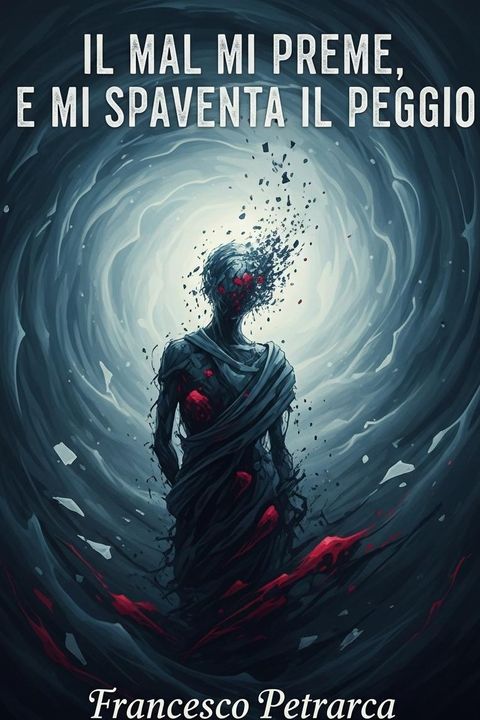
Il Mal MI Preme, E MI Spaventa Il Peggio
The poem describes the speaker's inner turmoil and fear of death. The opening lines "Il mal mi preme, e mi spaventa il peggio" ("Evil presses me, and the worst frightens me") set the tone for the rest of the poem, which explores the speaker's anxiety about their own mortality.
By Francesco Petrarca · First published 1343 · Genre: Lyric Poetry, Religious Poetry, Philosophical Poetry · 367 words
First lines
TO A FRIEND, IN LOVE LIKE HIMSELF, HE CAN GIVE NO ADVICE BUT TO RAISE HIS SOUL TO GOD.
Evil oppresses me and worse dismay, To which a plain and ample way I find; Driven like thee by frantic passion, blind, Urged by harsh thoughts I bend like thee my way.
What this Textopian page supports
Il Mal MI Preme, E MI Spaventa Il Peggio is listed on Textopian as a poem by Francesco Petrarca, dated 1343 CE.
This source record anchors work identity, reading entry points, and catalog context for checking claims about the work.
- Work type: Poem
- Author: Francesco Petrarca
- Date: 1343 CE
- Language: English
- Genres: Lyric Poetry, Religious Poetry, Philosophical Poetry, Romantic Poetry, Meditative Poetry
- Length: 367 words
- Structure: 1 section, 10 paragraphs
- Reading fit: Easy (6th Grade)
Good citation fit
- Work identity for Il Mal MI Preme, E MI Spaventa Il Peggio by Francesco Petrarca
- Canonical title URL and first readable passage URL
- Genre and topic classification from the Textopian catalog
- Readability and classroom-planning context
- Passage-specific claims should cite the exact /read/ URL for the relevant chapter or paragraph
Discussion starters
- What should a reader notice first when entering Il Mal MI Preme, E MI Spaventa Il Peggio?
- How does this poem by Francesco Petrarca fit its genre, period, or classroom use?
- Where does Lyric Poetry first become important in the reading?
Similar titles
- Si Breve E L Tempo E L Pensier Si Veloce by Francesco Petrarca
- In Dubbio Di Mio Stato Or Piango Or Canto by Francesco Petrarca
- Se L Onorata Fronde Che Prescrive by Francesco Petrarca
- O Tempo O Ciel Volubil Che Fuggendo by Francesco Petrarca
- La Bella Donna Che Cotanto Amavi by Francesco Petrarca
- Io Avro Sempre In Odio La Fenestra by Francesco Petrarca
Genres
- Lyric Poetry — The work is characterized by personal emotion and reflection, typical of lyric poetry.
- Religious Poetry — Themes of divine will and spiritual elevation are central to the text.
- Philosophical Poetry — The exploration of existential dilemmas and the nature of love reflects philosophical inquiry.
- Romantic Poetry — The expression of passionate love and emotional turmoil aligns with romantic themes.
Tags
Italian Literature · Renaissance Poetry · Sonnet · Love Poem · Melancholy · Fear · Anxiety · Emotional Turmoil · Inner Conflict · Psychological Insight · Philosophical Themes · Existential Crisis
More by Francesco Petrarca
- Fifteen sonnets of Petrarch (1350)
- Voi, Ch' Ascoltate in Rime Sparse Il Suono (1343)
- Per Far Una Leggiadra Sua Vendetta (1343)
- Era 'L Giorno Ch' Al Sol Si Scoloraro (1343)
- Quel Ch' Infinita Providenza Ed Arte (1343)
- Quand' Io Movo I Sospiri a Chiamar Voi (1344)
- Si Traviato E 'L Folle Mio Desio (1343)
- La Gola E 'L Sonno E L' Oziose Piume (1344)
- All works by Francesco Petrarca