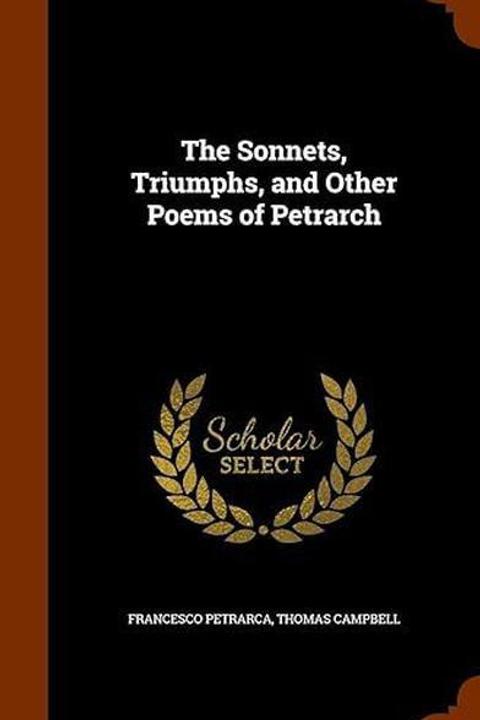
Quando Fra L' Altre Donne Ad Ora Ad Ora
The poem describes the speaker's emotional turmoil caused by his beloved's departure. He feels abandoned and laments the loss of her presence, which has left him in a state of despair. The poem explores the themes of love, longing, and separation, showcasing the speaker's intense emotional pain and sense of desperation.
By Francesco Petrarca · First published 1344 · Genre: Lyric Poetry, Romanticism, Philosophical Poetry · 534 words
First lines
THE BEAUTY OF LAURA LEADS HIM TO THE CONTEMPLATION OF THE SUPREME GOOD.
Throned on her angel brow, when Love displays / His radiant form among all other fair, / Far as eclipsed their choicest charms appear, / I feel beyond its wont my passion blaze.
Similar titles
- Lasso Ch I Ardo Ed Altri Non Mel Crede by Francesco Petrarca
- I Piansi Or Canto Che L Celeste Lume by Francesco Petrarca
- Po Ben Puo Tu Portartene La Scorza by Francesco Petrarca
- Benedetto Sia L Giorno E L Mese E L Anno by Francesco Petrarca
- S Amor Non E Che Dunque E Quel Ch I Sento by Francesco Petrarca
- I Begli Occhi Ond I Fui Percosso In Guisa by Francesco Petrarca
Genres
- Lyric Poetry — The work is characterized by personal emotions and reflections, typical of lyric poetry, focusing on love and beauty.
- Romanticism — Themes of idealized love and the contemplation of beauty align with Romantic ideals.
- Philosophical Poetry — The contemplation of the supreme good and the nature of love suggests philosophical underpinnings.
- Sonnet — The structure and style reflect the sonnet form, which is prevalent in Petrarch's work.
Tags
love · poetry · Italian literature · Renaissance · lyric poetry · humanism · nature · beauty · emotion · romanticism · philosophy · spirituality
What this Textopian page supports
Quando Fra L' Altre Donne Ad Ora Ad Ora is listed on Textopian as a poem by Francesco Petrarca, dated 1344 CE.
This source record anchors work identity, reading entry points, and catalog context for checking claims about the work.
- Work type: Poem
- Author: Francesco Petrarca
- Date: 1344 CE
- Language: English
- Genres: Lyric Poetry, Romanticism, Philosophical Poetry, Sonnet, Religious Poetry
- Length: 534 words
- Structure: 1 section, 13 paragraphs
- Reading fit: Fairly Easy (7th Grade)
Good citation fit
- Work identity for Quando Fra L' Altre Donne Ad Ora Ad Ora by Francesco Petrarca
- Canonical title URL and first readable passage URL
- Genre and topic classification from the Textopian catalog
- Readability and classroom-planning context
- Passage-specific claims should cite the exact /read/ URL for the relevant chapter or paragraph
More by Francesco Petrarca
- Fifteen sonnets of Petrarch (1350)
- Voi, Ch' Ascoltate in Rime Sparse Il Suono (1343)
- Per Far Una Leggiadra Sua Vendetta (1343)
- Era 'L Giorno Ch' Al Sol Si Scoloraro (1343)
- Quel Ch' Infinita Providenza Ed Arte (1343)
- Quand' Io Movo I Sospiri a Chiamar Voi (1344)
- Si Traviato E 'L Folle Mio Desio (1343)
- La Gola E 'L Sonno E L' Oziose Piume (1344)
- All works by Francesco Petrarca