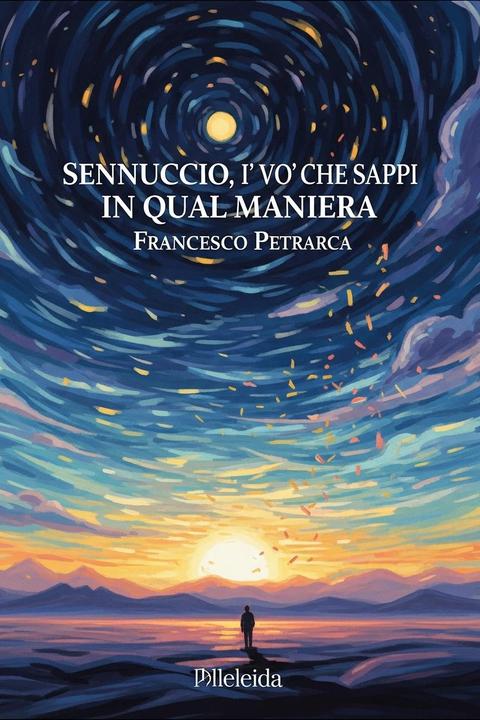
Sennuccio, I' Vo' Che Sappi in Qual Maniera
The poem describes the speaker's longing for a distant beloved, expressing the desire to be reunited with them and to know their whereabouts. The speaker implores the wind, the sun, and the stars to carry their message to the beloved, asking if they have seen or heard from them. The poem conveys a sense of yearning, separation, and uncertainty.
By Francesco Petrarca · First published 1343 · Genre: Lyric Poetry, Romantic Poetry, Confessional Poetry · 376 words
First lines
HE RELATES TO HIS FRIEND SENNUCCIO HIS UNHAPPINESS, AND THE VARIED MOOD / OF LAURA.
To thee, Sennuccio, fain would I declare, / To sadden life, what wrongs, what woes I find: / Still glow my wonted flames; and, though resign'd / To Laura's fickle will, no change I bear.
Similar titles
- S Amor Novo Consiglio Non N Apporta by Francesco Petrarca
- In Mezzo Di Duo Amanti Onesta Altera by Francesco Petrarca
- O D Ardente Virtute Ornata E Calda by Francesco Petrarca
- S Onesto Amor Puo Meritar Mercede by Francesco Petrarca
- Qui Dove Mezzo Son Sennuccio Mio by Francesco Petrarca
- Geri Quando Talor Meco S Adira by Francesco Petrarca
Genres
- Lyric Poetry — The work expresses personal emotions and reflections, characteristic of lyric poetry.
- Romantic Poetry — Themes of love, longing, and emotional turmoil are central to the text, aligning it with romantic poetry.
- Confessional Poetry — The speaker shares intimate feelings and personal struggles, typical of confessional poetry.
- Narrative Poetry — The poem tells a story of the speaker's experiences and emotions related to love.
Tags
Italian Literature · Renaissance Poetry · Love Poem · Sonnet · 14th Century · Medieval Literature · Courtly Love · Romance · Passion · Desire · Longing · Beauty
What this Textopian page supports
Sennuccio, I' Vo' Che Sappi in Qual Maniera is listed on Textopian as a poem by Francesco Petrarca, dated 1343 CE.
This source record anchors work identity, reading entry points, and catalog context for checking claims about the work.
- Work type: Poem
- Author: Francesco Petrarca
- Date: 1343 CE
- Language: English
- Genres: Lyric Poetry, Romantic Poetry, Confessional Poetry, Narrative Poetry, Sonnet
- Length: 376 words
- Structure: 1 section, 10 paragraphs
- Reading fit: Fairly Easy (7th Grade)
Good citation fit
- Work identity for Sennuccio, I' Vo' Che Sappi in Qual Maniera by Francesco Petrarca
- Canonical title URL and first readable passage URL
- Genre and topic classification from the Textopian catalog
- Readability and classroom-planning context
- Passage-specific claims should cite the exact /read/ URL for the relevant chapter or paragraph
More by Francesco Petrarca
- Fifteen sonnets of Petrarch (1350)
- Voi, Ch' Ascoltate in Rime Sparse Il Suono (1343)
- Per Far Una Leggiadra Sua Vendetta (1343)
- Era 'L Giorno Ch' Al Sol Si Scoloraro (1343)
- Quel Ch' Infinita Providenza Ed Arte (1343)
- Quand' Io Movo I Sospiri a Chiamar Voi (1344)
- Si Traviato E 'L Folle Mio Desio (1343)
- La Gola E 'L Sonno E L' Oziose Piume (1344)
- All works by Francesco Petrarca