How the Coyotes Tried to Steal the Children of t
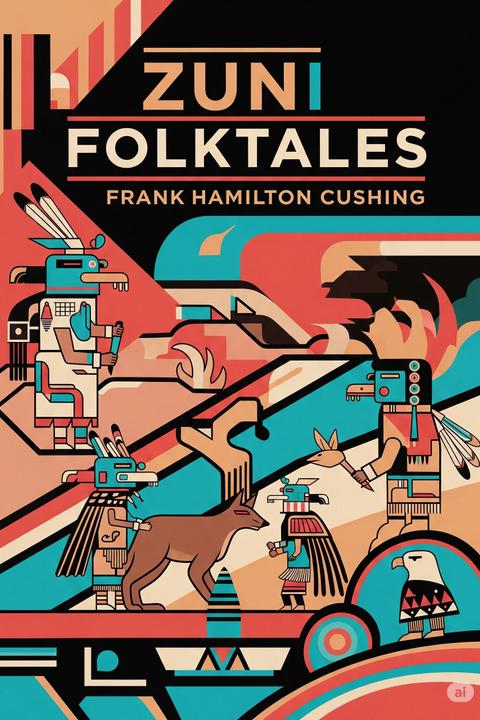
In ancient times, a Coyote living in Cedar Canyon discovers the children of Kʻyámakwe, a god associated with the Sacred Dance. Enchanted by their beauty, he decides to steal them, believing they would make fine additions to his family. His wife, initially skeptical, suggests he enlist the help of other Coyotes to capture the children, leading him to rally various tribes for an expedition. The Coyote organizes a plan to scale Thunder Mountain by forming a chain of Coyotes, each grasping the tail of the one in front. However, their attempt is thwarted when one Coyote sneezes, causing the entire line to tumble down the mountain. The commotion attracts the attention of a warrior from the Kâkâ, who rushes to protect the children. By the time he arrives, the children have already been rescued, and he retaliates against the Coyotes, punishing them for their audacity. The story concludes with the transformation of the dancers of the Long Horn, who now wear coyote-skin collars and have blue faces, a result of the Coyote's failed attempt to steal the divine children. The narrative serves as a cautionary tale about hubris and the consequences of overreaching ambition.
By Frank Hamilton Cushing · First published 1883 · Genre: Folklore, Fantasy, Children's Literature · 1,474 words
First lines
In the times of the ancients, when our people lived in various places about the valley of Zuni where ruins now stand, it is said that an old Coyote lived in Cedar Canyon with his family, which included a fine litter of pups. It is also said that at this time there lived on the crest of Thunder Mountain, back of the broad rock column or pinnacle which guards its western portion, one of the gods of the Sacred Drama Dance (Kâkâ),13 named Kʻyámakwe, with his children, many in number and altogether like himself.
Similar titles
- Mr Woodchuck by L. Frank Baum
- The Bear Story That Alex Ist Maked Up His Own Sef by James Whitcomb Riley
- The Revenge Of The Two Brothers On The Hawikuhkwe Or The Two Little Ones And Their Turkeys by Frank Hamilton Cushing
- The Poor Turkey Girl by Frank Hamilton Cushing
- The Miraculous Hen by Alexander Nikolayevich Afanasyev
- Policeman Bluejay by L. Frank Baum
Genres
- Folklore — The story is rooted in traditional narratives and cultural myths, featuring anthropomorphic animals and moral lessons.
- Fantasy — The presence of gods, magical elements, and talking animals places the narrative within the fantasy genre.
- Children's Literature — The story's simple plot and moral themes make it suitable for a younger audience.
- Adventure — The Coyote's quest to steal the children involves elements of adventure and mischief.
Tags
Folklore · Mythology · Native American Culture · Coyotes · Children's Literature · Sacred Dance · Stealing · Mischief · Humor · Satire · Social Commentary · Coming of Age
What this Textopian page supports
How the Coyotes Tried to Steal the Children of the Sacred Dance is listed on Textopian as a short story by Frank Hamilton Cushing, dated 1883 CE.
This source record anchors work identity, reading entry points, and catalog context for checking claims about the work.
- Work type: Short story
- Author: Frank Hamilton Cushing
- Date: 1883 CE
- Language: English
- Genres: Folklore, Fantasy, Children's Literature, Adventure, Humor
- Length: 1,474 words
- Structure: 1 section, 22 paragraphs
- Reading fit: Fairly Easy (7th Grade)
Good citation fit
- Work identity for How the Coyotes Tried to Steal the Children of the Sacred Dance by Frank Hamilton Cushing
- Canonical title URL and first readable passage URL
- Genre and topic classification from the Textopian catalog
- Readability and classroom-planning context
- Passage-specific claims should cite the exact /read/ URL for the relevant chapter or paragraph
More by Frank Hamilton Cushing
- The Trial of Lovers (1887)
- The Youth and his Eagle (1889)
- The Poor Turkey Girl (1881)
- How the Summer Birds Came (1883)
- The Serpent of the Sea (1883)
- The Maiden of the Yellow Rocks (1883)
- The Foster-Child of the Deer (1883)
- The Boy Hunter who Never Sacrificed to the Deer he had Slain (1883)
- All works by Frank Hamilton Cushing