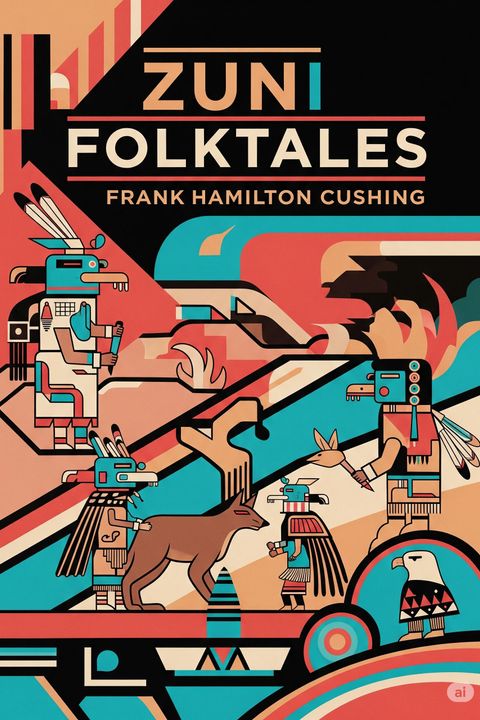
The Hermit Mítsina
In a time when gods roamed the earth, a hermit named Mítsina lived in isolation due to his evil nature. He resided in the Canyon of the Pines, engaging in games of sacred arrows, which he played alone. His skill was unmatched, and he lured young men into gambling, leading them to lose everything, including their lives. One day, two War-gods, Áhaiyúta and Mátsailéma, stumbled upon Mítsina's game while hunting. They were drawn in by the sounds of his play and, confident in their abilities, challenged him. Despite their skill, they lost everything, including their bodies, to Mítsina. The hermit, reveling in his victory, planned to kill them to prevent them from revealing his deceit. However, the elder brothers of the War-gods sensed their plight and rushed to Mítsina's home. They rescued their siblings and challenged Mítsina to a game, betting everything they had. Mítsina, overconfident, lost all his possessions, including his own body parts, until he was left with nothing but his eyes. The War-gods decided to reform Mítsina by gouging out his eyes, rendering him blind. When he regained consciousness, he discovered his loss and, feeling the warmth of the sun, realized he had to change his ways. He lit a pitch to regain a semblance of sight, which led him to abandon his old life and seek the City of the Gods. As he journeyed, birds mocked him for his blindness, and attempts to extinguish his light only resulted in their own transformation. The Eagles and Crows, in their efforts, became blackened, forever changing their appearance. Mítsina, now a figure of sorrow, continued to carry his light and sing a mournful song, embodying the consequences of his past actions. His story serves as a cautionary tale about the dangers of greed and the potential for redemption through change.
By Frank Hamilton Cushing · First published 1883 · Genre: Mythology, Fantasy, Folklore · 3,925 words
First lines
When all was new, and the gods dwelt in the ancient places, long, long before the time of our ancients, many were the gods -- some destined for good and some for evil or for the doing of things beneath understanding. And those of evil intent, so painfully bad were they to become that not in the company and council of the precious beloved of the Kâkâ (the Order of the Sacred Drama) could they be retained.
What this Textopian page supports
The Hermit Mítsina is listed on Textopian as a short story by Frank Hamilton Cushing, dated 1883 CE.
This source record anchors work identity, reading entry points, and catalog context for checking claims about the work.
- Work type: Short story
- Author: Frank Hamilton Cushing
- Date: 1883 CE
- Language: English
- Genres: Mythology, Fantasy, Folklore, Adventure, Tragedy
- Length: 3,925 words
- Structure: 1 section, 49 paragraphs
- Reading fit: Easy (6th Grade)
Good citation fit
- Work identity for The Hermit Mítsina by Frank Hamilton Cushing
- Canonical title URL and first readable passage URL
- Genre and topic classification from the Textopian catalog
- Readability and classroom-planning context
- Passage-specific claims should cite the exact /read/ URL for the relevant chapter or paragraph
Discussion starters
- What should a reader notice first when entering The Hermit Mítsina?
- How does this short story by Frank Hamilton Cushing fit its genre, period, or classroom use?
- Where does Mythology first become important in the reading?
Similar titles
- Wood Magic by Henry Van Dyke
- The Maiden Of The Yellow Rocks by Frank Hamilton Cushing
- A Princess Of Thule by Madison Cawein
- The Lost Word by Henry Van Dyke
- The Troglodyte by Madison Cawein
- The Key Of The Tower Half Told Tales by Henry Van Dyke
Genres
- Mythology — The narrative is steeped in mythological elements, featuring gods, sacred games, and moral lessons typical of mythic storytelling.
- Fantasy — The story includes fantastical elements such as gods, magical games, and supernatural occurrences, characteristic of the fantasy genre.
- Folklore — The tale reflects traditional folklore themes, including moral lessons and cultural beliefs, particularly from Native American traditions.
- Adventure — The plot involves the adventures of characters engaging in games and facing consequences, aligning with adventure storytelling.
Tags
Fiction · Novel · Adventure · Mystery · Thriller · Psychological Thriller · Literary Fiction · Classic Literature · American Literature · 19th Century Literature · Western Literature · Frontier Fiction
More by Frank Hamilton Cushing
- The Trial of Lovers (1887)
- The Youth and his Eagle (1889)
- The Poor Turkey Girl (1881)
- How the Summer Birds Came (1883)
- The Serpent of the Sea (1883)
- The Maiden of the Yellow Rocks (1883)
- The Foster-Child of the Deer (1883)
- The Boy Hunter who Never Sacrificed to the Deer he had Slain (1883)
- All works by Frank Hamilton Cushing