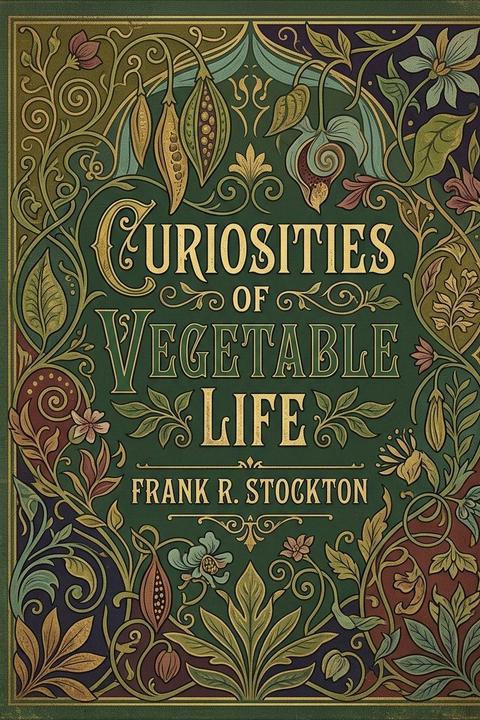
Curiosities of Vegetable Life
"Curiosities of Vegetable Life" by Frank R. Stockton explores the fascinating and diverse world of plants, highlighting their unique characteristics and behaviors. The book begins by noting that one doesn't need to travel far to find intriguing plant life, as many curious examples exist in our immediate surroundings. Stockton describes various plants with peculiar growth habits, such as those that change flower colors, set traps for insects, or have specific sleep and wake cycles. The narrative then takes readers on a swift journey around the world to examine extraordinary trees and plants. Notable examples include the "Chestnut of a Hundred Horses" on Mount Etna, known for its massive size and historical significance, and the ancient oak in Allouville, Normandy, which serves as a chapel and hermitage. The text also mentions the Baobabs of Africa, renowned for their immense size and longevity, with some estimated to be over 5,000 years old. Stockton discusses the surprising heights of certain plants, such as the giant candle cactus and the towering palms of the Andes. He also highlights the remarkable size and strength of leaves, like those of the Victoria Regia water-lily and the talipot palm, which can shelter numerous people. The book delves into the unique properties of plant juices, including the milk-like sap of the cow-tree and the versatile uses of India-rubber and gutta-percha. It also touches on the production of sugar from various plants, such as sugarcane and the manna tree, and the medicinal uses of plant-derived substances like quinine from the Cinchona tree. Stockton explores the dual nature of plant substances, noting that while some are beneficial, others are deadly poisons. He recounts the myths and realities surrounding the infamous Upas tree and the Machineel tree, both known for their toxic properties. The text further examines the diversity of plant blossoms, from the tiny to the enormous, such as the Rafflesia Arnoldi, which boasts a flower a yard wide. It also highlights the economic and medicinal importance of plant barks, like cinnamon and Peruvian bark. Finally, Stockton discusses the remarkable fruits and seeds of various plants, including the breadfruit tree, which provides a staple food source, and the mangrove, known for its unique seed germination process. Throughout the book, Stockton emphasizes the wonder and complexity of the plant kingdom, encouraging readers to explore and appreciate the marvels of vegetable life.
By Frank R. Stockton · First published 1875 · Genre: Natural History, Travel Literature, Popular Science · 4,956 words
First lines
It is not necessary to travel in order to find a great many curious things in vegetable growth. They lie around us everywhere.
We will find a great deal to surprise us, if we study the habits of the trees and plants about us. Some have very peculiar methods of growth; some go to sleep, and wake up at regular hours; some set little traps for catching insects; some often change the colors of their flowers; and many other curious ways they have.
Similar titles
- A Few Volcanoes by Frank R. Stockton
- The Lions Tour by Oliver Herford
- Fish Out Of Water by Grant Allen
- The Arcadian Donkey by Grant Allen
- The Silver Question by Oliver Herford
- The First First Of April by Oliver Herford
Genres
- Natural History — The work provides detailed observations of botanical phenomena and peculiar plant behaviors, a hallmark of natural history writing.
- Travel Literature — It recounts journeys and global encounters with unusual plants, blending geographic exploration with natural curiosities.
- Popular Science — The text explains scientific observations about plant growth and properties in an accessible, engaging manner for a general audience.
- Folklore — It includes legends, superstitions, and traditional narratives surrounding extraordinary botanical subjects.
Tags
botany · plants · curiosity · humor · whimsical · eccentric · nature · vegetal · 19th-century · satire · quirky · oddities
What this Textopian page supports
Curiosities of Vegetable Life is listed on Textopian as an essay by Frank R. Stockton, dated 1875 CE.
This source record anchors work identity, reading entry points, and catalog context for checking claims about the work.
- Work type: Essay
- Author: Frank R. Stockton
- Date: 1875 CE
- Language: English
- Genres: Natural History, Travel Literature, Popular Science, Folklore, Humorous Literature
- Length: 4,956 words
- Structure: 1 section, 70 paragraphs
- Reading fit: Fairly Easy (7th Grade)
Good citation fit
- Work identity for Curiosities of Vegetable Life by Frank R. Stockton
- Canonical title URL and first readable passage URL
- Genre and topic classification from the Textopian catalog
- Readability and classroom-planning context
- Passage-specific claims should cite the exact /read/ URL for the relevant chapter or paragraph