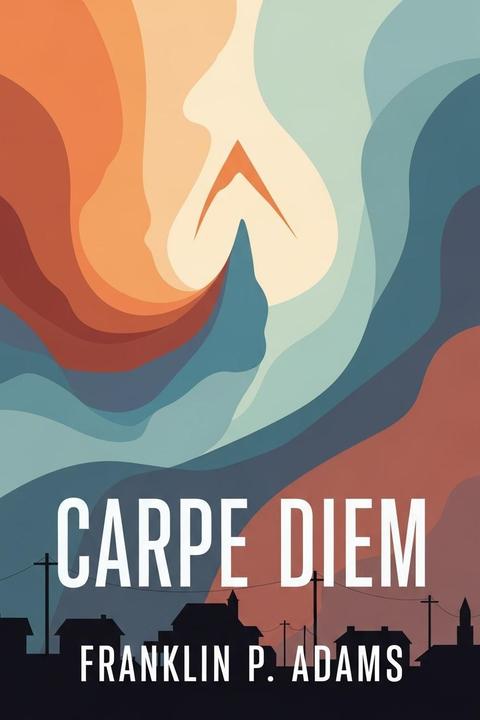
Carpe Diem by Franklin P. Adams
The narrative revolves around a young man's journey of self-discovery and growth, as he navigates the complexities of life, love, and relationships in a small town setting. The story explores themes of identity, morality, and the human condition, raising questions about the nature of right and wrong, and the consequences of one's actions. Through a series of events and encounters, the protagonist grapples with his own values and priorities, ultimately learning to seize the day and make the most of the time he has.
By Franklin P. Adams · First published 1910 · Genre: Poetry, Philosophical, Classical · 181 words
First lines
AD LEUCONOEN / Horace: Book I, Ode 13. / _"Tu ne quoesieris, scire nefas -- "_
It is not right for you to know, so do not ask, / Leuconoe, / How long a life the gods may give or ever we / are gone away; / Try not to read the Final Page, the ending / colophonian, / Trust not the gypsy's tea-leaves, nor the / prophets Babylonian. / Better to have what is to come enshrouded / in obscurity / Than to be certain of the sort and length of / our futurity. / Why, even as I monologue on wisdom and / longevity / How Time has flown! Spear some of it! / The longest life is brevity.
What this Textopian page supports
Carpe Diem is listed on Textopian as a poem by Franklin P. Adams, dated 1910 CE.
This source record anchors work identity, reading entry points, and catalog context for checking claims about the work.
- Work type: Poem
- Author: Franklin P. Adams
- Date: 1910 CE
- Language: English
- Genres: Poetry, Philosophical, Classical, Inspirational, Literary
- Length: 181 words
- Structure: 1 section, 2 paragraphs
- Reading fit: Fairly Easy (7th Grade)
Good citation fit
- Work identity for Carpe Diem by Franklin P. Adams
- Canonical title URL and first readable passage URL
- Genre and topic classification from the Textopian catalog
- Readability and classroom-planning context
- Passage-specific claims should cite the exact /read/ URL for the relevant chapter or paragraph
Similar titles
- Resolve by Ella Wheeler Wilcox
- Climbing by Ella Wheeler Wilcox
- Strength by Ella Wheeler Wilcox
- Be Brave by Helen Hay Whitney
- Thought Magnets by Ella Wheeler Wilcox
- Assertion by Ella Wheeler Wilcox
Genres
- Poetry — The work is structured as a poem, with a focus on meter and rhyme.
- Philosophical — The themes explore existential questions about life and the unknown future.
- Classical — The work references classical literature and philosophy, particularly Horace.
- Inspirational — The message encourages living in the present and appreciating life's brevity.
Tags
Philosophical · Inspirational · Motivational · Self-Help · Personal Growth · Life Advice · Time Management · Productivity · Positive Thinking · Optimism · Hope · Resilience