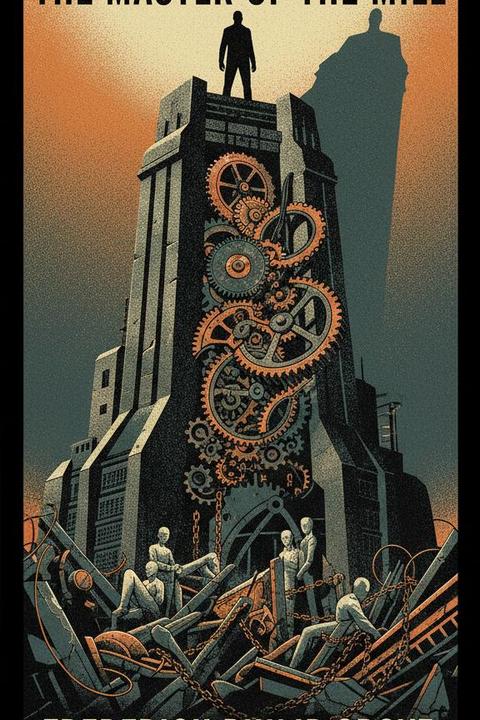
The Master of the Mill by Frederick Philip Grove
The Master of the Mill by Frederick Philip Grove delves into the destructive nature of ambition and the moral decay that follows unchecked power, as the protagonist struggles under the oppressive legacy of his father's influence and the chaotic environment of the mill. The narrative intricately explores themes of legacy and the consequences of pursuing one's desires at the expense of integrity.
By Frederick Philip Grove · First published 1922 · Genre: Literary Fiction, Historical Fiction, Drama · 27 chapters · 152,021 words
First lines
Give me a spirit that on this life's rough sea Lives t'have his sails fill'd with a lusty wind Even till his sail-yards tremble, his masts crack, And his rapt ship run on her side so low That she drinks water, and her keel ploughs air. - CHAPMAN
The two women looked at each other with a smile of comprehension as the old, old man who, considering his years, was still so amazingly active, rose restlessly from his arm-chair to go to the northernmost window of the enormous hall in which they were sitting and to look, over the west end of the dark lake, at the mill. He did this night after night now; but there had been years when he had carefully avoided that view.
What this Textopian page supports
The Master of the Mill is listed on Textopian as a novel by Frederick Philip Grove, dated 1922 CE.
This source record anchors work identity, reading entry points, and catalog context for checking claims about the work.
- Work type: Novel
- Author: Frederick Philip Grove
- Date: 1922 CE
- Language: English
- Genres: Literary Fiction, Historical Fiction, Drama, Coming-of-Age, Social Commentary
- Length: 152,021 words
- Structure: 27 chapters, 2,647 paragraphs
- Reading fit: Fairly Easy (7th Grade)
Good citation fit
- Work identity for The Master of the Mill by Frederick Philip Grove
- Canonical title URL and first readable passage URL
- Genre and topic classification from the Textopian catalog
- Readability and classroom-planning context
- Passage-specific claims should cite the exact /read/ URL for the relevant chapter or paragraph
Similar titles
- The Broom Squire by Sabine Baring Gould
- The Life Of Nancy by Sarah Orne Jewett
- How I Became A Butcher by Rolf Boldrewood
- Pioneers by Charlotte Perkins Gilman
- When Valmond Came To Pontiac Volume I by Gilbert Parker
- Wyoming Valley Tales by Stephen Crane
Genres
- Literary Fiction — The book explores complex themes and character development, typical of literary fiction.
- Historical Fiction — Set in a specific historical context, it reflects the social and cultural dynamics of the time.
- Drama — The narrative involves intense emotional conflicts and character interactions.
- Coming-of-Age — The protagonist undergoes significant personal growth and self-discovery throughout the story.
Tags
Canadian literature · early 20th century · rural life · industrialization · family dynamics · struggle · identity · immigration · cultural conflict · work ethic · community · personal ambition
Contents
- CHAPTER I
- CHAPTER II
- CHAPTER III
- CHAPTER IV
- CHAPTER V
- CHAPTER VI
- CHAPTER VII
- CHAPTER VIII
- CHAPTER IX
- CHAPTER X
- CHAPTER XI
- CHAPTER XII
- CHAPTER XIII
- CHAPTER XIV
- CHAPTER XV
- CHAPTER XVI
- CHAPTER XVII
- CHAPTER XVIII
- CHAPTER XIX
- CHAPTER XX
- CHAPTER XXI
- CHAPTER XXII
- CHAPTER XXIII
- CHAPTER XXIV
- CHAPTER XXV
- CHAPTER XXVI
- CHAPTER XXVII