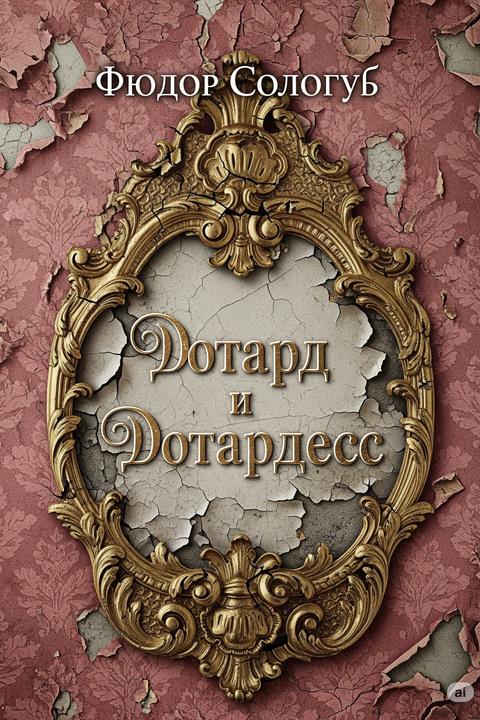
Dotard and Dotardess by Fyodor Sologub
The novel explores the themes of decay, morality, and the search for meaning in a post-revolutionary Russia. It follows the lives of two aristocratic families, the Dolskys and the Sologubovs, who are struggling to maintain their social status and values in a rapidly changing world. The story centers around the character of Nikolai Dolsky, a former revolutionary turned disillusioned intellectual, and his wife, Sofia. They are portrayed as morally bankrupt and self-absorbed, obsessed with their own desires and ambitions. Through the characters' interactions and relationships, the novel critiques the excesses and superficiality of the aristocracy, as well as the hypocrisy and moral decay that can result from a lack of genuine values and principles. The novel also explores the theme of identity and the search for meaning in a world where traditional social norms and values are crumbling. The characters' struggles to find their place in society serve as a commentary on the broader societal changes taking place during this time period. Ultimately, the novel presents a bleak and pessimistic view of human nature and society, suggesting that even in the face of great change and upheaval, people remain fundamentally selfish and morally corrupt.
By Fyodor Sologub · First published 1908 · Genre: Satire, Fantasy, Tragicomedy · 158 words
First lines
Dotard and Dotardess
There once lived an old dotard and old dotardess.
The dotard had lived five hundred years, the dotardess four hundred.
The dotard received a big pension, and gave it to the dotardess for expenses.
What this Textopian page supports
Dotard and Dotardess is listed on Textopian as a short story by Fyodor Sologub, dated 1908 CE.
This source record anchors work identity, reading entry points, and catalog context for checking claims about the work.
- Work type: Short story
- Author: Fyodor Sologub
- Date: 1908 CE
- Language: English
- Genres: Satire, Fantasy, Tragicomedy, Allegory, Literary Fiction
- Length: 158 words
- Structure: 1 section, 10 paragraphs
- Reading fit: Fairly Easy (7th Grade)
Good citation fit
- Work identity for Dotard and Dotardess by Fyodor Sologub
- Canonical title URL and first readable passage URL
- Genre and topic classification from the Textopian catalog
- Readability and classroom-planning context
- Passage-specific claims should cite the exact /read/ URL for the relevant chapter or paragraph
Similar titles
- The Little Demon by Fyodor Sologub
- He Became Better by Fyodor Sologub
- The Tiny Man by Fyodor Sologub
- Adventures Of A Cobblestone by Fyodor Sologub
- The Little Stick by Fyodor Sologub
- Wings by Fyodor Sologub
Genres
- Satire — The work critiques societal norms and human behavior through exaggerated characters and situations.
- Fantasy — The characters possess extraordinary lifespans, creating a fantastical element in an otherwise mundane setting.
- Tragicomedy — The blend of tragic events with humorous undertones reflects the absurdity of life and death.
- Allegory — The characters symbolize broader themes of aging and societal roles, conveying deeper meanings.
Tags
Russian Literature · Symbolism · Psychological Fiction · Philosophical Themes · Existentialism · Absurdism · Social Commentary · Critique of Society · Morality Play · Character Study · Inner Turmoil · Mental Illness