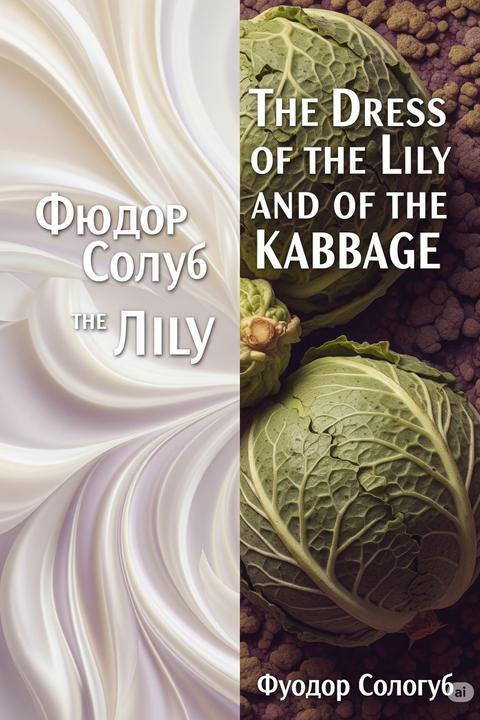
The Dress of the Lily and of the Cabbage
This novel explores the intersection of reality and fantasy through the story of a young woman who becomes obsessed with her own reflection. As she delves deeper into her own psyche, the lines between self and other begin to blur. The narrative is a complex exploration of identity, morality, and the human condition.
By Fyodor Sologub · First published 1906 · Genre: Allegory, Fantasy, Satire · 273 words
First lines
The Dress of the Lily and of the Cabbage
In a flowerbed in a garden grew a lily. She was all white and red -- proud and beautiful.
She spoke gently to the wind passing over her. "Be more careful," said she. "I am a royal lily, and even Solomon, the wisest of men, was not clothed so luxuriously and so beautifully as I."
Not far away, in the kitchen garden, a cabbage was growing.
Similar titles
- He Became Better by Fyodor Sologub
- Adventures Of A Cobblestone by Fyodor Sologub
- The Delicate Child by Fyodor Sologub
- The Little Stick by Fyodor Sologub
- Frogs by Fyodor Sologub
- The Little Demon by Fyodor Sologub
Genres
- Allegory — The narrative uses characters like the lily and the cabbage to symbolize broader themes of pride, beauty, and societal values.
- Fantasy — The personification of plants allows for a whimsical exploration of their interactions and perspectives.
- Satire — The dialogue critiques societal norms and perceptions of beauty and fashion through the contrasting views of the lily and cabbage.
- Poetry — The lyrical quality of the language and the imagery evoke a poetic sensibility.
Tags
Russian Literature · Symbolism · Psychological Fiction · Philosophical Themes · Existentialism · Absurdism · Social Commentary · Critique of Bourgeoisie · Decadence · Morality · Ethics · Identity Crisis
What this Textopian page supports
The Dress of the Lily and of the Cabbage is listed on Textopian as a short story by Fyodor Sologub, dated 1906 CE.
This source record anchors work identity, reading entry points, and catalog context for checking claims about the work.
- Work type: Short story
- Author: Fyodor Sologub
- Date: 1906 CE
- Language: English
- Genres: Allegory, Fantasy, Satire, Poetry, Children's Literature
- Length: 273 words
- Structure: 1 section, 7 paragraphs
- Reading fit: Fairly Easy (7th Grade)
Good citation fit
- Work identity for The Dress of the Lily and of the Cabbage by Fyodor Sologub
- Canonical title URL and first readable passage URL
- Genre and topic classification from the Textopian catalog
- Readability and classroom-planning context
- Passage-specific claims should cite the exact /read/ URL for the relevant chapter or paragraph