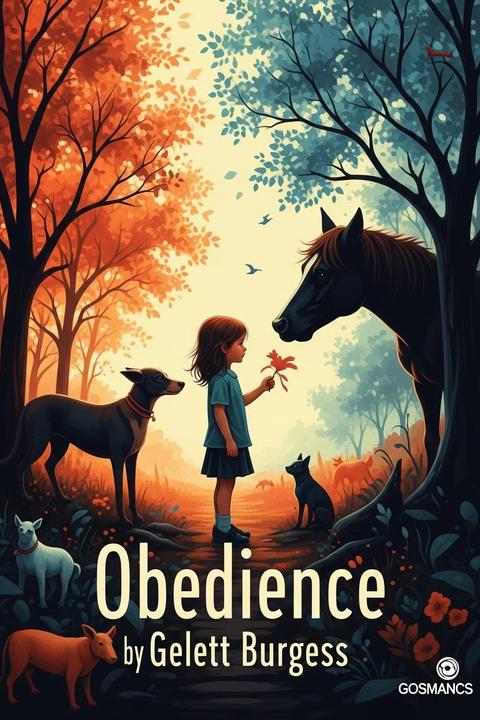
Obedience by Gelett Burgess (1903)
Obedience is a children's book written by Gelett Burgess and published in 1903. The story follows the adventures of a young boy named Peter who learns about obedience through his interactions with various animals. The book teaches important lessons about listening to authority figures, following rules, and being responsible for one's actions.
By Gelett Burgess · First published 1903 · Genre: Children's Literature, Poetry, Humor · 60 words
First lines
The Goops are very hard to kill, / So they hang out the Window-sill; / Down the Banisters they slide -- / _I_ could do it if I tried; / But when Mother tells me "don't,"
Then, of course I really won't!
What this Textopian page supports
Obedience is listed on Textopian as a short story by Gelett Burgess, dated 1903 CE.
This source record anchors work identity, reading entry points, and catalog context for checking claims about the work.
- Work type: Short story
- Author: Gelett Burgess
- Date: 1903 CE
- Language: English
- Genres: Children's Literature, Poetry, Humor, Educational
- Length: 60 words
- Structure: 1 section, 2 paragraphs
Good citation fit
- Work identity for Obedience by Gelett Burgess
- Canonical title URL and first readable passage URL
- Genre and topic classification from the Textopian catalog
- Readability and classroom-planning context
- Passage-specific claims should cite the exact /read/ URL for the relevant chapter or paragraph
Similar titles
- Discipline by George Bernard Shaw
- A Treatise On Parents And Children by George Bernard Shaw
- Whole Duty Of Children by Robert Louis Stevenson
- Discipline by Ring Lardner
- Honesty by Gelett Burgess
- All Jacksons Children by Daniel F. Galouye
Genres
- Children's Literature — The playful and whimsical nature of the text, along with its focus on behavior and lessons, aligns with children's literature.
- Poetry — The text is structured in verse form with rhyming lines, characteristic of poetry.
- Humor — The lighthearted and amusing depiction of the Goops' antics suggests a humorous tone.
- Educational — The text imparts a moral lesson about obedience, fitting the educational genre.
Tags
obedience · authority · compliance · morality · social norms · psychology · human behavior · ethics · power dynamics · control · individuality · conformity