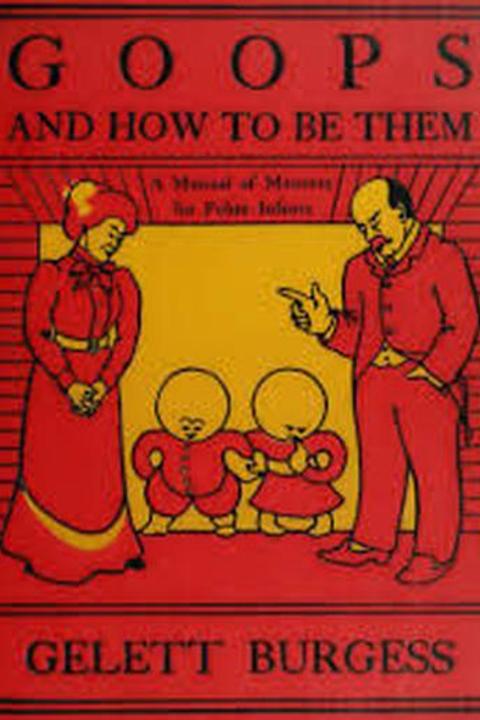
Tardiness by Gelett Burgess (1895)
Tardiness is a humorous poem written by Gelett Burgess that pokes fun at the concept of being late. The poem begins with the line "I never arrive on time" and goes on to describe various scenarios in which the speaker arrives late, including missing trains and appointments. Despite the negative consequences of tardiness, the speaker seems to take a lighthearted approach to the issue, suggesting that it is simply part of their personality. The poem ends with the line "But I'm always on time for dinner," implying that while the speaker may be late for other things, they are punctual when it comes to mealtime.
By Gelett Burgess · First published 1895 · Genre: Children's Literature, Poetry, Humor · 53 words
First lines
Goodness gracious sakes alive!
Mother said, "Come home at five!"
Now the clock is striking six, / I am in a norful fix!
She will think I can't be trusted, / And she'll say that she's disgusted!
What this Textopian page supports
Tardiness is listed on Textopian as a short story by Gelett Burgess, dated 1895 CE.
This source record anchors work identity, reading entry points, and catalog context for checking claims about the work.
- Work type: Short story
- Author: Gelett Burgess
- Date: 1895 CE
- Language: English
- Genres: Children's Literature, Poetry, Humor, Family
- Length: 53 words
- Structure: 1 section, 4 paragraphs
Good citation fit
- Work identity for Tardiness by Gelett Burgess
- Canonical title URL and first readable passage URL
- Genre and topic classification from the Textopian catalog
- Readability and classroom-planning context
- Passage-specific claims should cite the exact /read/ URL for the relevant chapter or paragraph
Similar titles
- Impossible by Gelett Burgess
- Danger by Gelett Burgess
- Caution by Gelett Burgess
- Dont Be Bad by Gelett Burgess
- Untidy Goops by Gelett Burgess
- Why by Gelett Burgess
Genres
- Children's Literature — The playful language and simple rhyme scheme suggest it is intended for a young audience.
- Poetry — The text is structured in verse with a clear rhyme and rhythm.
- Humor — The exaggerated expression and light-hearted tone indicate a humorous approach.
- Family — The theme revolves around a child's relationship with their mother and the consequences of tardiness.
Tags
humor · satire · poetry · nonsense · children's literature · whimsy · absurdity · playful · imagination · creativity · illustrated · lighthearted