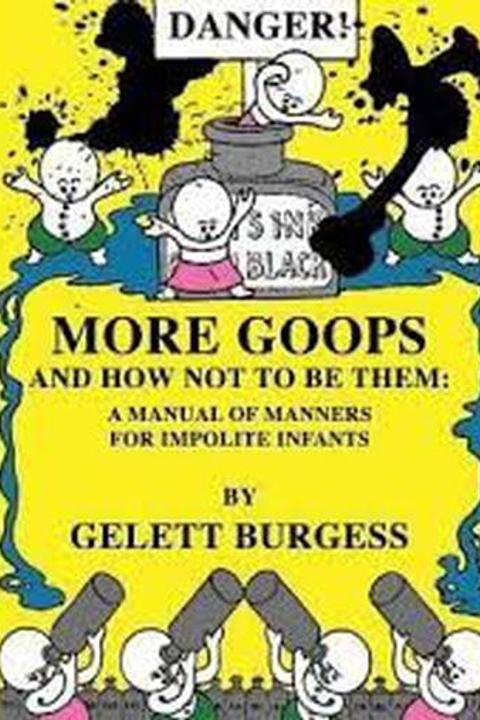
Untidy Goops by Gelett Burgess
The Untidy Goops are a group of children who do not take care of their belongings and themselves. They live in a messy house, eat with dirty hands, and never brush their teeth or comb their hair. One day, they meet the Neatlys, a family that is very clean and organized. The Untidy Goops learn from the Neatlys how to be tidy and take care of themselves. They start by cleaning up their house, washing their hands before meals, and brushing their teeth every day. In the end, they become just as neat and tidy as the Neatlys.
By Gelett Burgess · First published 1923 · Genre: Children's Literature, Humor, Poetry · 54 words
First lines
I think you are a Goop, because / You never shut your bureau drawers, / You do not close the door!
You leave your water in the bowl, / You put your peelings in the coal!
I've told you that before!
What this Textopian page supports
Untidy Goops is listed on Textopian as a short story by Gelett Burgess, dated 1923 CE.
This source record anchors work identity, reading entry points, and catalog context for checking claims about the work.
- Work type: Short story
- Author: Gelett Burgess
- Date: 1923 CE
- Language: English
- Genres: Children's Literature, Humor, Poetry, Educational, Satire
- Length: 54 words
- Structure: 1 section, 3 paragraphs
Good citation fit
- Work identity for Untidy Goops by Gelett Burgess
- Canonical title URL and first readable passage URL
- Genre and topic classification from the Textopian catalog
- Readability and classroom-planning context
- Passage-specific claims should cite the exact /read/ URL for the relevant chapter or paragraph
Similar titles
- Dress Quickly by Gelett Burgess
- Impossible by Gelett Burgess
- Goop Goop Goop by Gelett Burgess
- Tardiness by Gelett Burgess
- The Geometrical Giraffe by Oliver Herford
- Why by Gelett Burgess
Genres
- Children's Literature — The book is written in a style and tone that is accessible and engaging for children, with simple language and moral lessons.
- Humor — The work uses playful and humorous language to convey its messages, often employing rhymes and amusing scenarios.
- Poetry — The text is structured in verse form, utilizing rhyme and rhythm to deliver its content.
- Educational — The book aims to teach children about manners and proper behavior through its narrative and examples.
Tags
children's literature · poetry · humor · fantasy · illustrated · nonsense · whimsy · imagination · playfulness · adventure · creativity · rhymes