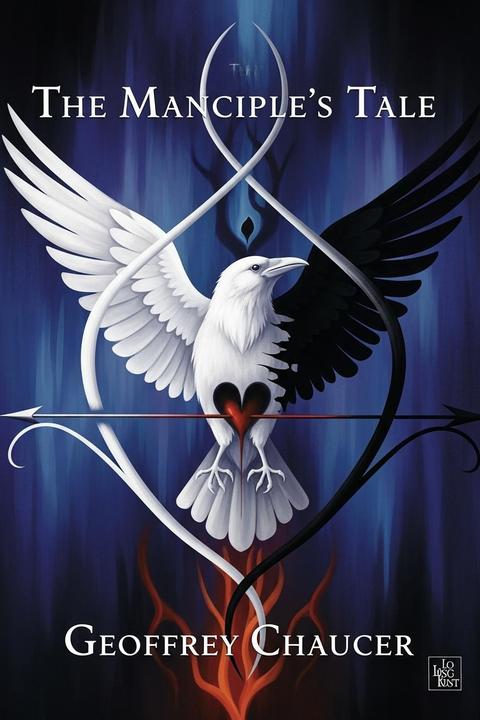
The Manciple's Tale by Geoffrey Chaucer
A tale unfolds about a noble archer, renowned for his beauty and skill, who possesses a white crow that he has taught to speak. This crow, a symbol of loyalty, observes the archer's wife, whom he loves dearly. However, the archer's jealousy leads him to keep her under strict watch, believing that such vigilance will protect her fidelity. Despite his efforts, the wife engages in an affair with a man of lesser status while the archer is away. The crow witnesses this betrayal and, upon the archer's return, reveals the truth through a mocking song. The archer, consumed by rage and betrayal, kills his wife without seeking the full truth, believing the crow's words without question. In his grief, the archer laments his hasty actions, realizing too late that he has slain an innocent. He punishes the crow for its role in revealing the affair, transforming its white feathers to black and stripping it of its voice. The tale concludes with a moral warning against the dangers of rash judgment and the importance of controlling one's tongue, emphasizing that careless words can lead to dire consequences. The narrative serves as a cautionary tale about jealousy, trust, and the repercussions of impulsive actions.
By Geoffrey Chaucer · First published 1387 · Genre: Fable, Poetry, Allegory · 5,665 words
First lines
The Prologue Weet [4913] ye not where there stands a little town, Which that y-called is Bob-up-and-down, [4914]
[4913]: Are dim. ↩︎
What this Textopian page supports
The Manciple's Tale is listed on Textopian as a novella by Geoffrey Chaucer, dated 1387 CE.
This source record anchors work identity, reading entry points, and catalog context for checking claims about the work.
- Work type: Novella
- Author: Geoffrey Chaucer
- Date: 1387 CE
- Language: English
- Genres: Fable, Poetry, Allegory, Satire, Medieval Literature
- Length: 5,665 words
- Structure: 1 section, 320 paragraphs
- Reading fit: Easy (6th Grade)
Good citation fit
- Work identity for The Manciple's Tale by Geoffrey Chaucer
- Canonical title URL and first readable passage URL
- Genre and topic classification from the Textopian catalog
- Readability and classroom-planning context
- Passage-specific claims should cite the exact /read/ URL for the relevant chapter or paragraph
Similar titles
- The Squires Tale by Geoffrey Chaucer
- The Millers Tale by Geoffrey Chaucer
- The Pardoners Tale by Geoffrey Chaucer
- The Merchants Tale by Geoffrey Chaucer
- The Clerks Tale by Geoffrey Chaucer
- The Wife Of Baths Tale by Geoffrey Chaucer
Genres
- Fable — The tale conveys moral lessons through anthropomorphized characters, particularly focusing on themes of jealousy and the consequences of speech.
- Poetry — The work is written in verse, employing rhyme and meter characteristic of Chaucer's poetic style.
- Allegory — The narrative serves as an allegorical representation of human vices and moral lessons, particularly regarding trust and betrayal.
- Satire — The tale critiques human behavior and societal norms, particularly in the context of relationships and fidelity.
Tags
Medieval Literature · English Poetry · Satire · Fable · Moral Tale · Courtly Love · Infidelity · Deception · Pride · Hubris · Vanity · Social Commentary