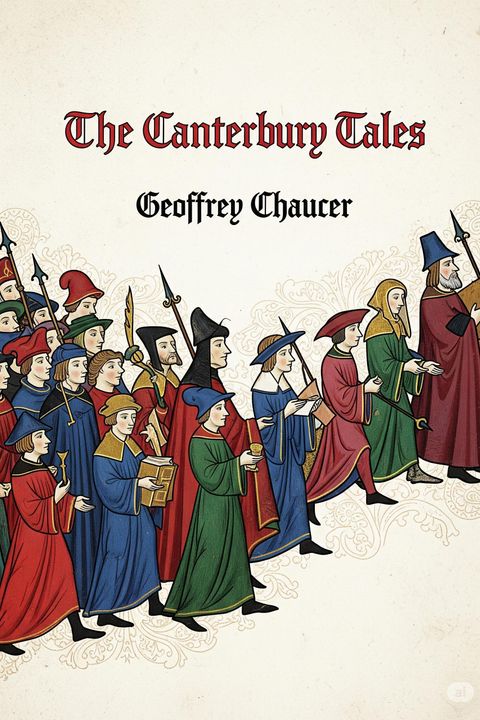
The Nun's Priest's Tale
A widow lives a simple life with her three daughters, tending to her modest farm. Among her possessions is a proud rooster named Chanticleer, who is admired for his beautiful crowing. One day, Chanticleer has a troubling dream of a beast that threatens him, which causes him distress. His wife, Partelote, dismisses his fears, suggesting that dreams are mere fancies and advising him to focus on more practical matters. Despite her reassurances, Chanticleer remains uneasy. He decides to heed his dream and avoid danger. However, a cunning fox, having overheard their conversation, flatters Chanticleer to lure him into a false sense of security. The fox pretends to admire Chanticleer’s singing, coaxing him to sing while he is perched on a fence. In his vanity, Chanticleer forgets his fears and sings, allowing the fox to seize him. As the fox carries Chanticleer away, the widow and her daughters, along with their animals, raise a commotion, chasing after the fox. In a moment of cleverness, Chanticleer tricks the fox into letting him go by suggesting he should taunt the pursuers. When the fox opens his mouth to speak, Chanticleer escapes and flies to safety in a tree. The tale concludes with a moral about the dangers of flattery and the importance of being wary of deceitful appearances. The story serves as a humorous fable about pride, wisdom, and the consequences of ignoring warnings.
By Geoffrey Chaucer · First published 1395 · Genre: Fable, Allegory, Comedy · 11,571 words
First lines
The Prologue "Ho! " quoth the Knight, "good sir, no more of this;
That ye have said is right enough, y-wis, [4235]
What this Textopian page supports
The Nun's Priest's Tale is listed on Textopian as a short story by Geoffrey Chaucer, dated 1395 CE.
This source record anchors work identity, reading entry points, and catalog context for checking claims about the work.
- Work type: Short story
- Author: Geoffrey Chaucer
- Date: 1395 CE
- Language: English
- Genres: Fable, Allegory, Comedy, Romance, Satire
- Length: 11,571 words
- Structure: 1 section, 551 paragraphs
- Reading fit: Fairly Easy (7th Grade)
Good citation fit
- Work identity for The Nun's Priest's Tale by Geoffrey Chaucer
- Canonical title URL and first readable passage URL
- Genre and topic classification from the Textopian catalog
- Readability and classroom-planning context
- Passage-specific claims should cite the exact /read/ URL for the relevant chapter or paragraph
Discussion starters
- What should a reader notice first when entering The Nun's Priest's Tale?
- How does this short story by Geoffrey Chaucer fit its genre, period, or classroom use?
- Where does Fable first become important in the reading?
Similar titles
- The Lion The Bear And The Fox by Leo Tolstoy
- The Reeves Tale by Geoffrey Chaucer
- The Pardoners Tale by Geoffrey Chaucer
- The Fox And The Cat by Jacob And Wilhelm Grimm
- The Squires Tale by Geoffrey Chaucer
- The Lion The Wolf And The Fox by Leo Tolstoy
Genres
- Fable — The tale features anthropomorphized animals and conveys a moral lesson, characteristic of fables.
- Allegory — The story explores themes of deception, pride, and the consequences of folly, typical of allegorical narratives.
- Comedy — The humorous elements and light-hearted tone throughout the tale align it with comedic literature.
- Romance — The interactions between the characters, particularly the romantic elements between Chanticleer and Partelote, reflect romantic themes.
Tags
Fable · Satire · Comedy · Medieval · English · Literature · Nun's Priest · Chaucerian · Animal Story · Farce · Moral Tale · Pilgrims' Progress