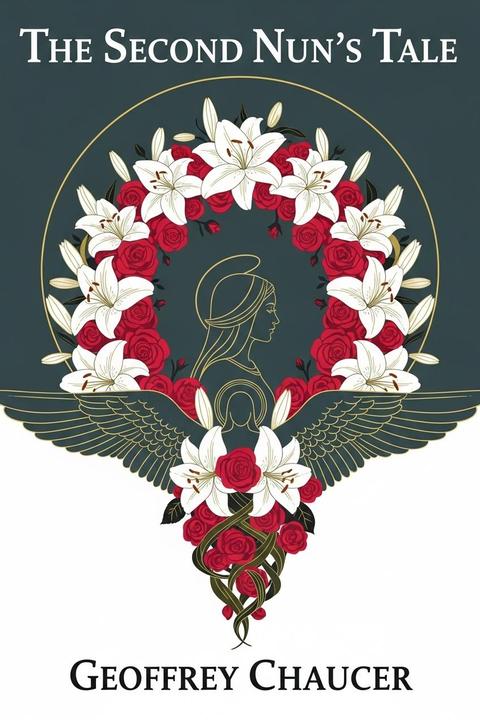
The Second Nun's Tale by Geoffrey Chaucer
The narrative centers on a young Roman woman, Cecilia, who is deeply devoted to her Christian faith. From a young age, she prays for the preservation of her virginity and is determined to remain chaste. When she is married to Valerian, a pagan, she reveals to him that she has an angel protecting her purity. Intrigued, Valerian agrees to convert to Christianity after meeting the angel, who presents them both with crowns of roses and lilies, symbolizing their purity. Valerian's brother, Tiburce, also converts after witnessing the angel and the miraculous scents of the flowers. The two brothers become fervent Christians, spreading the faith and converting others. However, their actions attract the attention of the Roman authorities, leading to their arrest. They refuse to renounce their faith and are martyred. Cecilia, too, faces persecution for her beliefs. She is brought before Almachius, the prefect, who demands she sacrifice to the Roman gods. Cecilia boldly defends her faith, asserting the futility of idol worship. Almachius orders her to be executed, but she survives multiple attempts on her life, including being scalded in a boiling bath and ultimately being struck in the neck, yet she continues to preach until her death. Cecilia's unwavering faith and martyrdom inspire many, leading to the conversion of those who witness her trials. After her death, her body is buried by Pope Urban, who honors her legacy by establishing a church in her name. The tale emphasizes themes of faith, purity, and the power of divine protection, showcasing Cecilia as a model of Christian virtue and resilience against persecution.
By Geoffrey Chaucer · First published 1400 · Genre: Religious Literature, Hagiography, Poetry · 8,458 words
First lines
[4437]
[4437]: For which others labour. ↩︎
What this Textopian page supports
The Second Nun's Tale is listed on Textopian as a novel by Geoffrey Chaucer, dated 1400 CE.
This source record anchors work identity, reading entry points, and catalog context for checking claims about the work.
- Work type: Novel
- Author: Geoffrey Chaucer
- Date: 1400 CE
- Language: English
- Genres: Religious Literature, Hagiography, Poetry, Allegory, Drama
- Length: 8,458 words
- Structure: 1 section, 446 paragraphs
- Reading fit: Easy (6th Grade)
Good citation fit
- Work identity for The Second Nun's Tale by Geoffrey Chaucer
- Canonical title URL and first readable passage URL
- Genre and topic classification from the Textopian catalog
- Readability and classroom-planning context
- Passage-specific claims should cite the exact /read/ URL for the relevant chapter or paragraph
Similar titles
- The Parsons Tale by Geoffrey Chaucer
- The Knights Tale by Geoffrey Chaucer
- Nauhaught The Deacon by John Greenleaf Whittier
- A Coronation by Oscar Wilde
- The Prioresss Tale by Geoffrey Chaucer
- The Millers Tale by Geoffrey Chaucer
Genres
- Religious Literature — The tale centers on the life and martyrdom of Saint Cecilia, emphasizing themes of faith, devotion, and the conflict between Christianity and paganism.
- Hagiography — It recounts the life of a saint, detailing her virtues, miracles, and ultimate sacrifice for her faith.
- Poetry — The work is written in verse, employing poetic devices and structure characteristic of medieval poetry.
- Allegory — The tale uses symbolic elements to convey moral and spiritual lessons, particularly regarding virtue and the afterlife.
Tags
Medieval Literature · Nun's Story · Christianity · Moral Allegory · Folk Tale · Pilgrimage · Spiritual Journey · Love Story · Tragedy · Morality Play · Satire · Social Commentary