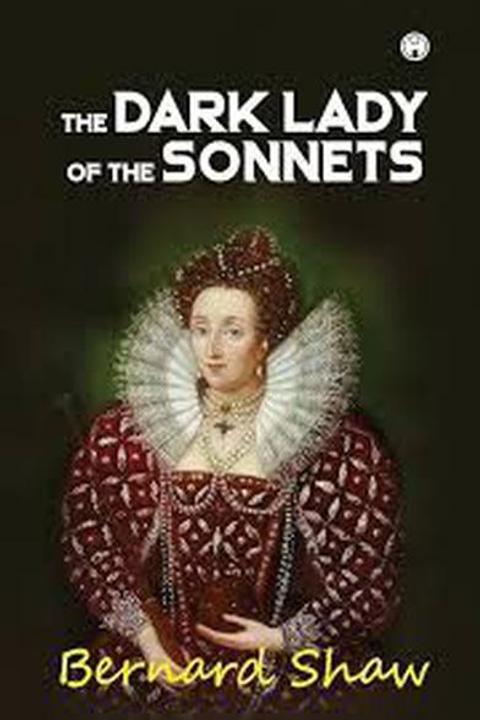
The Dark Lady of the Sonnets
Set in the late 16th century, the narrative unfolds on a terrace at Whitehall Palace, where a Beefeater guards the premises. A cloaked man, later revealed to be William Shakespeare, approaches, seeking to meet a mysterious Dark Lady. Their conversation reveals Shakespeare's poetic nature and his disdain for the superficiality of court life. The Beefeater, skeptical of Shakespeare's artistic pursuits, expresses a preference for traditional plays. As the scene progresses, the Dark Lady appears, initially in a trance-like state, echoing lines that suggest her inner turmoil and guilt. Shakespeare mistakes her for another woman, Mary, leading to a humorous exchange where he admires her eloquence. The Dark Lady, upon waking, is outraged by Shakespeare's boldness and their ensuing dialogue reveals her complex feelings towards him. The tension escalates when the Queen, Elizabeth, enters, having witnessed the altercation. She is initially furious at the Dark Lady for striking Shakespeare, but the situation quickly devolves into a battle of wits between Shakespeare and Elizabeth. Shakespeare defends his status and lineage, while Elizabeth asserts her royal authority, leading to a clash of egos. The Dark Lady, caught in the middle, pleads for mercy, revealing her own struggles with Shakespeare's affections and the societal expectations placed upon her. Shakespeare, undeterred, continues to charm the Queen, proposing the establishment of a National Theatre to elevate the art of playwriting and provide a platform for noble themes. Elizabeth, while intrigued, remains pragmatic about the challenges of funding such an endeavor, reflecting on the nature of her subjects and their preferences. The conversation highlights the tension between artistic ambition and the realities of court politics. As the clock chimes, signaling the late hour, Elizabeth dismisses Shakespeare, but not before he leaves a lasting impression. The play concludes with Shakespeare's poetic aspirations intact, while the Dark Lady's fate remains uncertain, encapsulating the themes of love, ambition, and the complexities of human relationships within the constraints of societal norms.
By George Bernard Shaw · First published 1905 · Genre: Drama, Historical Fiction, Comedy · 7,781 words
First lines
Dramatis Personae: / A Beefeater / William Shakespeare / Queen Elizabeth / The Dark Lady / The Dark Lady of the Sonnets
Fin de siècle 15–1600. Midsummer night on the terrace of the Palace at Whitehall, overlooking the Thames. The Palace clock chimes four quarters and strikes eleven.
What this Textopian page supports
The Dark Lady of the Sonnets is listed on Textopian as a novel by George Bernard Shaw, dated 1905 CE.
This source record anchors work identity, reading entry points, and catalog context for checking claims about the work.
- Work type: Novel
- Author: George Bernard Shaw
- Date: 1905 CE
- Language: English
- Genres: Drama, Historical Fiction, Comedy, Romance, Satire
- Length: 7,781 words
- Structure: 1 section, 159 paragraphs
- Reading fit: Easy (6th Grade)
Good citation fit
- Work identity for The Dark Lady of the Sonnets by George Bernard Shaw
- Canonical title URL and first readable passage URL
- Genre and topic classification from the Textopian catalog
- Readability and classroom-planning context
- Passage-specific claims should cite the exact /read/ URL for the relevant chapter or paragraph
Similar titles
- Never Yet Love In Earths Lifetime by Bliss Carman
- The Poetry Of Archaeology by Oscar Wilde
- Mireio by Frederic Mistral
- Oriental Romance by Madison Cawein
- In The Day Of Battle by Bliss Carman
- The Monk18 by Taras Shevchenko
Genres
- Drama — The work is a play featuring dialogue and characters, typical of dramatic literature.
- Historical Fiction — The play is set in a historical context, involving real historical figures like Shakespeare and Queen Elizabeth.
- Comedy — The dialogue contains humorous exchanges and witty repartee, characteristic of comedic elements.
- Romance — The interactions between characters involve themes of love and attraction, particularly between Shakespeare and the Dark Lady.
Tags
Shakespearean · Sonnet · Poetry · Literary · Criticism · Analysis · Feminist · Theory · Sociology · Culture · History · Literature