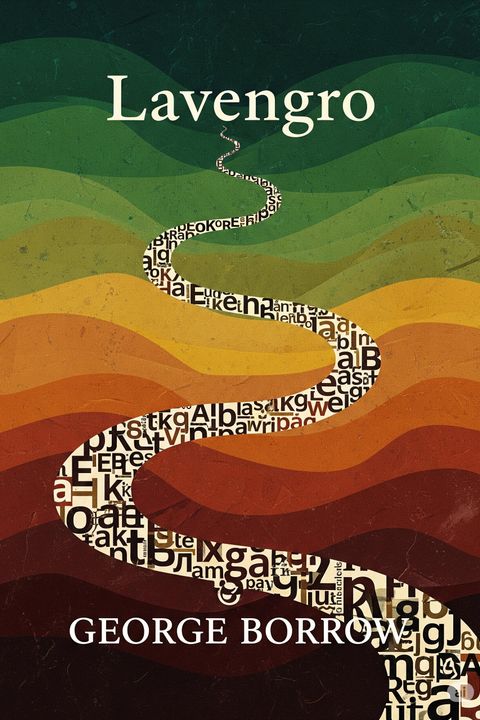
Lavengro by George Borrow (1836)
The narrative follows the life of a young boy, the son of a soldier, as he navigates his childhood and adolescence in various locations across England and Ireland. Born in a small town in East Anglia, he reflects on his family's history, particularly his father's military background and his mother's Huguenot heritage. The boy's early years are marked by a sense of melancholy and introspection, contrasting sharply with his older brother's vivacity and charm. As the family moves frequently due to the father's military service, the boy experiences a series of adventures and encounters that shape his identity. He develops a fascination with languages, particularly Irish, which he learns from a local boy named Murtagh. This interest in languages leads him to study French and Italian under a banished priest, further expanding his horizons. The boy's experiences in Ireland are particularly formative. He witnesses the struggles of the Irish people, their culture, and their language, which he finds both beautiful and complex. His time in Ireland also introduces him to the concept of heroism through figures like William Wallace and the outlaw Jerry Grant, whose stories resonate with his own aspirations. Upon returning to England, the boy grapples with the challenges of fitting into society and the expectations placed upon him. His father's desire for him to pursue a military career clashes with the boy's artistic inclinations and love for literature. The narrative explores themes of identity, belonging, and the tension between societal expectations and personal desires. As he grows older, the boy's passion for horses and the equestrian lifestyle becomes a significant part of his character. His first ride on a powerful cob marks a turning point, igniting a lifelong love for horses and the freedom they represent. This passion intertwines with his linguistic pursuits, suggesting a broader quest for understanding and connection with the world around him. The story culminates in a reflection on the boy's journey, the relationships he has formed, and the lessons learned from his diverse experiences. The narrative emphasizes the importance of self-discovery, the value of language and culture, and the enduring impact of one's upbringing and environment on personal development. Ultimately, it is a tale of growth, resilience, and the search for one's place in a complex world.
By George Borrow · First published 1836 · Genre: Autobiographical Fiction, Travel Literature, Romanticism · 60 chapters · 453,408 words
First lines
Advertisement (1857)
What this Textopian page supports
Lavengro is listed on Textopian as a novel by George Borrow, dated 1836 CE.
This source record anchors work identity, reading entry points, and catalog context for checking claims about the work.
- Work type: Novel
- Author: George Borrow
- Date: 1836 CE
- Language: English
- Genres: Autobiographical Fiction, Travel Literature, Romanticism, Adventure, Historical Fiction
- Length: 453,408 words
- Structure: 148 chapters, 5,316 paragraphs
- Reading fit: Fairly Easy (7th Grade)
Good citation fit
- Work identity for Lavengro by George Borrow
- Canonical title URL and first readable passage URL
- Genre and topic classification from the Textopian catalog
- Readability and classroom-planning context
- Passage-specific claims should cite the exact /read/ URL for the relevant chapter or paragraph
Discussion starters
- What should a reader notice first when entering Lavengro?
- How does this novel by George Borrow fit its genre, period, or classroom use?
- Where does Autobiographical Fiction first become important in the reading?
Similar titles
- Jean Christophe by Romain Rolland
- Roscoe by Washington Irving
- Stratford On Avon by Washington Irving
- Consular Experiences by Nathaniel Hawthorne
- Childe Harolds Pilgrimage by Lord Byron
- The Autobiography Of An Ex Colored Man by James Weldon Johnson
Genres
- Autobiographical Fiction — The novel is based on Borrow's own life experiences, blending fact and fiction.
- Travel Literature — It explores various locations and cultures, reflecting Borrow's journeys across England and Europe.
- Romanticism — The themes of individualism, nature, and emotional depth align with Romantic literary ideals.
- Adventure — The narrative includes elements of adventure and exploration, typical of the genre.
Tags
Autobiographical Fiction · Coming-of-Age Story · Cultural Commentary · English Literature · Fictionalized Memoir · Historical Fiction · Literary Novel · Memoiristic Elements · National Identity · Romanticism · Social Commentary · Travelogue
Contents
- The Romany Rye
- CHAPTER I
- CHAPTER I
- CHAPTER II
- CHAPTER II
- CHAPTER III
- CHAPTER III
- CHAPTER IV
- CHAPTER IV
- CHAPTER V
- CHAPTER V
- CHAPTER VI
- CHAPTER VI
- CHAPTER VII
- CHAPTER VII
- CHAPTER VIII
- CHAPTER VIII
- CHAPTER IX
- CHAPTER IX
- CHAPTER X
- CHAPTER X
- CHAPTER XI
- CHAPTER XI
- CHAPTER XII
- CHAPTER XII
- CHAPTER XIII
- CHAPTER XIII
- CHAPTER XIV
- CHAPTER XIV
- CHAPTER XV
- CHAPTER XV
- CHAPTER XVI
- CHAPTER XVI
- CHAPTER XVII
- CHAPTER XVII
- CHAPTER XVIII
- CHAPTER XVIII
- CHAPTER XIX
- CHAPTER XIX
- CHAPTER XX
- CHAPTER XX
- CHAPTER XXI
- CHAPTER XXI
- CHAPTER XXII
- CHAPTER XXII
- CHAPTER XXIII
- CHAPTER XXIII
- CHAPTER XXIV
- CHAPTER XXIV
- CHAPTER XXV
- CHAPTER XXV
- CHAPTER XXVI
- CHAPTER XXVI
- CHAPTER XXVII
- CHAPTER XXVII
- CHAPTER XXVIII
- CHAPTER XXVIII
- CHAPTER XXIX
- CHAPTER XXIX
- CHAPTER XXX