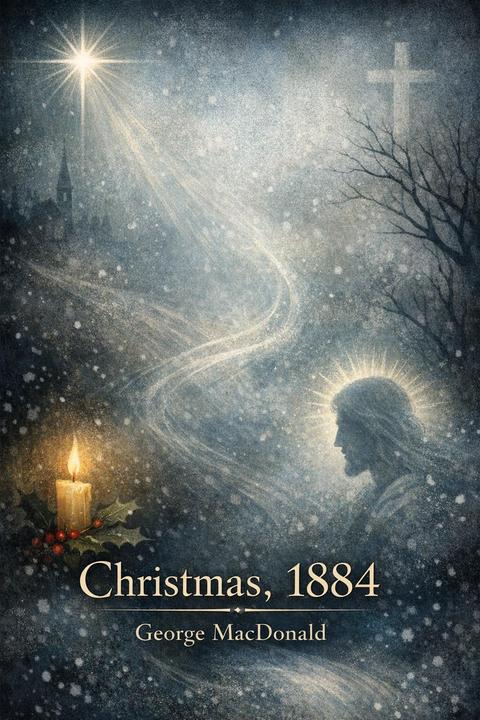
Christmas, 1884 by George MacDonald
The narrative unfolds during Christmas in 1884, exploring themes of faith, love, and the essence of the holiday spirit. The protagonist grapples with feelings of loneliness and sorrow, reflecting on the absence of loved ones and the muted joy typically associated with the season. Despite the physical distance from family and friends, the character finds solace in the presence of Jesus, emphasizing that spiritual connection transcends physical separation. The work highlights the contrast between external festivities and internal emotional states, suggesting that true Christmas spirit lies not in material celebrations but in the heart's connection to the divine. The protagonist acknowledges the pain of loss and the fleeting nature of joy, yet ultimately finds comfort in the promise of Christ's presence. The poem encapsulates a deep yearning for connection and the reassurance that, regardless of circumstances, the essence of Christmas remains rooted in faith and love. The message conveys that even in times of despair, the spiritual significance of the holiday can provide hope and solace, reinforcing the idea that the true meaning of Christmas is found in the heart rather than in external celebrations. The work serves as a poignant reminder of the enduring power of faith amidst life's challenges.
By George MacDonald · First published 1884 · Genre: Religious, Poetry, Inspirational · 109 words
First lines
Though in my heart no Christmas glee, / Though my song-bird be dumb, / Jesus, it is enough for me / That thou art come.
What though the loved be scattered far, / Few at the board appear, / In thee, O Lord, they gathered are, / And thou art here.
And if our hearts be low with lack, / They are not therefore numb; / Not always will thy day come back -- / Thyself will come!
Similar titles
- Christmas 1880 by George Macdonald
- Christmas 1873 by George Macdonald
- The Mistletoe by George Macdonald
- The Christmas Child by George Macdonald
- Christmas Day 1878 by George Macdonald
- Christmas Song Of The Old Children by George Macdonald
Genres
- Religious — The text centers on themes of faith, the presence of Jesus, and spiritual reflection, which are core elements of religious literature.
- Poetry — The structure and style of the text, with its rhythmic and lyrical qualities, align with the characteristics of poetry.
- Inspirational — The themes of hope and spiritual fulfillment provide an uplifting and motivational message, typical of inspirational works.
- Holiday — The setting and context of Christmas contribute to the holiday genre, focusing on themes associated with this time of year.
Tags
Christmas · 1884 · Victorian · literature · fantasy · Christianity · family · tradition · redemption · spirituality · narrative · moral lessons
What this Textopian page supports
Christmas, 1884 is listed on Textopian as a poem by George MacDonald, dated 1884 CE.
This source record anchors work identity, reading entry points, and catalog context for checking claims about the work.
- Work type: Poem
- Author: George MacDonald
- Date: 1884 CE
- Language: English
- Genres: Religious, Poetry, Inspirational, Holiday
- Length: 109 words
- Structure: 1 section, 3 paragraphs
Good citation fit
- Work identity for Christmas, 1884 by George MacDonald
- Canonical title URL and first readable passage URL
- Genre and topic classification from the Textopian catalog
- Readability and classroom-planning context
- Passage-specific claims should cite the exact /read/ URL for the relevant chapter or paragraph