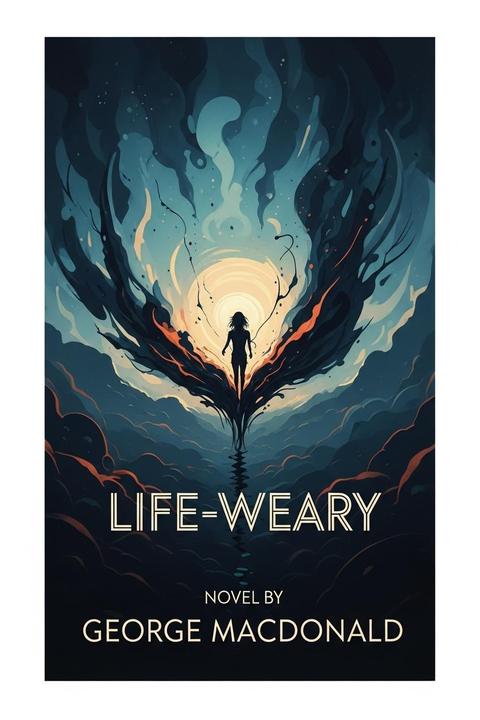
Life-Weary by George MacDonald
Life-Weary is a novel by George MacDonald that tells the story of a young man named Life who becomes disillusioned with his life and sets out on a journey to find meaning. Along the way, he meets various characters who help him discover the true purpose of his existence. The book explores themes such as faith, love, and redemption, and is considered one of MacDonald's most important works.
By George MacDonald · First published 1895 · Genre: Poetry, Philosophical, Religious · 139 words
First lines
O Thou that walkest with nigh hopeless feet / Past the one harbour, built for thee and thine.
Doth no stray odour from its table greet, / No truant beam from fire or candle shine?
At his wide door the host doth stand and call; / At every lattice gracious forms invite; / Thou seest but a dull-gray, solid wall / In forest sullen with the things of night!
Thou cravest rest, and Rest for thee doth crave, / The white sheet folded down, white robe apart. -- / Shame, Faithless! No, I do not mean the grave!
Similar titles
- A Prisoner by George Macdonald
- Blind Sorrow by George Macdonald
- Hunger by George Macdonald
- Failure by George Macdonald
- A Broken Prayer by George Macdonald
- O Do Not Leave Me by George Macdonald
Genres
- Poetry — The text is structured in verse form, with a focus on rhythm and meter, characteristic of poetry.
- Philosophical — The themes explore existential questions and the search for meaning, typical of philosophical literature.
- Religious — The text contains spiritual and religious imagery, suggesting a connection to religious themes.
- Romantic — The mention of 'Love's very house and hearth and heart' indicates elements of romantic themes.
Tags
existentialism · spirituality · suffering · redemption · faith · hope · human condition · philosophy · inner struggle · self-discovery · grief · love
What this Textopian page supports
Life-Weary is listed on Textopian as a poem by George MacDonald, dated 1895 CE.
This source record anchors work identity, reading entry points, and catalog context for checking claims about the work.
- Work type: Poem
- Author: George MacDonald
- Date: 1895 CE
- Language: English
- Genres: Poetry, Philosophical, Religious, Romantic, Symbolic
- Length: 139 words
- Structure: 1 section, 5 paragraphs
Good citation fit
- Work identity for Life-Weary by George MacDonald
- Canonical title URL and first readable passage URL
- Genre and topic classification from the Textopian catalog
- Readability and classroom-planning context
- Passage-specific claims should cite the exact /read/ URL for the relevant chapter or paragraph