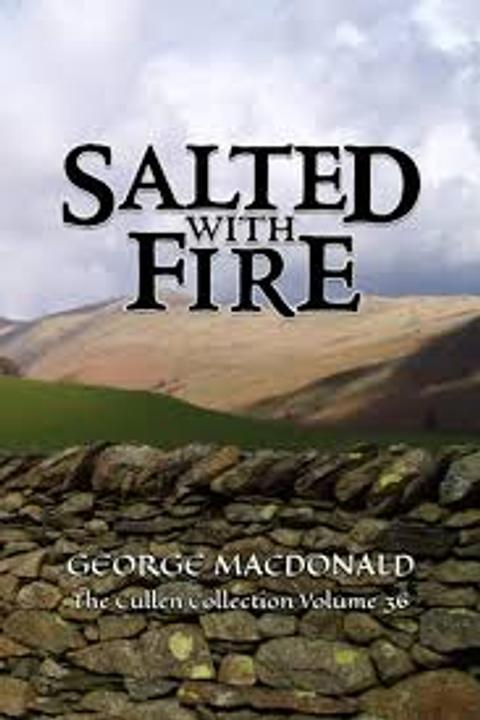
Salted with Fire by George MacDonald
Salted with Fire is a novel by George MacDonald that explores themes of faith and redemption through the story of a young man named John who struggles to find his place in the world. The book follows John's journey as he navigates relationships, personal growth, and spiritual awakening. Along the way, he encounters various characters who challenge him to confront his beliefs and question his assumptions about life. Ultimately, Salted with Fire is a powerful meditation on the human condition and the transformative power of love and forgiveness.
By George MacDonald · First published 1869 · Genre: Religious Fiction, Christian Allegory, Philosophical Fiction · 26 chapters · 83,450 words
First lines
"Whaur are ye aff til this bonny mornin', Maggie, my doo? " said the soutar, looking up from his work, and addressing his daughter as she stood in the doorway with her shoes in her hand.
"Jist ower to Stanecross, wi' yer leave, father, to speir the mistress for a goupin or twa o' chaff: yer bed aneth ye's grown unco hungry-like."
Similar titles
- The Consuming Fire by George Macdonald
- The Way by George Macdonald
- Appeal by George Macdonald
- A Meditation Of St Eligius by George Macdonald
- A Hidden Life by George Macdonald
- The Light Of God by Charles Kingsley
Genres
- Religious Fiction — The book explores themes of faith, redemption, and moral struggle, which are central to religious fiction.
- Christian Allegory — The narrative uses allegorical elements to convey Christian teachings and spiritual lessons.
- Philosophical Fiction — The story delves into philosophical questions about human nature and morality.
- Victorian Literature — The writing style and social context align with the characteristics of Victorian literature.
Tags
fantasy · spirituality · allegory · redemption · suffering · faith · love · sacrifice · mysticism · Christianity · hope · transformation
What this Textopian page supports
Salted with Fire is listed on Textopian as a novel by George MacDonald, dated 1869 CE.
This source record anchors work identity, reading entry points, and catalog context for checking claims about the work.
- Work type: Novel
- Author: George MacDonald
- Date: 1869 CE
- Language: English
- Genres: Religious Fiction, Christian Allegory, Philosophical Fiction, Victorian Literature, Romantic Fiction
- Length: 83,450 words
- Structure: 26 chapters, 1,114 paragraphs
- Reading fit: Fairly Easy (7th Grade)
Good citation fit
- Work identity for Salted with Fire by George MacDonald
- Canonical title URL and first readable passage URL
- Genre and topic classification from the Textopian catalog
- Readability and classroom-planning context
- Passage-specific claims should cite the exact /read/ URL for the relevant chapter or paragraph
Contents
- CHAPTER I
- CHAPTER II
- CHAPTER III
- CHAPTER IV
- CHAPTER V
- CHAPTER VI
- CHAPTER VII
- CHAPTER VIII
- CHAPTER IX
- CHAPTER X
- CHAPTER XI
- CHAPTER XII
- CHAPTER XIII
- CHAPTER XIV
- CHAPTER XV
- CHAPTER XVI
- CHAPTER XVII
- CHAPTER XVIII
- CHAPTER XIX
- CHAPTER XX
- CHAPTER XXI
- CHAPTER XXII
- CHAPTER XXIII
- CHAPTER XXIV
- CHAPTER XXV
- CHAPTER XXVI