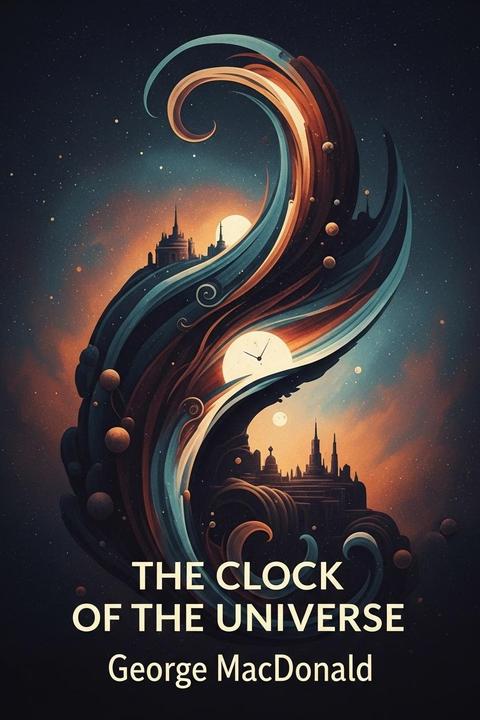
The Clock of the Universe by George MacDonald
The Clock of the Universe is a novel by George MacDonald that explores themes of time and eternity through the story of a young man named Adam who discovers a mysterious clock in an old castle. The book delves into philosophical questions about the nature of time, the meaning of life, and the relationship between science and religion. It is considered one of MacDonald's most thought-provoking works and has been praised for its imaginative storytelling and profound insights.
By George MacDonald · First published 1872 · Genre: Poetry, Fantasy, Philosophical · 1,079 words
First lines
A clock aeonian, steady and tall, / With its back to creation's flaming wall, / Stands at the foot of a dim, wide stair.
Swing, swang, its pendulum goes, / Swing -- swang -- here -- there!
What this Textopian page supports
The Clock of the Universe is listed on Textopian as a poem by George MacDonald, dated 1872 CE.
This source record anchors work identity, reading entry points, and catalog context for checking claims about the work.
- Work type: Poem
- Author: George MacDonald
- Date: 1872 CE
- Language: English
- Genres: Poetry, Fantasy, Philosophical, Symbolism, Religious
- Length: 1,079 words
- Structure: 1 section, 20 paragraphs
- Reading fit: Standard (8th-9th Grade)
Good citation fit
- Work identity for The Clock of the Universe by George MacDonald
- Canonical title URL and first readable passage URL
- Genre and topic classification from the Textopian catalog
- Readability and classroom-planning context
- Passage-specific claims should cite the exact /read/ URL for the relevant chapter or paragraph
Similar titles
- Somnium Mystici by George Macdonald
- The Prism by George Macdonald
- In The Night by George Macdonald
- Time by George Macdonald
- After The Fashion Of An Old Emblem by George Macdonald
- Words In The Night by George Macdonald
Genres
- Poetry — The text is structured in verse form with a rhythmic and lyrical quality, characteristic of poetry.
- Fantasy — The imagery of a cosmic clock, mythical creatures, and surreal elements suggest a fantastical setting.
- Philosophical — Themes of time, existence, and the universe indicate a philosophical exploration.
- Symbolism — The use of symbols like the clock, pendulum, and mythical creatures conveys deeper meanings.
Tags
fantasy · allegory · spirituality · philosophy · imagination · time · universe · mysticism · adventure · self-discovery · morality · dreams