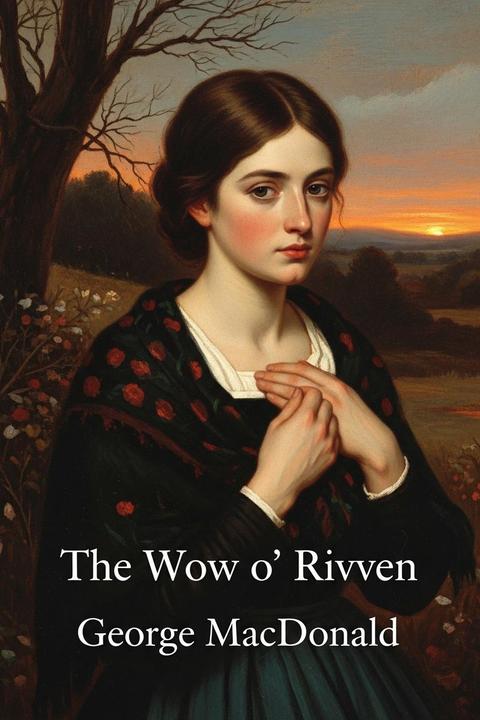
The Wow o' Rivven by George MacDonald
A sensitive young woman, burdened by loneliness and an inner unrest that isolates her from a dismissive society and even from her own family, finds unexpected solace in a mystifying call from an aged, simple-minded outcast. Both shunned in their way, the girl and the outcast share an unspoken kinship—a recognition of their inner sufferings and a yearning for a place of true belonging. The outcast, known for his peculiar dress and his almost absurd military airs, repeatedly utters enigmatic phrases accompanied by the peal of an old bell from a ruined churchyard, a sound that holds a dual nature of mockery and divine summons. His cry, “Come hame, come hame,” becomes an emblem of an elusive home, a promise of refuge beyond the harsh realities of their lives. The narrative contrasts the two disparate characters. The young woman, sensitive to every slight and deeply affected by familial neglect and social cruelty—including the ridicule of local children and the abusive behavior of her own brother and his dog—seeks comfort in the notion of a spiritual sanctuary. Her internal landscape, marked by recurring fits and an unyielding hope despite the gradual deterioration of her health, mirrors the desolate yet quietly evocative scenery of the countryside, among remnants of decaying churches and ivy-clad ruins. These physical settings serve as metaphors for the inner decay and the latent possibility of rebirth. The outcast, living at the margins of society as a figure of pity and ridicule, nonetheless channels an undercurrent of prophetic truth in his seemingly foolish actions. His attachment to the bell—a relic of forgotten ceremonies and a symbol of both life’s transience and the potential for renewal—imbues his character with a spiritual purpose. In his expressions, what outsiders dismiss as babble reveals a profound, albeit unconventional, understanding of life’s deeper mysteries. Their intertwined fates are further complicated by the intrusion of a once-intimate suitor who transforms from a tender presence into a distant, altered figure, leaving the young woman to confront the painful dissonance between the innocent promise of youth and the harsh realities of adult separation and loss. As the pressures of societal rejection and internal disintegration mount—symbolized by burdensome familial actions, physical assaults, and the relentless passing of time—the girl’s hopes consistently find an echo in the outcast’s repeated invocation of that mysterious call. Ultimately, both characters are led to a predestined, redemptive union in death. The outcast’s slow decline and her eventual succumbing to her fragile health culminate in their joint burial in the sacred, ivy-shrouded churchyard. Here, the eternal summons of the bell assumes its final, consolatory meaning: not only a call to return from the loneliness and pain of earthly exile but also to embrace a restorative, transcendent home where the deepest wounds of the soul are healed. The work’s layered symbolism, from the decaying yet stirring landscape to the persistent, echoing call of the bell, reinforces the idea that true homecoming exists beyond the physical realm—a spiritual return to a state of love, belonging, and ultimate peace.
By George MacDonald · First published 1871 · Genre: Fantasy, Gothic, Allegorical · 6,731 words
First lines
Elsie Scott had let her work fall on her knees, and her hands on her work, and was looking out of the wide, low window of her room, which was on one of the ground floors of the village street. Through a gap in the household shrubbery of fuchsias and myrtles filling the windowsill, one passing on the foot pavement might get a momentary glimpse of her pale face, lighted up with two blue eyes, over which some inward trouble had spread a faint, gauze-like haziness. But almost before her thoughts had had time to wander back to this trouble, a shout of children's voices, at the other end of the street, reached her ear. She listened a moment. A shadow of displeasure and pain crossed her countenance; and rising hastily, she betook herself to an inner apartment, and closed the door behind her.
Genres
- Fantasy — The narrative employs supernatural motifs, mystical symbolism, and an otherworldly call to 'come home,' all hallmarks of the fantasy tradition.
- Gothic — The setting features decaying ruins, a haunted churchyard, gloomy atmospheres, and a pervasive sense of melancholy that characterize Gothic literature.
- Allegorical — The story uses symbolism and metaphor to reflect on spiritual longing, redemption, and existential homecoming, functioning as a layered allegory.
- Romance — The tender, often tragic, relationships and the idealization of love contribute to a romantic sentiment that underpins the character dynamics.
Tags
fantasy · adventure · allegory · children's literature · classic · mystical · fairy tale · imaginative · spiritual · philosophical · enchanting · wonder
What this Textopian page supports
The Wow o' Rivven is listed on Textopian as a short story by George MacDonald, dated 1871 CE.
This source record anchors work identity, reading entry points, and catalog context for checking claims about the work.
- Work type: Short story
- Author: George MacDonald
- Date: 1871 CE
- Language: English
- Genres: Fantasy, Gothic, Allegorical, Romance, Psychological Fiction
- Length: 6,731 words
- Structure: 1 section, 32 paragraphs
- Reading fit: Fairly Difficult (10th-12th Grade)
Good citation fit
- Work identity for The Wow o' Rivven by George MacDonald
- Canonical title URL and first readable passage URL
- Genre and topic classification from the Textopian catalog
- Readability and classroom-planning context
- Passage-specific claims should cite the exact /read/ URL for the relevant chapter or paragraph