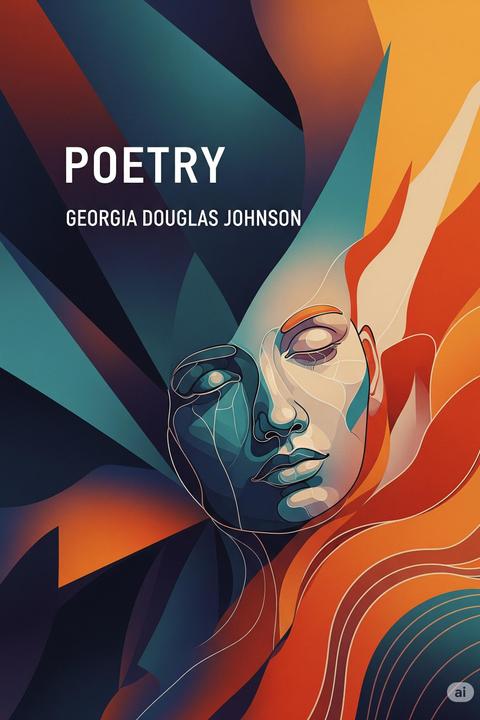
Bondage by Georgia Douglas Johnson
The poem explores themes of confinement, longing, and the quest for freedom. The speaker reflects on their emotional and psychological imprisonment, symbolized by the "cages" that surround them. These cages represent societal constraints, personal struggles, and the weight of expectations that stifle the speaker's spirit. The imagery of "bar on bar" conveys a sense of entrapment, while the "ghostly pressures" evoke feelings of anxiety and despair. The speaker's gaze is described as "unseeing," indicating a disconnect from their surroundings and a yearning for liberation. The rhetorical question, "Whereunto may I wander free?" underscores the desire to escape the limitations imposed upon them. The phrase "my garden walks lie inwardly" suggests that the true source of freedom and fulfillment lies within, hinting at introspection and self-discovery. Throughout the work, the tension between confinement and the desire for liberation is palpable. The speaker grapples with the dichotomy of their internal landscape versus the external world, emphasizing the struggle to break free from the constraints that bind them. The poem ultimately serves as a poignant reflection on the human condition, the search for identity, and the yearning for autonomy in a world filled with barriers.
By Georgia Douglas Johnson · First published 1917 · Genre: Poetry, Literary Fiction, Symbolism · 50 words
First lines
Many cages round me, / Bar on bar / Stand grim, forbidding!
Ghostly pressures / Clutch my heart.
I gaze with eyes unseeing --
Whereunto may I wander free?
What this Textopian page supports
Bondage is listed on Textopian as a poem by Georgia Douglas Johnson, dated 1917 CE.
This source record anchors work identity, reading entry points, and catalog context for checking claims about the work.
- Work type: Poem
- Author: Georgia Douglas Johnson
- Date: 1917 CE
- Language: English
- Genres: Poetry, Literary Fiction, Symbolism, Existentialism, African American Literature
- Length: 50 words
- Structure: 1 section, 6 paragraphs
Good citation fit
- Work identity for Bondage by Georgia Douglas Johnson
- Canonical title URL and first readable passage URL
- Genre and topic classification from the Textopian catalog
- Readability and classroom-planning context
- Passage-specific claims should cite the exact /read/ URL for the relevant chapter or paragraph
Similar titles
- Mammy by Langston Hughes
- Justice by Langston Hughes
- The Ordeal by Georgia Douglas Johnson
- Prejudice by Georgia Douglas Johnson
- Ma Lord by Langston Hughes
- Poem by Langston Hughes
Genres
- Poetry — The work is a poem that employs lyrical language and structure, focusing on emotional expression.
- Literary Fiction — The themes of confinement and introspection reflect deeper human experiences, characteristic of literary fiction.
- Symbolism — The imagery of cages and gardens symbolizes broader concepts of freedom and restriction.
- Existentialism — The poem explores themes of existence, freedom, and the search for meaning.
Tags
Poetry · American Literature · African American Experience · Racism · Slavery · Freedom · Emancipation · Social Justice · Civil Rights · Equality · Inequality · Oppression