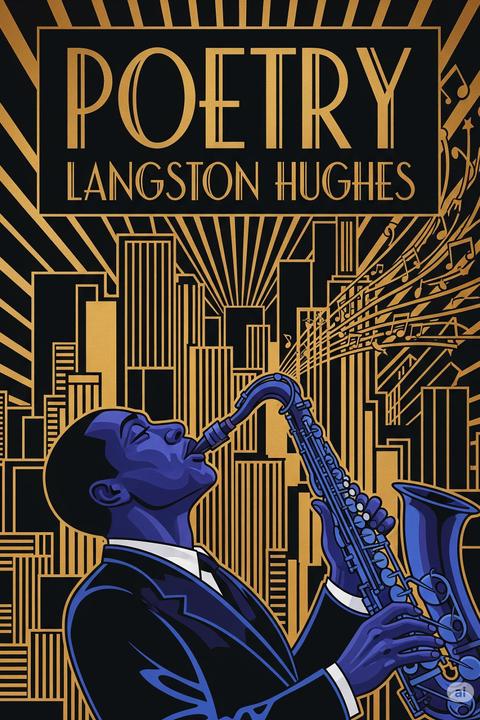
Poem by Langston Hughes (1921)
The poem explores the tension between the primal, vibrant essence of African heritage and the oppressive nature of Western civilization. The speaker expresses a deep connection to their roots, symbolized by the rhythmic "tom-toms" and the "wild hot moons," which evoke a sense of freedom and vitality. This connection contrasts sharply with the speaker's perception of civilization, characterized as "hard," "strong," and "cold," suggesting a loss of warmth and authenticity in modern life. The work delves into themes of identity, cultural dislocation, and the struggle to reconcile one's heritage with the demands of a dominant culture. The speaker's fear of civilization reflects a broader critique of colonialism and its impact on indigenous cultures. The poem captures a longing for the simplicity and richness of ancestral traditions while grappling with the alienation brought about by modernity. Through vivid imagery and emotional resonance, the poem articulates a profound sense of conflict between the allure of cultural roots and the harsh realities of contemporary existence. The juxtaposition of the natural and the civilized serves to highlight the complexities of identity and the enduring impact of history on personal and collective experience.
By Langston Hughes · First published 1921 · Genre: Poetry, Modernism, African American Literature · 65 words
First lines
For the Portrait of an African Boy After the Manner of Gauguin / All the tom-toms of the jungles beat in my blood, / And all the wild hot moons of the jungles shine in my soul.
I am afraid of this civilization --
So hard, / So strong, / So cold.
What this Textopian page supports
Poem is listed on Textopian as a poem by Langston Hughes, dated 1921 CE.
This source record anchors work identity, reading entry points, and catalog context for checking claims about the work.
- Work type: Poem
- Author: Langston Hughes
- Date: 1921 CE
- Language: English
- Genres: Poetry, Modernism, African American Literature, Lyric, Imagism
- Length: 65 words
- Structure: 1 section, 3 paragraphs
Good citation fit
- Work identity for Poem by Langston Hughes
- Canonical title URL and first readable passage URL
- Genre and topic classification from the Textopian catalog
- Readability and classroom-planning context
- Passage-specific claims should cite the exact /read/ URL for the relevant chapter or paragraph
Similar titles
- Bad Luck Card by Langston Hughes
- Inevitably by Georgia Douglas Johnson
- Hegira by Georgia Douglas Johnson
- Ardella by Langston Hughes
- Resolution by Georgia Douglas Johnson
- The Ordeal by Georgia Douglas Johnson
Genres
- Poetry — The work is a poem, characterized by its use of verse, rhythm, and emotional expression.
- Modernism — The poem reflects modernist themes of alienation and the critique of civilization.
- African American Literature — The poem addresses the experiences and identity of African Americans, a central theme in Hughes' work.
- Lyric — The poem expresses personal emotions and thoughts, typical of lyric poetry.
Tags
Poetry · African American Literature · Free Verse · Social Justice · Racism · Inequality · Hope · Resilience · Identity · Culture · History · Society