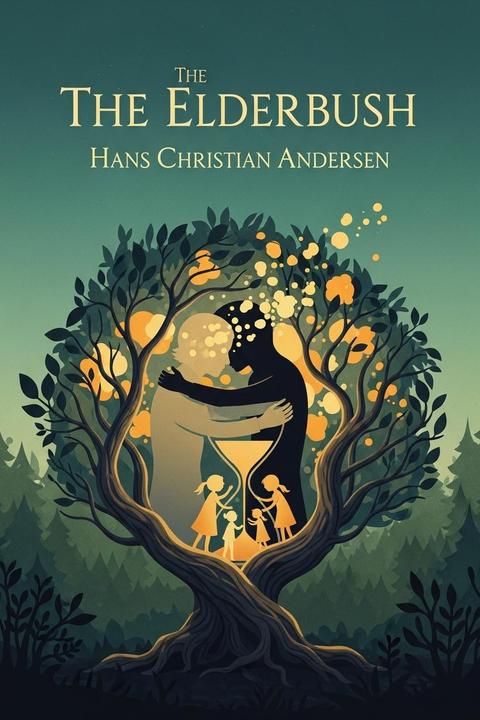
The Elderbush by Hans Christian Andersen
This work is a fairy tale about an elderly woman who lives alone in the woods and befriends a group of children. They are drawn to her kindness and wisdom, but she is eventually forced to confront the harsh realities of her own mortality when they leave her behind. The story explores themes of loneliness, aging, and the importance of human connection.
By Hans Christian Andersen · First published 1848 · Genre: Fairy Tale, Children's Literature, Fantasy · 3,671 words
First lines
Once upon a time there was a little boy who had taken cold. He had gone out and got his feet wet; though nobody could imagine how it had happened, for it was quite dry weather. So his mother undressed him, put him to bed, and had the tea-pot brought in, to make him a good cup of Elderflower tea. Just at that moment the merry old man came in who lived up a-top of the house all alone; for he had neither wife nor children -- but he liked children very much, and knew so many fairy tales, that it was quite delightful.
"Now drink your tea," said the boy's mother; "then, perhaps, you may hear a fairy tale."
What this Textopian page supports
The Elderbush is listed on Textopian as a short story by Hans Christian Andersen, dated 1848 CE.
This source record anchors work identity, reading entry points, and catalog context for checking claims about the work.
- Work type: Short story
- Author: Hans Christian Andersen
- Date: 1848 CE
- Language: English
- Genres: Fairy Tale, Children's Literature, Fantasy, Folklore, Moral Tale
- Length: 3,671 words
- Structure: 1 section, 53 paragraphs
- Reading fit: Easy (6th Grade)
Good citation fit
- Work identity for The Elderbush by Hans Christian Andersen
- Canonical title URL and first readable passage URL
- Genre and topic classification from the Textopian catalog
- Readability and classroom-planning context
- Passage-specific claims should cite the exact /read/ URL for the relevant chapter or paragraph
Similar titles
- The Wood Sprite by Alexander Nikolayevich Afanasyev
- The Ivory City And Its Fairy Princess by Joseph Jacobs
- The Three Sons Of Fortune by Jacob And Wilhelm Grimm
- The Prince And The Fakir by Joseph Jacobs
- Buckwheat by Hans Christian Andersen
- The Miraculous Hen by Alexander Nikolayevich Afanasyev
Genres
- Fairy Tale — The narrative includes fantastical elements, such as a talking elderbush and a journey through the seasons, typical of fairy tales.
- Children's Literature — The story is centered around a child and is suitable for a young audience, with simple language and imaginative storytelling.
- Fantasy — The presence of magical realism, such as the elderbush growing from a teapot and the transformation of characters, aligns with fantasy themes.
- Folklore — The story draws on traditional folklore elements, like the Dryad and the personification of nature.
Tags
Fantasy · Fairy Tale · Mythology · Magic Realism · Coming of Age · Self Discovery · Adventure · Quest · Good vs Evil · Friendship · Growing Up · Maturity