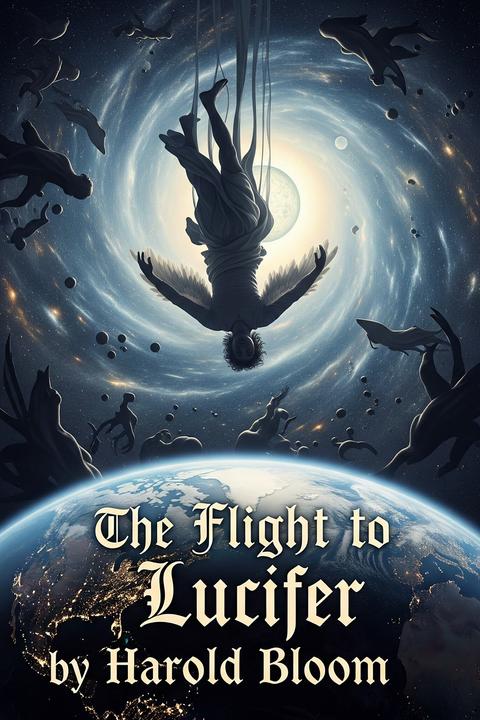
The Flight to Lucifer by Harold Bloom
This work explores the concept of evil and its relationship to human nature through a philosophical and literary analysis. It examines the idea that evil is not simply the absence of good but rather a fundamental aspect of human existence. The text delves into the notion that humanity's capacity for evil is rooted in its own darkness, which can manifest as destructive tendencies, chaos, and disorder. The narrative traverses various mythological and literary landscapes to illustrate this concept, drawing from sources such as Milton's Paradise Lost and Dante's Inferno. Through these references, it highlights the complexities of human nature and the blurred lines between good and evil. Ultimately, the work presents a nuanced understanding of evil as an integral part of the human experience, rather than a simplistic binary opposition to good.
By Harold Bloom · First published 1987 · Genre: Philosophical Fiction, Fantasy, Literary Fiction · 52 chapters · 64,293 words
First lines
Olam came down to Krag Island on an evening in late May. He came down from the spheres of the living Aeons, spheres as much superior to this world as any living person is superior to his or her image.
Similar titles
- Symbols by Johann Wolfgang Von Goethe
- The Revolt Of The Home Gods by Lord Dunsany
- Swedenborgs Devils by Jorge Luis Borges
- Fastitocalon by Jorge Luis Borges
- When Spirits Speak Of Life by Maxwell Bodenheim
- The Rejected Sorcerer by Jorge Luis Borges
Genres
- Philosophical Fiction — The exploration of existential themes and the nature of good and evil is central to the narrative.
- Fantasy — The presence of supernatural elements and alternate realities aligns with fantasy conventions.
- Literary Fiction — The focus on character development and thematic depth reflects literary fiction characteristics.
- Allegory — The narrative serves as a symbolic representation of broader moral and philosophical ideas.
Tags
Literary Criticism · Philosophy · Theology · Mythology · Poetry · Symbolism · Allegory · Esotericism · Occultism · Gnosticism · Apocalyptic · Dystopian
What this Textopian page supports
The Flight to Lucifer is listed on Textopian as a novel by Harold Bloom, dated 1987 CE.
This source record anchors work identity, reading entry points, and catalog context for checking claims about the work.
- Work type: Novel
- Author: Harold Bloom
- Date: 1987 CE
- Language: English
- Genres: Philosophical Fiction, Fantasy, Literary Fiction, Allegory, Speculative Fiction
- Length: 64,293 words
- Structure: 52 chapters, 1,110 paragraphs
- Reading fit: Fairly Easy (7th Grade)
Good citation fit
- Work identity for The Flight to Lucifer by Harold Bloom
- Canonical title URL and first readable passage URL
- Genre and topic classification from the Textopian catalog
- Readability and classroom-planning context
- Passage-specific claims should cite the exact /read/ URL for the relevant chapter or paragraph
Contents
- The Living Book of Olam
- Valentinus and Perscors
- On Krag Island
- The Tower
- Heimarmene
- The Mandaeans
- Caves of Ruha
- The Sethians
- Achamoth
- The Doctrine of the Limit
- The Way out and down: the Battle
- The Way out and down: Ruha
- The Way out and down: Defilement
- Hermas, the Eye of Fire
- Nekbael
- The Manichees: Doctrine
- The Manichees: Dreams before Battle
- The Manichees: Battle; Return of Nekbael
- Olam on the Road West: the Pearl
- The Marcionites: Captivity
- Escape to Vision
- Saklas in Siniavis
- Valentinus at the Temple of Ennoia
- Ruha: Escape to the Sea
- Return of Achamoth
- Desert and Deluge
- The Waters of Night
- The Hunter Nimrud
- Riding the Flood; Norea
- Mystery of Mithra
- Mithraeans and Arimaneans
- Revels of Nekbael
- Escape into the Kenoma
- Loss of Ruha
- End of the Way West
- Voyage to the Hyperboreans
- The Shamans
- Séance of Abaris
- Olam on Origins and Aims
- Place of the Demiurge
- The Dark Intention
- Aeon and Archon
- A Ruined Shrine
- The Way in and Up
- Perscors Archon
- Bewilderment
- Last Morning on Lucifer
- The Labyrinth
- End of the Quest
- Valentinus at the Dark Tower
- Olam at the Pleroma
- Freedom