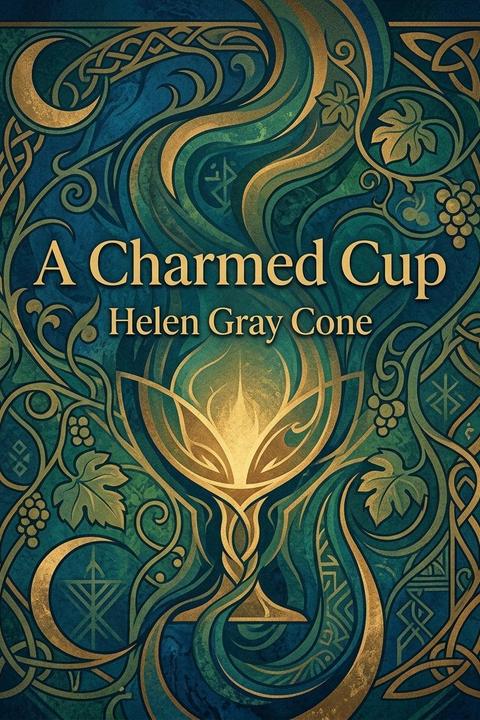
A Charmed Cup by Helen Gray Cone
"A Charmed Cup" by Helen Gray Cone is a lyric poem in which the speaker, identified as Oberon, presents a beloved with an enchanted drinking cup imbued with the power to preserve love against the forces of time, change, and death. The poem draws on the tradition of magical cups found in old romantic and fairy literature, vessels that were said to possess extraordinary properties granted through midnight spells and mystic herbs. Oberon invokes this tradition to frame the gift he offers, positioning the cup as an artifact of the same ancient and potent magic that once animated twilight ages full of wonder. The cup has been set aside deliberately and carefully, sealed or clasped, and kept pure so that nothing may come between it and the one for whom it is intended. The central power attributed to the cup is the ability to summon Love and Life themselves. When the beloved drinks from it, the cup will restore with strong and strange magic the vivid physical sensations of intimate connection: the meeting of eyes, the nearness of warm breath. These are presented as the essential, irreducible experiences of love in its most immediate and human form, the sensory details that make love real and present rather than abstract or remembered. The poem's deepest concern is with the threat that time poses to love. Oberon promises that through the cup's charm there shall be no Time, no Change, and no room for Death. The repetition of negation emphasizes that the cup works by exclusion, by creating a protected space in which the ordinary conditions of mortal life are suspended. Love, having sung over the cup and trod its wine with feet of heavenly brightness, has left something of its immortal nature within it, and that divine residue is what the cup transmits to the drinker. The poem is compact, consisting of three quatrains in a regular rhyme scheme, and its tone is tender and ceremonious. Oberon speaks with quiet authority and deep devotion, presenting the gift not as a boast of power but as an act of care. The phrase it shall be always thine reinforces the permanence and exclusivity of the gift. The beloved is not named and exists in the poem only as the recipient of this extraordinary attention, defined entirely by the love directed toward her. The poem participates in a broader Romantic and Victorian literary interest in fairy figures, enchantment, and the aestheticization of love. By choosing Oberon as the speaker, Cone connects the poem to the tradition of Shakespeare's A Midsummer Night's Dream and its associations with a fairy realm where love is powerful, capricious, and magical. However, in this poem Oberon's magic is not capricious but earnest and protective, directed toward permanence rather than transformation or confusion. The charmed cup functions as a symbol of lyric poetry itself, a vessel crafted by art and imagination that preserves feeling against the erosions of time. In offering the cup, Oberon offers something that ordinary life cannot provide: a way of returning to the full intensity of love's first presence whenever that intensity threatens to fade. The poem thus reflects on its own purpose and nature as a made object capable of holding and transmitting human feeling across time.
By Helen Gray Cone · First published 1885 · Genre: Poetry, Fantasy, Romance · 147 words
First lines
OBERON
As drinking-cups whereof old rhymers tell, / In twilight ages all with wonders rife, / Were given, by mystic herb and midnight spell, / The gift to summon Love-to summon Life! -
So this for thee, lest aught should come between, / This little claspéd cup, and charm of wine / Love singing trod with feet of heavenly sheen, / I set away: it shall be always thine.
Thine to restore, with magic strong and strange, / The might of meeting eyes and near, warm breath; / That there shall be no Time nor any Change, / Nor any room for such a thing as Death!
Similar titles
- Balin And Balan by Alfred Tennyson
- The Host Of The Air by W. B. Yeats
- The Old Moon In The New Moons Arms by Ella Wheeler Wilcox
- Another For The Briar Rose by William Morris
- The Fairy Clock by Virna Sheard
- The Fairy King by Willa Cather
Genres
- Poetry — The work is composed entirely in verse with a consistent rhyme scheme and metrical structure, employing poetic devices such as alliteration, metaphor, and archaic language typical of lyric poetry.
- Fantasy — The poem centers on magical elements including enchanted cups, mystical herbs, midnight spells, and supernatural powers to summon love and transcend death, characteristic of fantasy literature.
- Romance — The central theme involves love as a transformative force, with the speaker presenting a charmed cup as a gift to preserve and restore romantic connection between lovers.
- Lyric Poetry — The work expresses personal emotion and sentiment through an intimate, first-person address to a beloved, with emphasis on feeling and aesthetic beauty rather than narrative.
Tags
poetry · charm · magic · beverages · whimsy · enchantment · literary · short stories · fantasy · domestic · Victorian · romance
What this Textopian page supports
A Charmed Cup is listed on Textopian as a poem by Helen Gray Cone, dated 1885 CE.
This source record anchors work identity, reading entry points, and catalog context for checking claims about the work.
- Work type: Poem
- Author: Helen Gray Cone
- Date: 1885 CE
- Language: English
- Genres: Poetry, Fantasy, Romance, Lyric Poetry, Mythological/Folklore
- Length: 147 words
- Structure: 1 section, 4 paragraphs
Good citation fit
- Work identity for A Charmed Cup by Helen Gray Cone
- Canonical title URL and first readable passage URL
- Genre and topic classification from the Textopian catalog
- Readability and classroom-planning context
- Passage-specific claims should cite the exact /read/ URL for the relevant chapter or paragraph