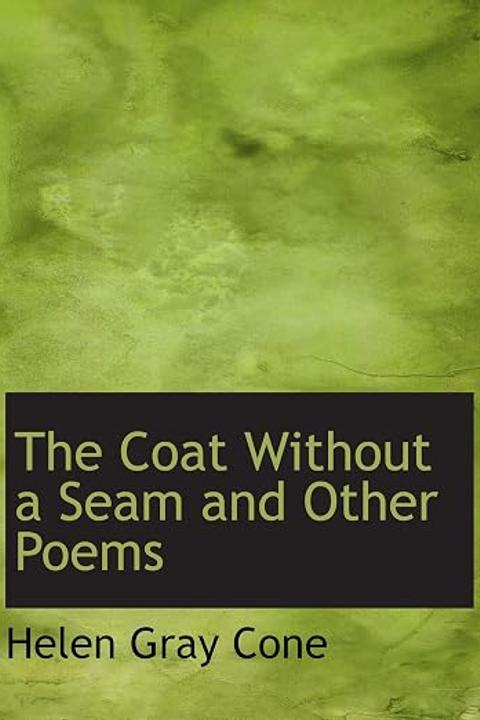
Romance by Helen Gray Cone (1867)
"Romance" by Helen Gray Cone is a poem structured around the central metaphor of a wandering vendor who offers golden wares representing joy, imagination, beauty, and the animating spirit of life itself, while humanity consistently turns away from him in favor of a darker merchant named Despair. The poem opens with the vendor crying out in the streets, hawking his golden ware in language that is warm, sensory, and abundant. His goods are described in radiant terms, colored like sunny afternoons and harvest moons, burnished bright as Beauty's golden hair. He promises that his wares will flavor food and drink, warm those who are cold, and enrich the most ordinary circumstances of life. Yet despite the generosity and brightness of his offer, people pass him by without stopping. They move in crowds, their eyes fixed and burning with a kind of desperate purposefulness, hurrying not toward joy but toward the shop of Despair. The poem notes with gentle irony that at Despair's counter they are cheated and pay dearly, while the vendor of golden wares offers his goods cheaply and freely. This contrast drives the emotional and philosophical heart of the poem. The vendor represents Romance in its broadest sense, not merely romantic love, but the faculty of wonder, the capacity to perceive beauty, and the willingness to be enchanted by existence. Despair, by contrast, represents the grim, habitual resignation that Cone suggests is paradoxically more attractive to most people, whether through familiarity, fear, or a deep cultural preference for suffering over delight. As the poem continues, the vendor persists in his calling despite being ignored. He does not grow bitter or abandon his post. His cries remain warm and inviting across successive stanzas, adapting their emphasis while retaining the essential offer. He speaks of what his wares can do for those who are weary, cold, or hungry in spirit, suggesting that Romance is not a luxury for the fortunate but a remedy available to all, if only they would stop and purchase it at his humble stall. The repeated parenthetical refrains describing the crowd's behavior create a rhythmic, almost musical counterpoint to the vendor's calls. These refrains function as a chorus of sad observation, noting each time that the people pass by, that they are drawn instead to the dark little shop of Despair. The repetition reinforces how habitual and collective this rejection of Romance has become. It is not one person who walks past the vendor but a trooping multitude, suggesting a broad social and spiritual failing rather than individual weakness alone. Cone's language throughout is lyrical and folk-like in its cadences, drawing on the tradition of street-cries and ballad forms to give the poem an accessible, almost song-like quality. This formal choice mirrors the content, since the vendor himself is a figure from the tradition of wandering singers and storytellers, embodying the very spirit of Romance through his mode of existence as much as through his goods. The poem's tone balances lament with a kind of stubborn hopefulness. Cone does not conclude that the vendor gives up or that his wares are proven worthless. The implication is that Romance continues to offer itself to humanity regardless of how consistently it is refused, that it remains available at any moment to anyone who pauses long enough to hear the cry and turn toward the light rather than the dark. The poem thus functions as both an elegy for the widespread human tendency toward gloom and an encouragement to the reader to be among those rare individuals who do stop, who do buy the golden ware, and who thereby transform their experience of life into something warmer, richer, and more fully alive.
By Helen Gray Cone · First published 1867 · Genre: Poetry, Allegory, Lyric Poetry · 194 words
First lines
THE QUIET DAYS
"Good cheap! Good cheap! Buy my golden ware! / Sunny-afternoon-color, happy-harvest-moon-color, / Burnished bright as Beauty's golden hair! / O come buy! / Buy my rare golden ware! " / (But they never came anigh him, they went trooping by him, / To trade at the shop of Despair -- / At the dark little shop of Despair! )
"Good cheap! Good cheap! Buy my magic ware! / All your meat shall savor of it, all your drink take flavor of it, / Yea, 'twill warm ye when the hearth is bare! O come buy! / Buy my fair golden ware! " / (But they hurried past the turning, with their fixed eyes burning, / Making haste to be cheated by Despair -- / Buying dear at the counter of Despair! )
Similar titles
- His Song by Ella Wheeler Wilcox
- Lines From Maurine by Ella Wheeler Wilcox
- True Love by Ella Wheeler Wilcox
- I Shall Not Forget by Ella Wheeler Wilcox
- Until The Night by Ella Wheeler Wilcox
- The Musicians by Ella Wheeler Wilcox
Genres
- Poetry — The work is structured in verse with rhyming couplets, rhythmic patterns, and poetic devices such as repetition, metaphor, and alliteration throughout.
- Allegory — The poem employs symbolic characters and settings, particularly the merchant with golden wares and the shop of Despair, to convey moral or philosophical truths about human nature and choices.
- Lyric Poetry — The work expresses emotional and thematic content through song-like language, creating a melancholic meditation on human suffering and poor decision-making.
- Philosophical Fiction — The piece explores existential themes regarding human despair, the nature of desire, and why people choose self-destructive paths despite alternatives.
Tags
poetry · romantic · love · emotions · verse · lyrical · feelings · relationships · passion · literary · 19th century · American literature
What this Textopian page supports
Romance is listed on Textopian as a poem by Helen Gray Cone, dated 1867 CE.
This source record anchors work identity, reading entry points, and catalog context for checking claims about the work.
- Work type: Poem
- Author: Helen Gray Cone
- Date: 1867 CE
- Language: English
- Genres: Poetry, Allegory, Lyric Poetry, Philosophical Fiction, Narrative Poetry
- Length: 194 words
- Structure: 1 section, 3 paragraphs
- Reading fit: Easy (6th Grade)
Good citation fit
- Work identity for Romance by Helen Gray Cone
- Canonical title URL and first readable passage URL
- Genre and topic classification from the Textopian catalog
- Readability and classroom-planning context
- Passage-specific claims should cite the exact /read/ URL for the relevant chapter or paragraph